

LASIK • Los Angeles
LASIK Recovery Timeline: Day by Day
Most people see well within a day, but the eye keeps healing for months. Here is what each stage usually looks like after bladeless LASIK, and when to call.
Request a consultation
How long does LASIK recovery take?
Most patients notice clearer vision within the first day and return to desk work within a few days. The cornea keeps healing for months: the FDA notes vision can take three to six months to fully stabilize, and dryness or night glare often improves over that time. Your surgeon or co-managing optometrist sets your exact timeline at each follow-up visit.
What happens in the first few hours?
The laser part of LASIK is brief. At Berg-Feinfield, the flap is made with a femtosecond laser instead of a blade, and the reshaping takes from a few seconds to under a minute per eye, depending on your prescription. You rest for a short time and then go home. Plan for someone to drive you, because you should not drive yourself on surgery day.
Once the numbing drops wear off, most people feel burning, scratchiness or a sense that something is in the eye. Your eyes may water and your vision will likely look hazy. This is expected. A nap with your eyes closed is the most useful thing you can do that afternoon, and many patients find the discomfort has eased by the time they wake up.
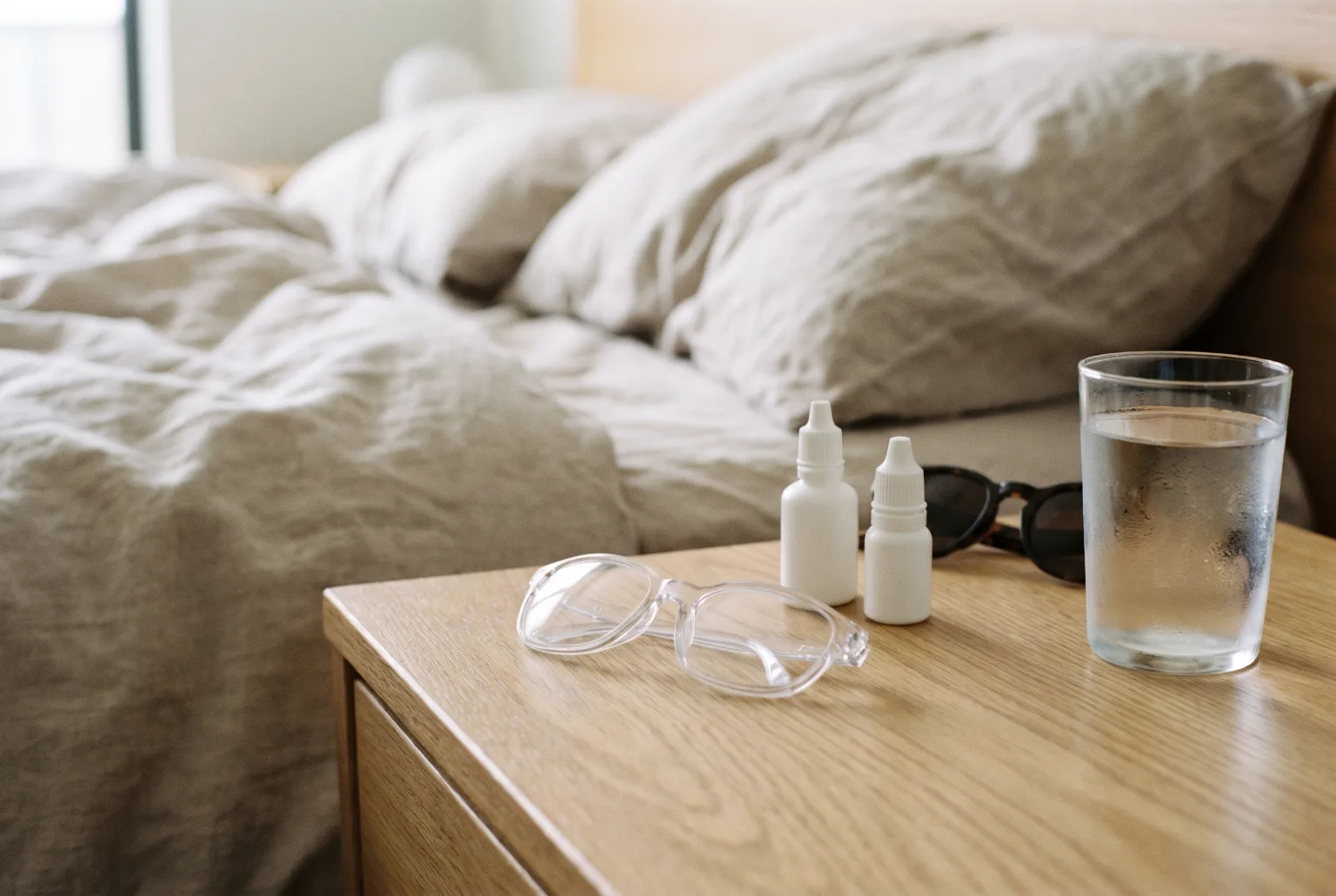
- Start your drops on schedule: antibiotic and anti-inflammatory drops protect the healing eye. Finish the full course even if your eyes feel fine.
- Wear the clear shields to sleep: they keep you from rubbing your eyes against the pillow while the flap heals.
- Skip screens and reading that evening: they will not harm the eye, but they dry the surface and make the first night less comfortable.
What should day one look like?
You will have a check the next day, either at Berg-Feinfield or with your own optometrist. Most Berg-Feinfield surgical patients see their own optometrist before and after surgery through co-management; patients who are not co-managed are followed by the in-house MD/OD team. The FDA advises a visit within the first 24 to 48 hours and regular checks for at least six months.
Many people wake up the morning after LASIK able to read a clock across the room. Some haze, light sensitivity or a few small red spots on the white of the eye are common and usually fade within days to a couple of weeks. Do not drive until your doctor confirms at this visit that your vision meets the driving standard.
What happens during the first week?
Vision often improves quickly and then changes from hour to hour, especially first thing in the morning, late in the day or after long screen sessions. That is usually the tear film settling, not a problem with the treatment, and lubricating drops help. Many people are back to desk work within one to three days. Jobs with dust, chemicals or heavy physical work may need more time.
- Don’t rub your eyes: the flap is most vulnerable early. If your eyes itch, use drops instead of your fingers.
- Keep water and soap out: shower with your eyes closed and avoid splashing your face.
- Hold off on eye makeup and lotions: the FDA suggests waiting up to two weeks, or until your doctor says it is fine.
- Wear sunglasses outside: they cut glare and keep wind and dust out on bright Los Angeles days.
- Keep exercise light: FDA guidance says non-contact activity can usually resume after one to three days. Keep sweat out of your eyes.
What changes in weeks two through four?
Most daily restrictions lift during this stretch, though not all at once. Your doctor will tell you when you can return to full-intensity workouts, wear eye makeup and stop using the night shields. Dryness is common in this period because the corneal nerves that trigger tearing are still recovering. Using artificial tears regularly, rather than only when your eyes feel dry, makes a real difference.
Water and contact are where patients are most tempted to rush. FDA guidance says to avoid swimming, hot tubs and whirlpools for one to two months, and to wait at least four weeks before strenuous contact sports such as football, boxing or martial arts. Pools, the ocean and hot tubs can carry infection while the surface heals. If you surf, swim laps or play a contact sport, read our guide to LASIK for athletes and active lifestyles.
What happens between one and six months?
Vision continues to sharpen and settle. Glare, halos or starbursts around lights at night, if you had them, usually fade as the cornea and tear film recover. If your vision has stabilized and some nearsightedness, farsightedness or astigmatism remains, your surgeon can evaluate whether an enhancement makes sense. Enhancements are not right for every eye, and the evaluation waits until your measurements are stable.
LASIK corrects the prescription you have when you are treated. It does not stop the age-related loss of close-up focus that begins in the 40s, and it does not prevent cataracts later in life. See how long LASIK lasts for what tends to change over the years.
When should you call right away?
Some discomfort, watering and blur in the first day are normal. Call your surgeon or co-managing optometrist the same day if you notice any of these:
- Pain that gets worse instead of better after the first day
- Vision that gets worse instead of better
- Increasing redness, discharge or swelling
- Any blow or poke to the eye, even if it seems minor
Berg-Feinfield’s main line is (866) 273-3327. If you are co-managed, your optometrist will also tell you how to reach them after hours.
How can you set yourself up for an easier recovery?
A smooth recovery starts before surgery. Stay out of contact lenses for as long as your team asks, so your corneal measurements are accurate. If your eyes are dry, treat that first; our guide to LASIK with dry eyes explains why. Arrange a driver for surgery day and the next-day visit, fill your drop prescriptions ahead of time, and plan a quiet evening at home. Our LASIK consultation guide covers the tests and questions for your first visit.
Meet your care team
Who leads refractive care at Berg-Feinfield?
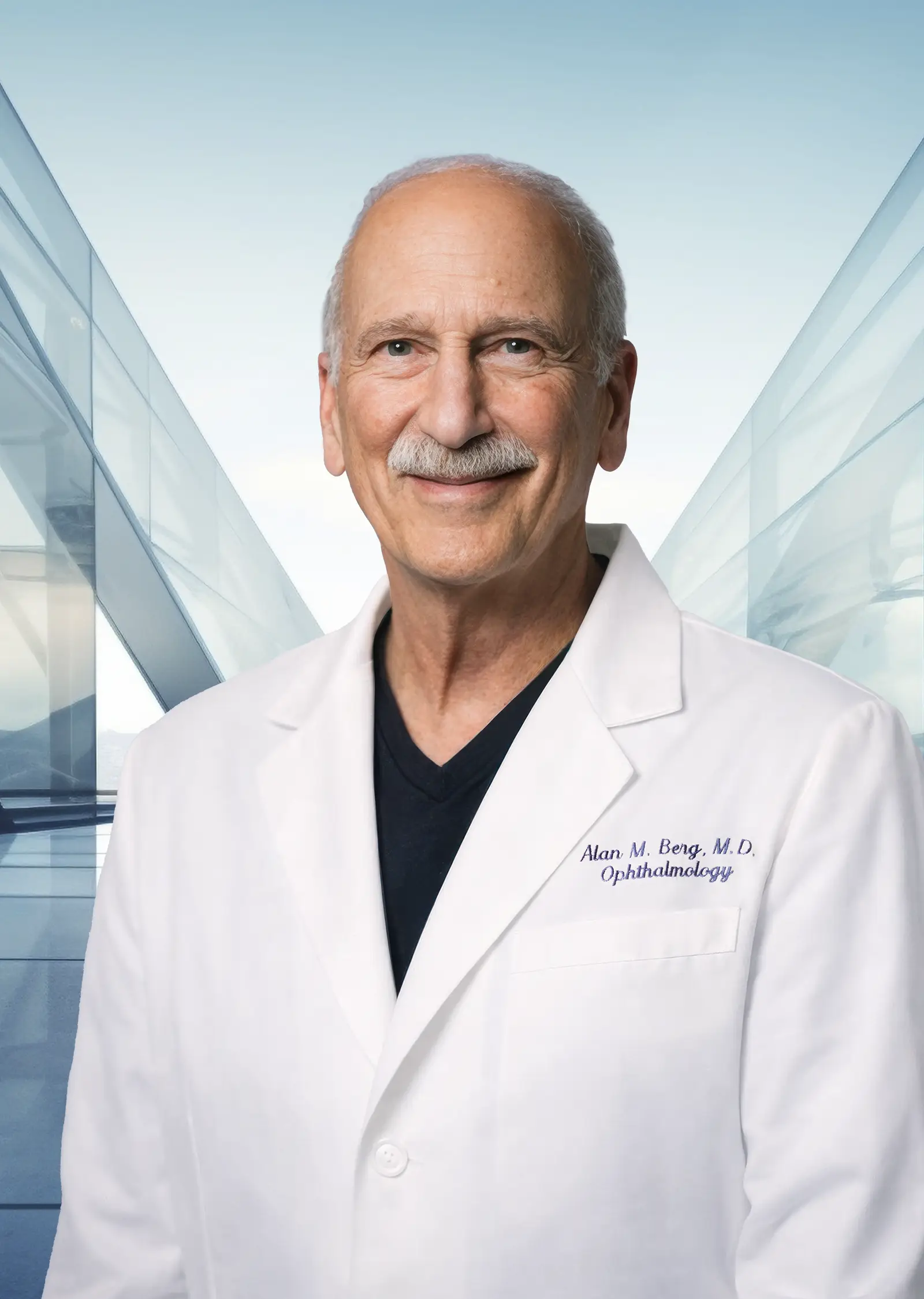
Alan M. Berg, MD
Dr. Berg is a board-certified ophthalmologist who leads LASIK and refractive surgery at Berg-Feinfield. He earned his medical degree at Bowman Gray School of Medicine and finished his ophthalmology residency at the University of Southern California, where he remains on the faculty teaching residents.
He has performed more than 50,000 LASIK procedures. Berg-Feinfield has served Los Angeles since 1980 and offers 100% bladeless LASIK through a practice with five offices. He was one of 50 U.S. surgeons chosen for the clinical trials of the Implantable Collamer Lens (ICL). Your own measurements still decide whether surgery is right for you.
What else do Los Angeles patients ask?
When can I drive after LASIK?
Not on surgery day. Many patients are cleared to drive at the day-after visit once their vision meets the legal standard. Night driving can feel harder for a few weeks if you notice glare or halos, so plan evening drives with that in mind.
When can I go back to work?
Many people return to desk work within one to three days. Jobs with dust, chemicals, heavy lifting or a risk of eye injury may need longer. Ask your surgeon for a return date that fits your work.
When can I work out after LASIK?
FDA guidance says non-contact exercise can usually resume after one to three days. Keep sweat out of your eyes, and wait at least four weeks for strenuous contact sports unless your surgeon gives you different instructions.
When can I swim or use a hot tub?
FDA guidance says to avoid swimming, hot tubs and whirlpools for one to two months after LASIK, because water can carry infection while the eye heals. Your surgeon will tell you when it is safe for you.
Is blurry or changing vision normal after LASIK?
Yes, in the first days and weeks. Vision often shifts during the day as the tear film settles, and lubricating drops help. Vision that is getting worse, especially with pain, needs a same-day call.
How long will I need eye drops?
Prescription antibiotic and anti-inflammatory drops are used for a limited time after surgery, and lubricating drops are often used longer. Follow the schedule your team gives you and finish the full course.
Can my own optometrist handle my follow-up visits?
Usually, yes. Most Berg-Feinfield surgical patients see their own optometrist before and after surgery through co-management. Patients who are not co-managed are followed by Berg-Feinfield’s in-house MD/OD team.
Which Berg-Feinfield office is convenient for you?
Request an evaluation at one of five offices. Confirm the clinician and location for each appointment when scheduling.
Sherman Oaks
13320 Riverside Dr, Ste 114Monday–Friday
8:30 AM–5:30 PM
Serving San Fernando Valley.
Request a consultationBurbank
2625 W Alameda Ave, Ste 208Monday–Friday
8:30 AM–5:30 PM
Serving Burbank, Glendale and the eastern San Fernando Valley.
Request a consultationBeverly Hills
462 N Linden Dr, Ste 441Monday–Friday
8:30 AM–5:30 PM
Serving Beverly Hills, the Westside and nearby Los Angeles neighborhoods.
Request a consultationArcadia
638 W Duarte Rd, Ste 10Monday–Friday
8:30 AM–5:30 PM
Serving San Gabriel Valley, including Arcadia and nearby Pasadena.
Request a consultationValencia (Santa Clarita)
27335 Tourney Rd, Ste 210Monday–Friday
8:30 AM–5:30 PM
Serving Santa Clarita Valley.
Request a consultationPlan your LASIK recovery with an experienced team
Request a complimentary LASIK consultation and ask how recovery would fit around your work, workouts and travel.
Request a consultation