

Cataracts • Los Angeles
Cataract Surgery with Astigmatism in Los Angeles
Cataract removal and astigmatism correction are related decisions. Compare lens designs, laser incisions and postoperative light adjustment before choosing your plan.
Request a consultation
Can cataract surgery also correct astigmatism?
Yes. Cataract surgery can include treatment for corneal astigmatism using a toric lens, selected corneal incisions or a Light Adjustable Lens in eligible eyes. Berg-Feinfield compares these options using your measurements and visual goals. Removing a cataract alone does not necessarily eliminate corneal astigmatism or the need for glasses.
Why can astigmatism remain after cataract removal?
A cataract is clouding of the natural lens inside the eye. Astigmatism is uneven focusing that can come from the cornea or the lens. Replacing the cloudy lens addresses the cataract, but corneal astigmatism can still blur vision unless the treatment plan also accounts for it.
Your evaluation measures corneal shape, focusing power and overall eye health. The surgeon distinguishes regular astigmatism from irregular patterns caused by scarring or disease. Dry-eye treatment and repeat measurements may be needed before choosing a lens. The NEI explains astigmatism.
Which toric lens options does Berg-Feinfield offer?
A toric IOL has different focusing power along different axes to address regular corneal astigmatism. The surgeon aligns it to a planned axis during implantation. Toric describes astigmatism correction; the underlying optical design determines how the lens distributes focus across distances.
Berg-Feinfield offers toric versions of these premium lenses:
- PanOptix Pro Toric — a trifocal option intended to provide a range of distance, intermediate and near vision.
- Clareon Vivity Toric — an extended depth-of-focus option; reading glasses may still be needed.
- TECNIS Odyssey Toric II — a full-range lens option with design-specific visual trade-offs.
- TECNIS PureSee Toric II — an extended depth-of-focus option to discuss alongside near-vision priorities.
- RayOne EMV Toric — an enhanced monofocal approach that extends functional range toward intermediate vision.
A listed option is not suitable for every eye or every prescription. Ask which available power and design fit your cornea, retina and daily activities. Glare, halos, contrast and reading-glasses needs should be discussed alongside the desired range of vision.

Can the LenSx laser reduce astigmatism?
Yes. The LenSx femtosecond laser can create planned corneal incisions used to reduce astigmatism in selected eyes. These incisions change corneal curvature; they work differently from the correction built into a toric lens. The amount and pattern of astigmatism help determine whether this approach is appropriate.
Berg-Feinfield uses LenSx with 3D imaging and the Alcon UNITY Cataract System. Ask which components are recommended for your eyes and why. Laser assistance does not guarantee a better result or freedom from glasses. See laser cataract surgery in Los Angeles.
How can the Light Adjustable Lens refine vision after surgery?
The RxSight Light Adjustable Lens allows the prescription to be refined with light treatments after the implanted eye has healed enough for reassessment. Adjustment can address residual nearsightedness, farsightedness and astigmatism in eligible eyes. This differs from choosing a fixed toric prescription before surgery.
The sequence is implant, heal, measure, adjust when appropriate and complete lock-in treatments. Additional appointments and adherence to UV-protective eyewear instructions are essential. The team should explain the expected visit schedule, medication or eye-health exclusions and how to protect the lens between treatments. The number and timing of visits depend on your plan.
Prior LASIK can make lens-power prediction more challenging because the cornea has already been reshaped. Postoperative adjustability may be useful for selected patients, but it does not erase corneal irregularity or guarantee a precise outcome. Bring old surgical records and read cataract surgery after LASIK.
Ask how the proposed focus matches your actual tasks: distance driving, a computer across a desk or reading a phone. Testable visual goals are more useful than a promise of perfect vision. RxSight explains treatment and protective-eyewear requirements.
Where is cataract surgery performed, and who coordinates follow-up?
Berg-Feinfield cataract surgery is performed at Pacific Surgery Center, an AAAHC-accredited ambulatory surgery center at 2829 W. Burbank Blvd., Burbank, CA 91505, (818) 567-0348. This is separate from the Burbank office at 2625 W Alameda Ave, Ste 208. Confirm the destination for each visit.
Most surgical patients continue with their own optometrist before and after surgery through co-management. Patients who are not co-managed receive care from Berg-Feinfield’s in-house MD/OD team. If you choose the Light Adjustable Lens, ask which appointments are for routine follow-up and which require dedicated light treatment.
What if you prefer a standard lens and glasses?
A conventional non-toric monofocal lens is a reasonable option when you accept glasses for remaining astigmatism or other distances. A premium lens is not required to remove a cataract. Compare the likely vision, optical trade-offs, appointments and costs of each appropriate choice using the lens comparison table.
No lens guarantees freedom from glasses. Residual prescription, healing differences, corneal disease or retinal conditions can limit vision. Toric rotation may reduce correction and sometimes requires further treatment. Cataract surgery carries risks including infection, inflammation, retinal complications and rare lasting vision loss. Review your individual risks before deciding.

How does astigmatism correction affect Medicare and cost?
Original Medicare covers medically necessary cataract surgery and a conventional lens, subject to its rules. The additional astigmatism-correcting function of a toric lens and related noncovered refractive services can be patient-paid. Optional LAL or laser refractive services can also add charges; a premium choice does not make every component noncovered.
Read the Medicare cataract coverage guide and request an itemized estimate. Separate insurance cost sharing from optional services and ask how follow-up or additional treatment is handled. CMS describes coverage for astigmatism-correcting IOLs.
Meet your care team
Who can you see for cataract planning?
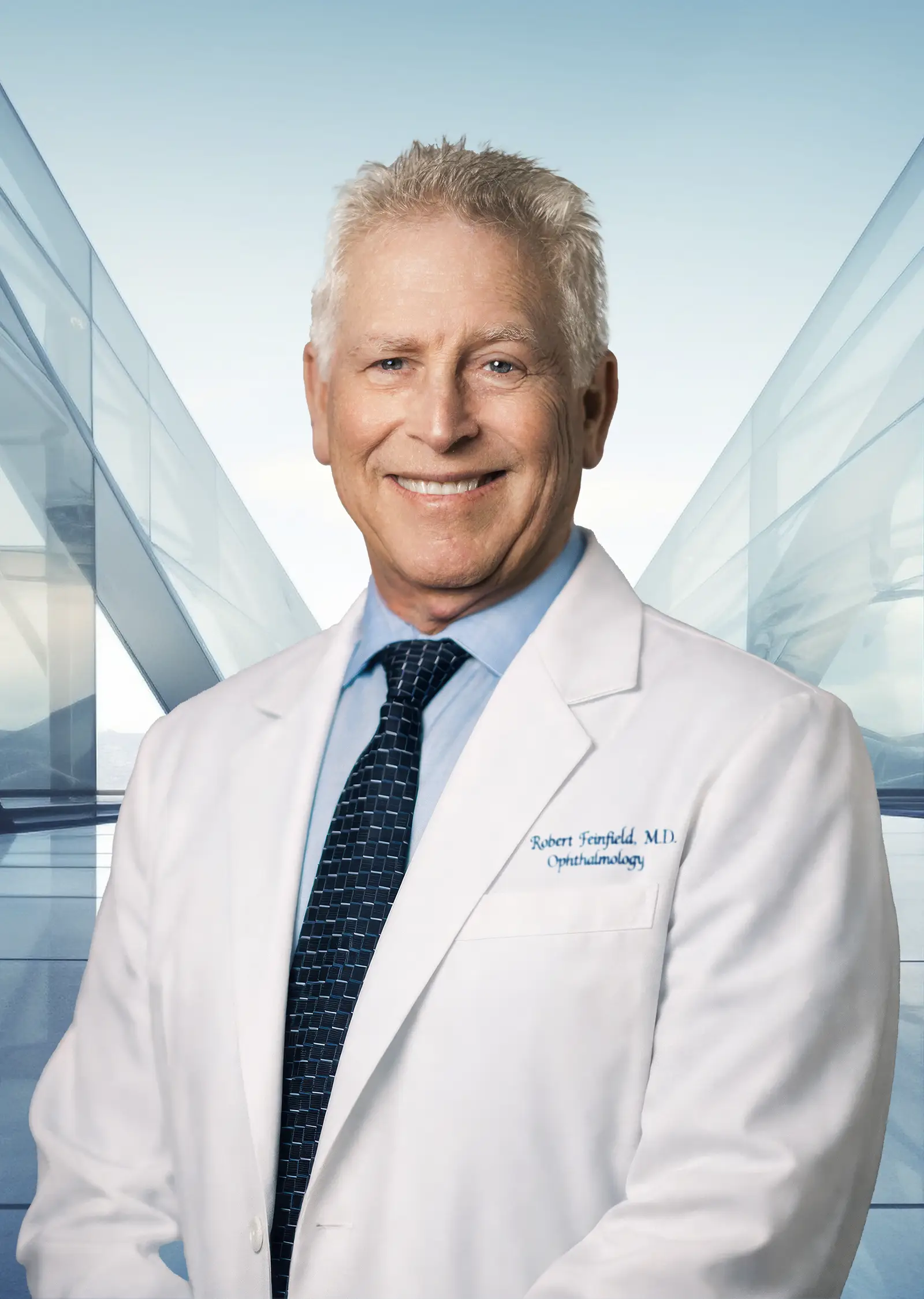
Robert Feinfield, MD
Dr. Feinfield is a board-certified ophthalmologist who sees cataract patients in Burbank and Sherman Oaks. He earned his medical degree with honors from the University of California, San Francisco and completed ophthalmology residency training at the LSU/Ochsner Eye Center.
Berg-Feinfield has served Los Angeles since 1980 and has five offices. Cataract planning includes conventional and premium lens choices, Alcon UNITY technology and LenSx laser options, with surgery at Pacific Surgery Center in Burbank.
What else do Los Angeles patients ask?
Does everyone with astigmatism need a toric lens?
No. The amount and regularity of astigmatism, eye health, visual goals and willingness to wear glasses all matter. A standard lens with glasses, selected corneal incisions or a Light Adjustable Lens may be discussed. Berg-Feinfield can compare the suitable options after measuring your cornea and reviewing the full examination.
Will a toric lens let me read without glasses?
Not necessarily. Toric describes correction of astigmatism, not the lens’s complete range of focus. Near vision also depends on the optical design, chosen target and your eye health. Some toric lenses are combined with multifocal or extended-focus designs, but reading glasses may still be needed for particular tasks.
Is the Light Adjustable Lens the same as a toric lens?
No. A fixed toric lens provides astigmatism correction through its built-in optical design and axis alignment. The Light Adjustable Lens is refined through postoperative light treatments that can address residual astigmatism in eligible eyes. It requires additional appointments and following the prescribed UV-protective eyewear instructions through the treatment period.
Can astigmatism remain after cataract surgery?
Yes. Residual astigmatism can remain even when correction is planned. Healing, measurements, corneal irregularity and lens position can affect the result. After reassessment, your clinician can discuss glasses or other appropriate treatment. New or worsening vision symptoms should be reported to your treating team rather than assumed to be routine.
Does Berg-Feinfield offer toric versions of its premium lenses?
Yes. The practice’s lens pages list PanOptix Pro Toric, Clareon Vivity Toric, TECNIS Odyssey Toric II, TECNIS PureSee Toric II and RayOne EMV Toric. Your surgeon must still determine whether a particular design and available power fit your eyes. Listing a lens does not mean every patient is eligible.
Where can I see Dr. Feinfield for a cataract consultation?
Dr. Robert Feinfield sees patients in Burbank and Sherman Oaks. Request a consultation and confirm the appropriate appointment location with the scheduling team. Cataract surgery is performed at Pacific Surgery Center in Burbank, a separate facility. Bring your optometrist’s records, insurance information and any records of previous LASIK.
Can the Light Adjustable Lens help if I previously had LASIK?
Yes, it may be an option for selected patients. Previous LASIK changes corneal measurements used to predict lens power, and postoperative adjustment may help refine the prescription. It does not correct every source of blur or guarantee an outcome. Your surgeon must assess candidacy, eye health and treatment commitments.
Which Berg-Feinfield office is convenient for you?
Request an evaluation at one of five offices. Confirm the clinician and location for each appointment when scheduling.
Sherman Oaks
13320 Riverside Dr, Ste 114Monday–Friday
8:30 AM–5:30 PM
Serving San Fernando Valley.
Request a consultationBurbank
2625 W Alameda Ave, Ste 208Monday–Friday
8:30 AM–5:30 PM
Serving Burbank, Glendale and the eastern San Fernando Valley.
Request a consultationBeverly Hills
462 N Linden Dr, Ste 441Monday–Friday
8:30 AM–5:30 PM
Serving Beverly Hills, the Westside and nearby Los Angeles neighborhoods.
Request a consultationArcadia
638 W Duarte Rd, Ste 10Monday–Friday
8:30 AM–5:30 PM
Serving San Gabriel Valley, including Arcadia and nearby Pasadena.
Request a consultationValencia (Santa Clarita)
27335 Tourney Rd, Ste 210Monday–Friday
8:30 AM–5:30 PM
Serving Santa Clarita Valley.
Request a consultationChoose a cataract plan around your visual priorities
Bring your prescription history, prior LASIK records and questions about driving, reading and lens choices.
Request a consultation