Medications
Pressure-Lowering Eye Drops
Drops taken once or several times a day to help lower eye pressure.

Once glaucoma is diagnosed, the goal of every treatment is the same: lower the pressure inside the eye. From medicated drops to laser therapy and surgery, Berg-Feinfield Vision Correction offers a full range of glaucoma treatment options serving the greater Beverly Hills and Burbank, CA areas.
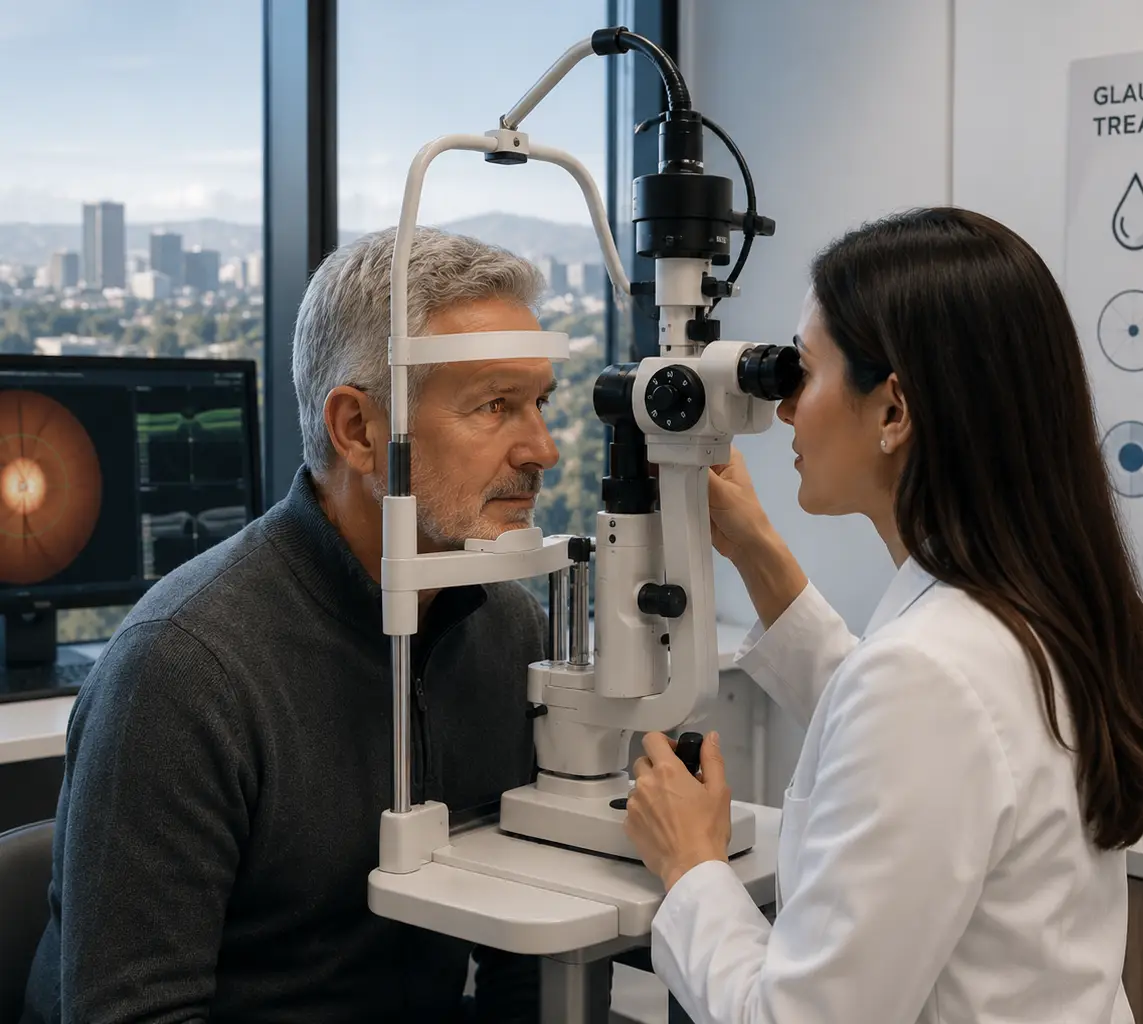
Once a determination is made that glaucoma is present, treatment must be initiated. The goal of treatment for any kind of glaucoma is to lower the eye pressure.
It does not matter how this is accomplished, as long as the pressure is brought down and kept under control. It is important to note that glaucoma cannot be cured. Because it is a lifelong disease, it must be monitored and managed on a regular basis.
Below are the primary treatment options we use for open-angle glaucoma, followed by the preferred approach for closed-angle glaucoma and additional options for cases that do not respond to conventional surgery.
Learn About Glaucoma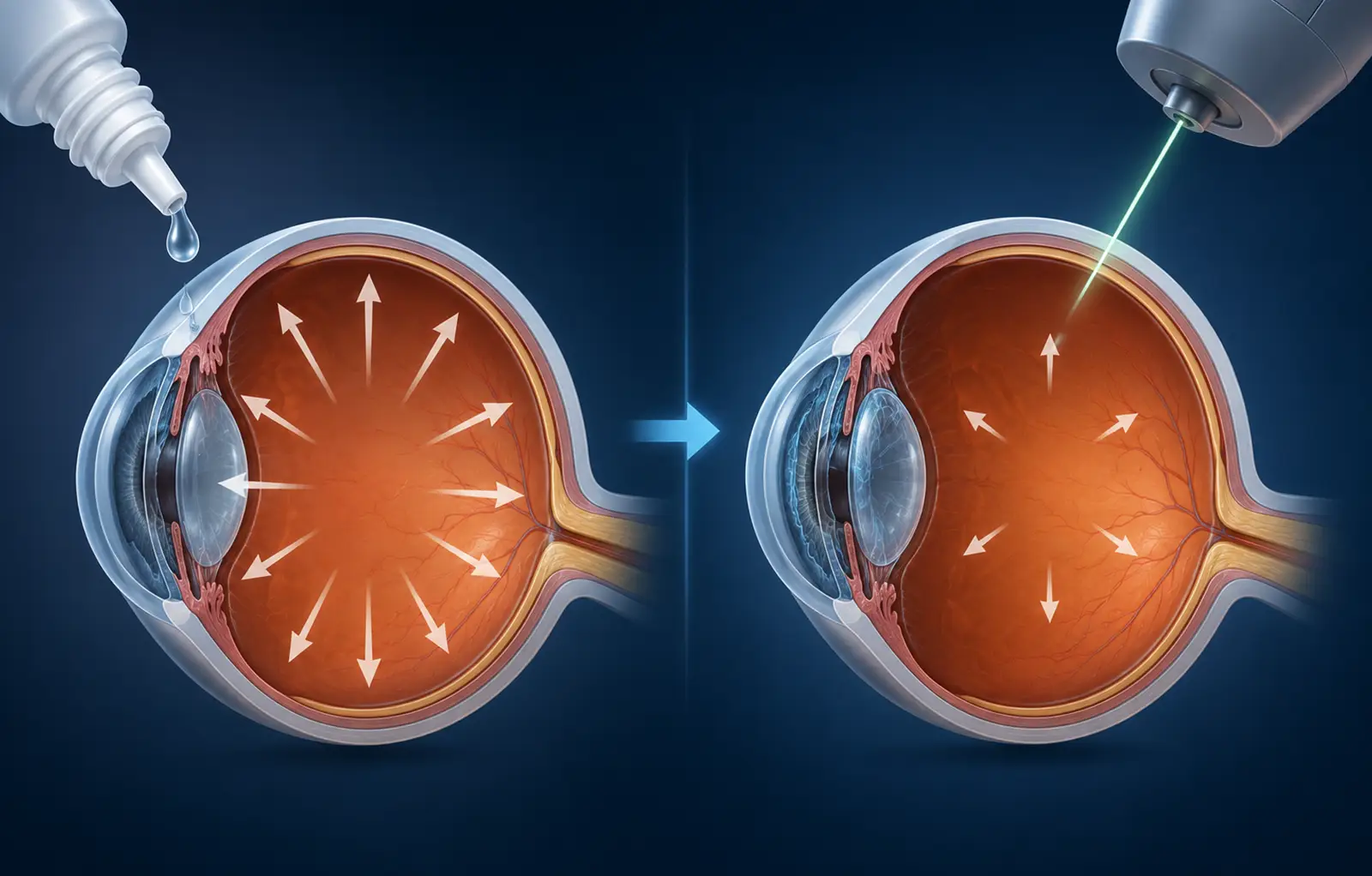
Each option works toward the same objective — lowering intraocular pressure — and treatment is tailored to how advanced the glaucoma is and how well earlier approaches have worked.
Drops taken once or several times a day to help lower eye pressure.
A safe laser option, with little or no side effects, that lowers eye pressure much like medication.
Reserved for more advanced or difficult-to-control glaucoma when drops and laser are not enough.
Medications can be used in the form of drops to help lower eye pressure.
Depending on the medication, the drops need to be administered once or multiple times a day in order to be effective. Compliance — remembering to take the medication — is one of the drawbacks of this option, because studies have shown that a large percentage of people tend to forget to take them. These medications may also have side effects.
Selective Laser Trabeculoplasty is a good option because it is safe, with little or no side effects.
The laser accomplishes what medications do — it lowers the eye pressure. It works well in most people; however, in some individuals it has little or no effect. For patients who are good candidates, laser treatment can reduce or eliminate the need for daily drops.
Learn About Selective Laser TrabeculoplastyGlaucoma surgery is reserved for patients whose glaucoma is more advanced or difficult to control, where medications and laser have not been effective enough.
A surgical procedure used to lower eye pressure when medications and laser have not been effective enough.
A procedure that helps restore the eye's natural drainage to reduce intraocular pressure.
For certain kinds of glaucoma that will not respond to conventional filtering surgery, a glaucoma drainage device may be implanted.
Tube surgery and other drainage procedures are also available for advanced cases. Your surgeon will recommend the approach best suited to the type and severity of your glaucoma.
Learn About Trabeculectomy SurgeryThe preferred treatment for closed or narrow-angle glaucoma uses a laser.
This particular kind of laser, called peripheral iridotomy, is curative and will deepen the angle where the drainage system was initially blocked or narrow. Sometimes people who have closed-angle glaucoma will develop a secondary form of open-angle glaucoma. In that case, any of the treatment options for open-angle glaucoma can be started.
Glaucoma cannot be cured, so ongoing monitoring is an essential part of protecting your vision.
Because glaucoma is a lifelong disease, it must be monitored and managed on a regular basis. Regular follow-up visits allow us to confirm that your eye pressure is well controlled, adjust treatment as needed, and watch for any progression over time. Consistent care is the best way to preserve the vision you have.
Our ophthalmologists offer the full spectrum of glaucoma treatment, from eye drops and laser therapy to advanced surgical care.
Because the goal of every treatment is to lower eye pressure and keep it controlled, we tailor each plan to your type of glaucoma and how well earlier approaches have worked. From the first pressure check through long-term monitoring, our team guides you at every step with the goal of protecting your sight for years to come.
Explore Glaucoma CareGlaucoma cannot be cured, but with the right treatment its progression can be controlled. The sooner treatment begins, the more vision there is to protect.
Our experienced ophthalmologists can help you lower your eye pressure and manage glaucoma for the long term.
Answers to common questions about glaucoma treatment at Berg-Feinfield.
The goal of treatment for any kind of glaucoma is to lower the eye pressure. It does not matter how this is accomplished, as long as the pressure is brought down and kept under control.
No. Glaucoma cannot be cured. Because it is a lifelong disease, it must be monitored and managed on a regular basis to control its progression and protect your vision.
Open-angle glaucoma can be treated with medicated eye drops, Selective Laser Trabeculoplasty, or surgery — such as trabeculectomy, canaloplasty, or tube surgery. Surgery is reserved for more advanced or difficult-to-control cases where medications and laser have not been effective enough.
The preferred treatment for closed or narrow-angle glaucoma is a laser procedure called peripheral iridotomy. It is curative and deepens the angle where the drainage system was blocked or narrow. If a secondary open-angle glaucoma develops, any of the open-angle treatment options can be started.
Certain kinds of glaucoma will not respond to conventional glaucoma filtering surgery. In these cases, a glaucoma drainage device (GDD) is implanted to help lower the eye pressure.
Ready to protect your vision? Request an appointment or call our team to discuss the glaucoma treatment options that are right for you at Berg-Feinfield Vision Correction.
BERG-FEINFIELD · AFTER HOURS
Questions about your vision? Talk with our AI assistant about LASIK, cataract surgery, or general eye care.
Talk with ClaireAI assistant for general information, not medical advice or emergency care. AI can make mistakes. Confirm medical information with your eye care professional.