iDESIGN 2.0 Refractive Suite
1,257-point wavefront mapping that captures your eye's unique optical fingerprint. J&J Vision · FDA approved.


Berg-Feinfield performs LASIK with four integrated FDA-approved platforms. Every step — from diagnostic mapping through laser treatment — is connected by design, producing outcomes that generic LASIK cannot match.

Four integrated, FDA-approved platforms carry your treatment from a 1,257-point diagnostic scan to bladeless flap creation and wavefront-guided laser reshaping — with zero blades used at any step.
1,257-point wavefront mapping that captures your eye's unique optical fingerprint. J&J Vision · FDA approved.
Bladeless flap creation with programmable depth, diameter, and hinge angle. J&J Vision · FDA approved.
ActiveTrak 3-D eye tracking and Variable Repetition Rate wavefront-guided treatment. J&J Vision · FDA approved.
1,050 Hz 6-D eye tracking and a 1 kHz repetition rate — 20 to 50 seconds per eye. Alcon · FDA approved.
The iDESIGN 2.0 Refractive Suite by Johnson & Johnson Vision is one of the most comprehensive diagnostic platforms available for LASIK in Los Angeles. In a single, non-invasive scan, it captures wavefront aberrometry, corneal topography, autorefraction, and keratometry all at once.
Its wavefront sensor maps 1,257 unique data points across your eye, capturing not just lower-order refractive errors — nearsightedness, farsightedness, and astigmatism — but also the higher-order aberrations that glasses and soft contacts cannot correct. These subtle imperfections contribute to halos, glare, and reduced contrast sensitivity. The data transfers directly to the excimer laser, creating a closed-loop process from scan to treatment.

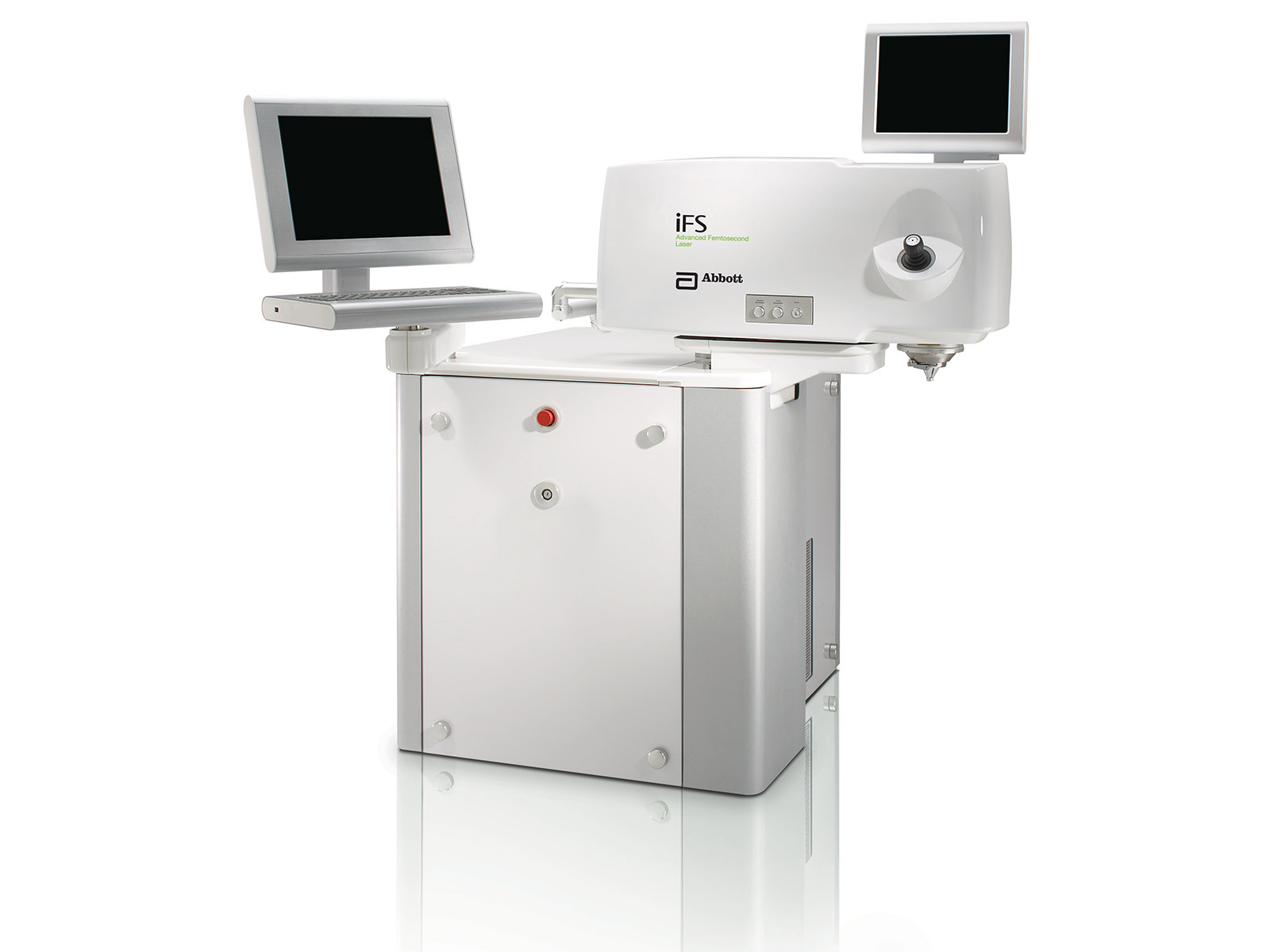
The iFS uses ultrashort pulses of infrared laser energy to precisely separate corneal tissue at a programmed depth — with no blade involved at any stage. Unlike older microkeratome systems that used a mechanical blade, the iFS is entirely computer-guided.
Dr. Berg specifies flap depth, diameter, hinge position, and side-cut angle individually for each patient based on their corneal topography and anatomy. The result is a consistently precise flap with smooth, reproducible edges that repositions cleanly after treatment and heals predictably. The iFS integrates directly with iDESIGN 2.0 data, so the surgical plan flows continuously from mapping through flap creation to excimer treatment.
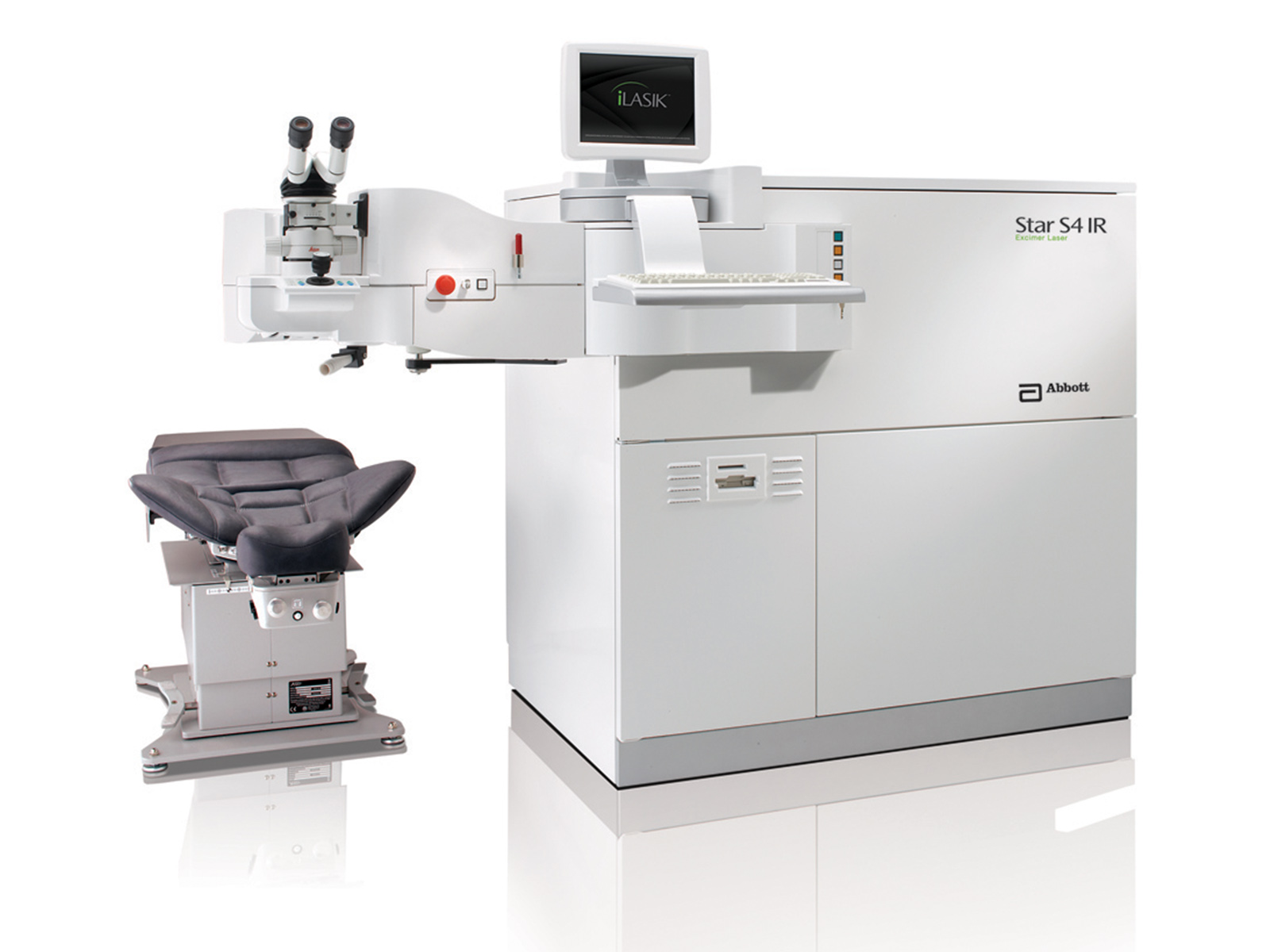
The STAR S4 IR by Johnson & Johnson Vision performs the corneal reshaping step of LASIK. It is specifically validated to work with iDESIGN 2.0 treatment data — the diagnostic and treatment systems are designed as a matched pair.
ActiveTrak 3-D eye tracking monitors eye position continuously and compensates for movement in three dimensions, including cyclotorsion — rotational drift that is critical to precise astigmatism correction. If the eye moves outside the safe zone, the laser pauses instantly and resumes only when realigned. Variable Repetition Rate technology adjusts pulse frequency based on the tissue being treated, delivering energy efficiently and reducing treatment time for higher prescriptions.

The Alcon WaveLight Pro delivers laser corneal reshaping with a 1 kHz repetition rate and 1,050 Hz 6-dimensional eye tracking, compensating for movement in every direction, including cyclotorsion.
A faster laser means less corneal tissue exposure time. The WaveLight Pro typically completes treatment in 20 to 50 seconds per eye, compared with 60 seconds or more on older platforms. If the eye moves beyond a safe threshold, the laser pauses automatically and resumes only when repositioned. Combined with the iDESIGN 2.0 data pipeline, it executes each patient's wavefront-guided plan with sub-micron precision.
Not all LASIK is created equal. Diagnostic accuracy, laser precision, and system integration all shape your outcome — and every platform at Berg-Feinfield feeds directly into the next.
iDESIGN 2.0 captures 1,257 data points, including higher-order aberrations standard lenses cannot correct. The treatment plan is only as good as the data behind it.
The WaveLight Pro tracks eye position at 1,050 Hz and adjusts delivery in real time, keeping every pulse precisely where it belongs as the eye moves.
No mechanical blade contacts your eye at any point. Femtosecond flap creation reduces blade-related risk and gives the surgeon precise control over flap dimensions.
Wavefront-guided treatment addresses higher-order aberrations — potentially improving contrast, reducing glare and halos, and delivering better night vision than conventional LASIK.
Wavefront data points captured before a single pulse is delivered.
Laser treatment time per eye on the WaveLight Pro.
Blades used — fully bladeless from flap creation through treatment.
Dr. Alan M. Berg co-founded Berg-Feinfield and is one of the most experienced refractive surgeons in the Los Angeles area — among the first in Southern California to adopt iDESIGN wavefront-guided, bladeless LASIK.
Tens of thousands of LASIK and refractive procedures performed across the LA area.
Among LA's first to offer bladeless, wavefront-guided LASIK and iLink corneal cross-linking.
Contributed to the data shaping how these technologies are evaluated and approved.
Patients who are not right for LASIK are offered PRK, EVO ICL, or another fitting approach.
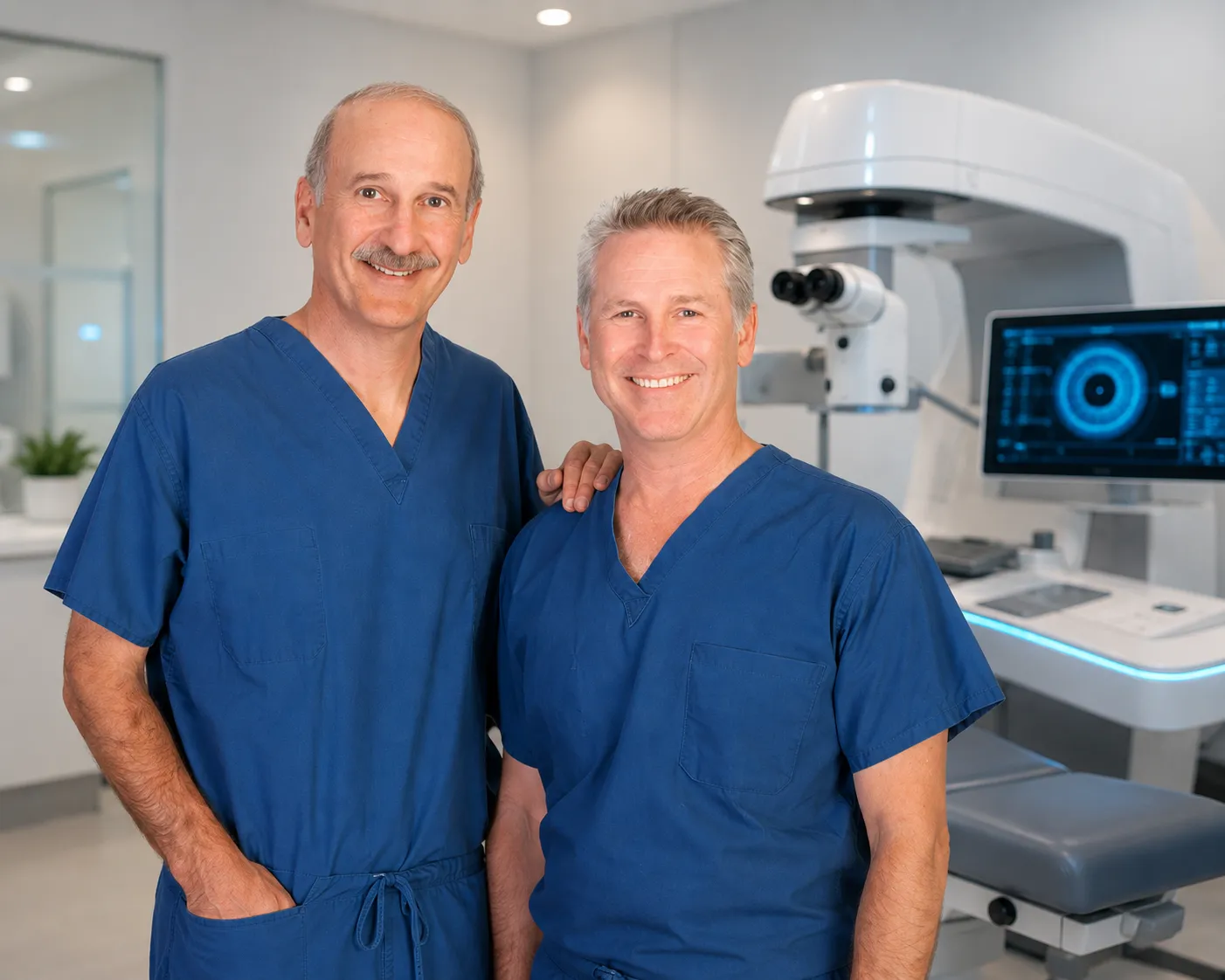
A complimentary evaluation at Berg-Feinfield includes a full iDESIGN 2.0 wavefront scan and candidacy review — so you leave knowing exactly where you stand and what your options are.
BERG-FEINFIELD · AFTER HOURS
Questions about your vision? Talk with our AI assistant about LASIK, cataract surgery, or general eye care.
Talk with ClaireAI assistant for general information, not medical advice or emergency care. AI can make mistakes. Confirm medical information with your eye care professional.