You Want a Fast Recovery
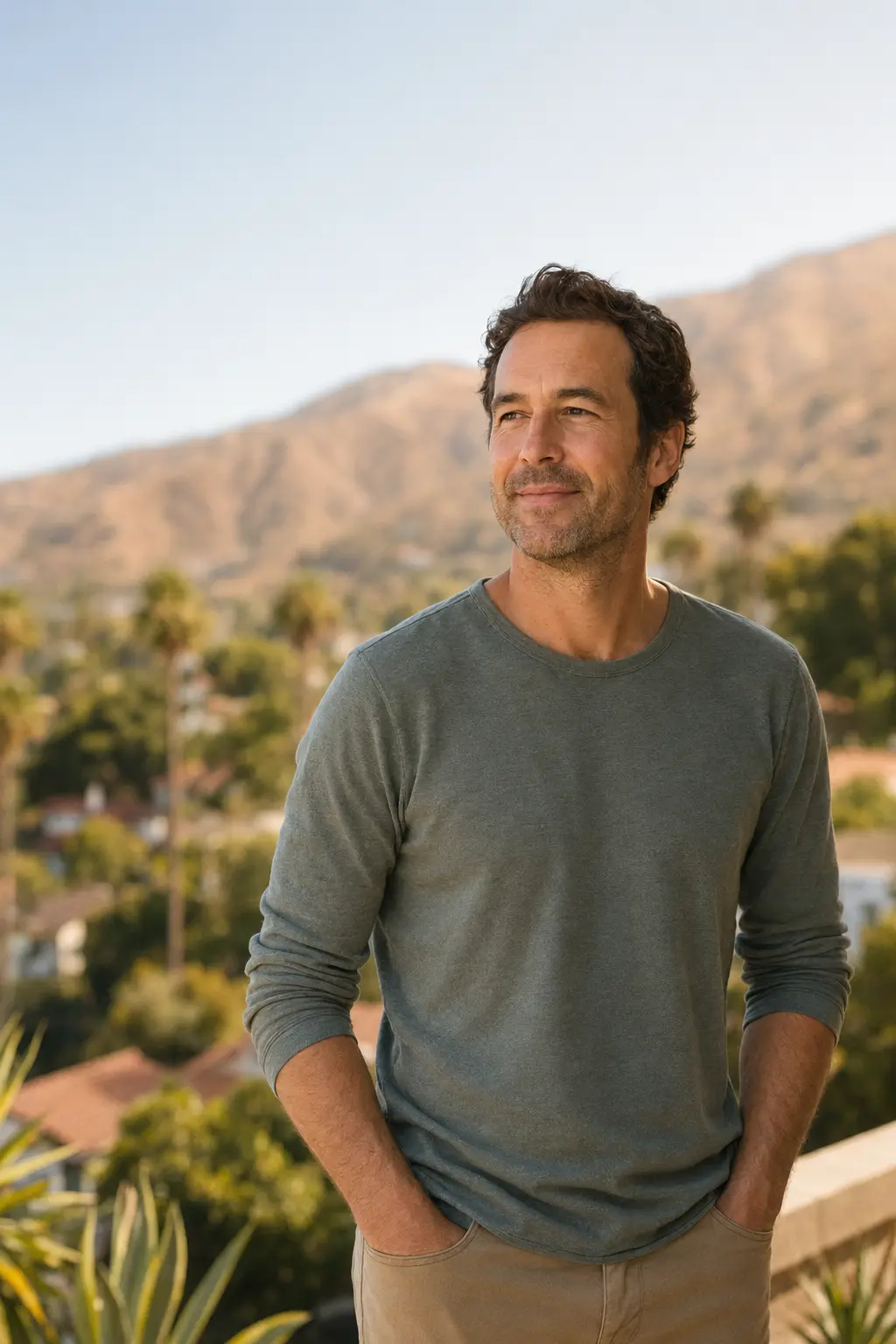
Most LASIK patients see clearly by the next morning and return to work the following day — ideal if you can't spare a week of blurry vision.

LASIK and PRK are both laser vision-correction procedures with excellent long-term results — the difference is how the cornea is prepared and how you recover. Berg-Feinfield performs both in Los Angeles, so your recommendation is matched to your eyes, not to the one procedure a clinic happens to sell.

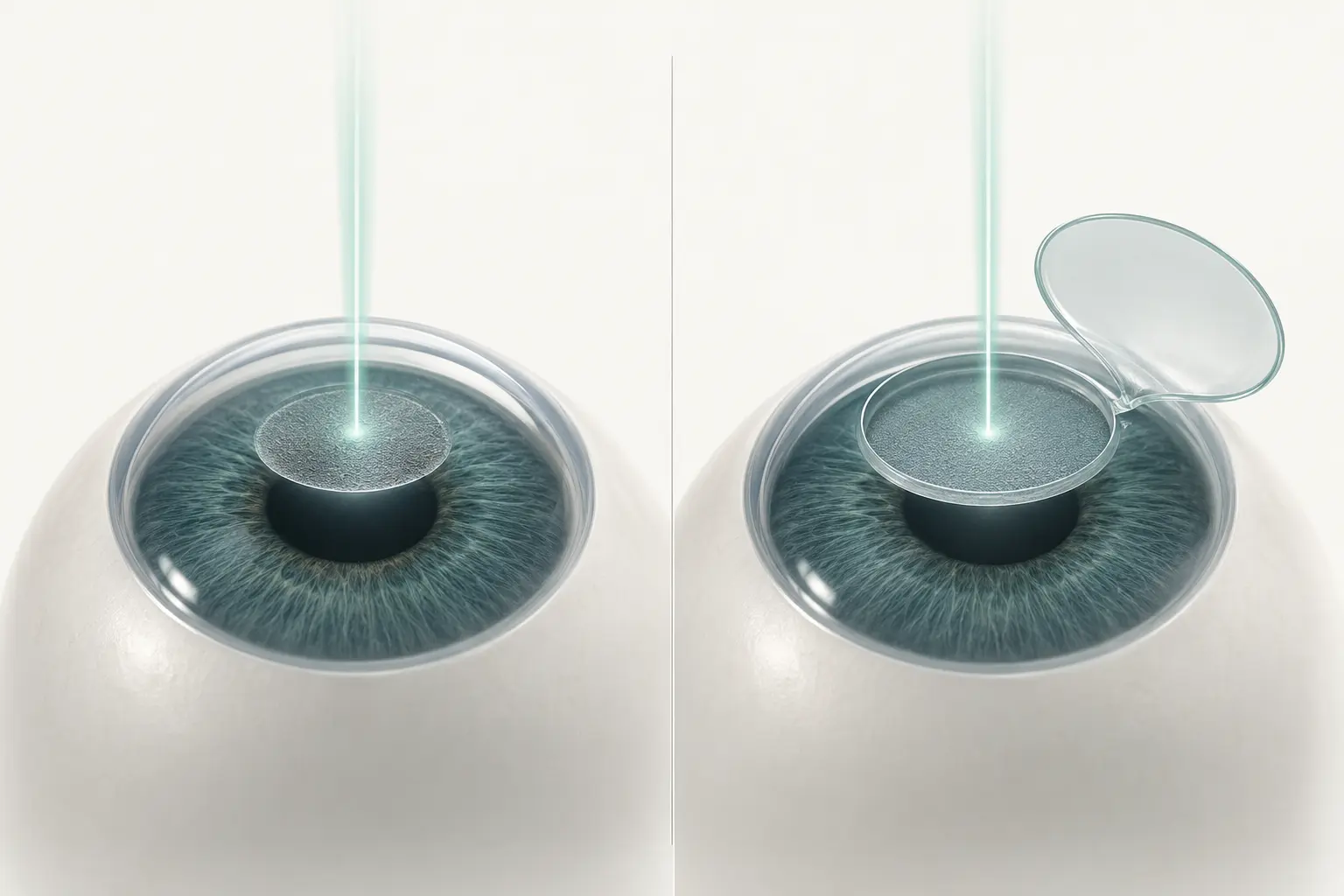
Both procedures use the same excimer laser to reshape the cornea and correct nearsightedness, farsightedness, and astigmatism. The one real difference is the surface: LASIK creates a thin corneal flap that's lifted and replaced, giving fast, comfortable recovery. PRK removes the cornea's outer layer entirely and lets it regrow — a few more days of recovery, but no flap at all.
For most people with healthy, adequately thick corneas, LASIK is the more comfortable experience. PRK becomes the better — sometimes safer — choice for thinner corneas, certain dry-eye profiles, and anyone whose life or work carries a real risk of eye trauma. One-year visual outcomes for the two are very similar; the decision is mostly about the recovery path and your individual anatomy.
Compare Side by SideSame laser, same corrections, similar long-term results. Here's where they differ — and what each difference means for you.
 LASIK
PRK
LASIK
PRK
| LASIK | PRK | |
|---|---|---|
| How the cornea is prepared | A thin flap is created, lifted, then laid back down after treatment | The outer epithelial layer is removed and regrows naturally over a few days |
| Corneal flap | Yes | No flap at all |
| Discomfort | Minimal — mild scratchiness for a few hours | Moderate — a few days of irritation while the surface heals |
| Visual recovery | Sharp for most by the next morning | Gradual — functional in days, fully sharp over a few weeks |
| Back to work | Usually the next day | Typically several days to a week |
| Best for | Healthy corneas of adequate thickness wanting the fastest recovery | Thinner corneas, some dry-eye cases, high trauma-risk lifestyles |
| Contact sports & trauma risk | Small long-term risk of flap displacement from a direct blow | No flap — often preferred for athletes, military, and first responders |
| Dry eye | Can temporarily increase dryness; usually manageable | Often preferred when dry eye is a concern |
| Long-term results | Very similar — comparable visual outcomes at one year for suitable candidates | |
Neither procedure is “better” in the abstract — the right one depends on your corneal thickness, tear film, prescription, and lifestyle. That's exactly what a LASIK/PRK evaluation is for.
For most candidates with healthy corneas, LASIK offers the fastest, most comfortable path to clear vision.
Most LASIK patients see clearly by the next morning and return to work the following day — ideal if you can't spare a week of blurry vision.
LASIK requires enough thickness to safely create a flap. If your corneal mapping confirms it, you have the full range of options.
Because the surface layer is preserved, most patients feel only light scratchiness for a few hours rather than several days.
PRK isn't a “lesser” option — for the right eyes, it's the safer and smarter one. Learn more about PRK.
Because PRK creates no flap, it preserves more corneal tissue — making it the safer choice when your cornea is on the thinner side.
No flap means no flap to displace. PRK is frequently preferred for athletes in contact sports, military personnel, and first responders.
PRK can be gentler on the corneal nerves involved in tear production, making it a better fit for some patients prone to dry eye.
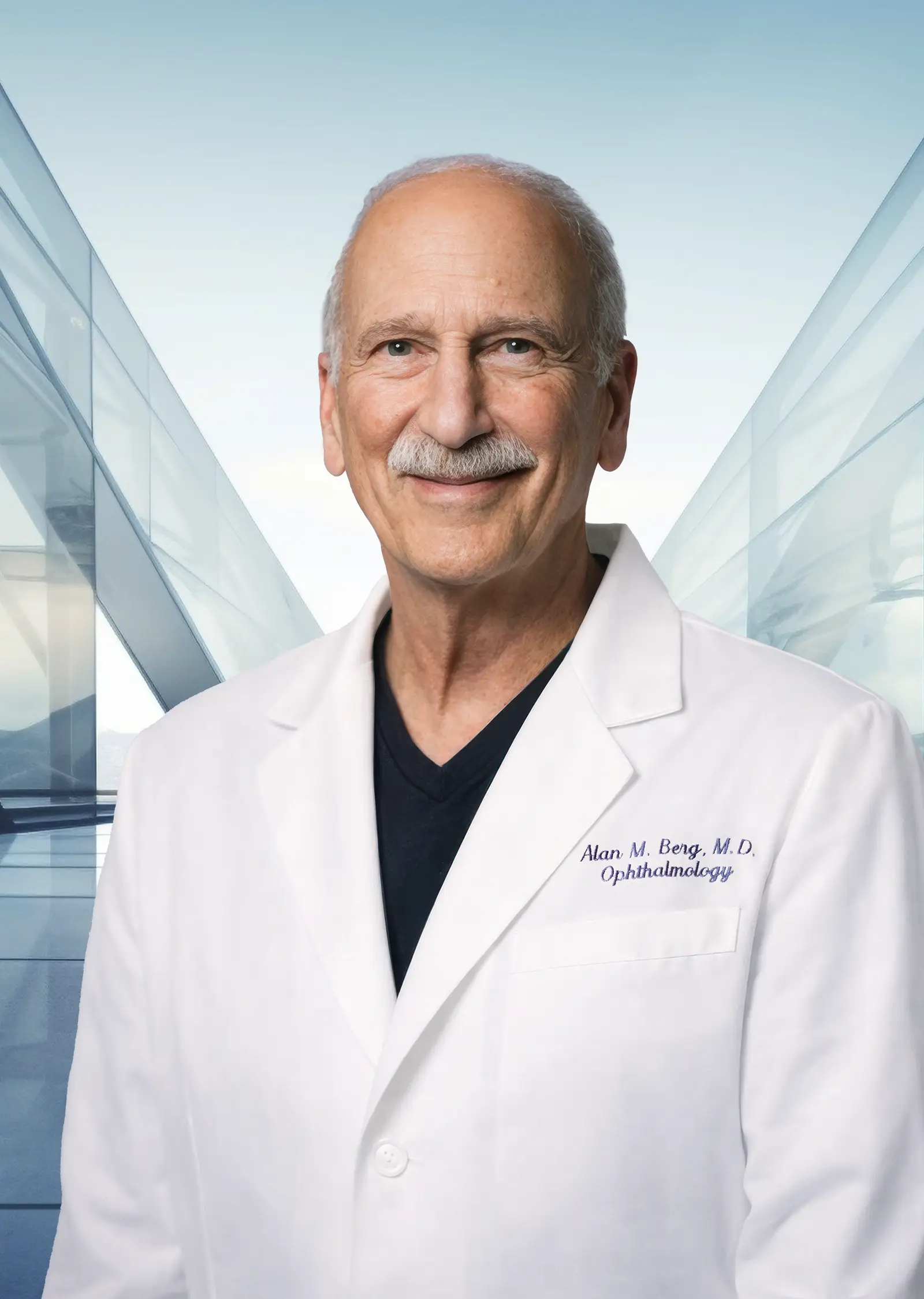
Berg-Feinfield's LASIK and refractive surgery are led by co-founder Dr. Alan M. Berg, who has performed corneal and refractive surgery in Southern California for more than 30 years — and offers both LASIK and PRK.
Because we perform LASIK and PRK — plus EVO ICL and refractive lens exchange — our recommendation is driven by your eyes, not by the one procedure a clinic is set up to sell.
Co-founder of Berg-Feinfield, among the first in Southern California to offer corneal cross-linking, and a surgical educator who has trained ophthalmologists nationally.
Your evaluation includes detailed corneal tomography and pachymetry — the measurements that actually determine whether LASIK or PRK is right for you.
We'll tell you honestly which procedure suits your eyes — or if you're better served by an alternative or by waiting.
A Berg-Feinfield evaluation measures your corneas and gives you an honest recommendation — LASIK, PRK, or an alternative. Five Los Angeles-area locations, one straight answer.
BERG-FEINFIELD · AFTER HOURS
Questions about your vision? Talk with our AI assistant about LASIK, cataract surgery, or general eye care.
Talk with ClaireAI assistant for general information, not medical advice or emergency care. AI can make mistakes. Confirm medical information with your eye care professional.