Pre-Operative Evaluation
Comprehensive corneal tomography, pachymetry, and topographic review to confirm the diagnosis, stage the disease, and determine whether Epioxa epi-on or standard epi-off CXL is your best option.

Epioxa by Glaukos, now in Los Angeles — the first FDA-approved epi-on CXL therapy, which preserves your corneal epithelium with no removal, no wound, and no weeks of painful recovery. Berg-Feinfield offers Epioxa across all five of our Los Angeles-area locations. FDA approved October 2025.


If you've been diagnosed with keratoconus, you've probably heard of corneal cross-linking — the procedure that can stop the condition from getting worse. Until now, its biggest downside was recovery: standard treatment required scraping off the cornea's outer layer, leaving an open wound that took weeks to heal and was genuinely painful. Many patients put it off for that reason.
Epioxa changes that. It's the first FDA-approved cross-linking treatment that works without removing any part of your eye. The drop formula is applied directly to the cornea, seeps through the surface on its own, and is then activated by UV light to strengthen the tissue underneath — no scraping, no open wound, and no weeks of recovery. Berg-Feinfield is the first practice in Los Angeles to offer Epioxa.
About Keratoconus30+
Years treating keratoconus
Age 13+
Eligible patients
5
LA-area locations
0
Epithelium removed
FDA approved. Epioxa received FDA approval on October 20, 2025, indicated for adults and pediatric patients aged 13 and older with keratoconus, with commercial availability beginning in early 2026. In two large clinical trials of over 400 patients, it stopped progression in the vast majority of cases, with a tolerability rate of 91.5%.
Epioxa strengthens the cornea using drops and light — without ever disturbing the surface of your eye.
A specially formulated drop is placed on the eye and works its way through the surface on its own — no scraping or removal required.
A follow-up drop continues to saturate the deeper corneal tissue, preparing it for the light treatment.
You wear comfortable specialized goggles that bathe the eye in oxygen — the key to making the light treatment work without removing the corneal surface.
A gentle UV light is directed at the eye for a set period, activating the drops and strengthening the collagen fibers to stop the cornea from thinning further.
The cornea is now stronger and more stable, progression halts, and some patients even notice their cornea becomes slightly flatter over time — with no hospital stay, no patch, and no weeks off work.
From evaluation through a fast recovery, here's how the Epioxa procedure runs at our practice.
Comprehensive corneal tomography, pachymetry, and topographic review to confirm the diagnosis, stage the disease, and determine whether Epioxa epi-on or standard epi-off CXL is your best option.
Modified riboflavin is applied sequentially and penetrates your intact epithelium to saturate the corneal stroma — no cuts, no scraping, and no wound of any kind.
You wear boost goggles delivering supplemental oxygen while the KXL system applies calibrated UV-A light. The photochemical reaction creates new collagen bonds to stiffen the cornea — total treatment about 60–90 minutes.
Because the epithelium is never disturbed, most patients return to work and normal activities within days — a dramatically different experience than the 1–4 weeks required after standard epi-off CXL.
Berg-Feinfield offers both procedures. The right choice depends on your disease severity, corneal thickness, and individual profile. Here's how they compare.
| Feature | Epioxa (Epi-On) | Photrexa / iLink (Epi-Off) |
|---|---|---|
| Epithelium | Preserved — intact throughout | Removed before treatment |
| Pain & Discomfort | Minimal — no epithelial wound | Moderate — 3–5 days of significant discomfort |
| Recovery Time | Days to 1–2 weeks | 1–4 weeks for full healing |
| Infection Risk | Lower — intact epithelium | Elevated — open corneal surface |
| Corneal Haze Risk | Minimal | Possible — managed with steroids |
| FDA Indication | Ages 13+ with keratoconus | Progressive keratoconus & post-LASIK ectasia |
| Long-Term Data | Phase 3 trials (2024–2025); accumulating | Extensive — years of real-world outcomes |
The epi-off procedure remains appropriate for certain cases — advanced keratoconus, specific corneal thickness measurements, or post-refractive surgery ectasia. Your Berg-Feinfield surgeon will evaluate your tomography, pachymetry, and disease stage to determine which approach is optimal for your corneas.
Epioxa is FDA-indicated for adults and pediatric patients aged 13 and older with progressive keratoconus. The ideal candidate includes:
Progressive keratoconus confirmed by topographic change over time.
Enough corneal thickness to safely support the procedure.
Particularly teenagers with active progression, where earlier intervention protects more vision.
Cases where Epioxa's efficacy profile is optimal, and those who want to minimize discomfort and recovery time — including patients who delayed epi-off CXL over recovery concerns.
A note on young patients: keratoconus is most often diagnosed during the teenage years and progresses most aggressively in young patients — the younger the diagnosis, the more vision is at stake. Epioxa's approval for ages 13 and older makes proactive intervention more practical for students and athletes who can't afford weeks of recovery. If your child has been diagnosed or flagged as a keratoconus suspect, we strongly encourage a timely evaluation.
Our keratoconus team combines decades of surgical experience with fellowship-level corneal specialization and the full spectrum of CXL technology.
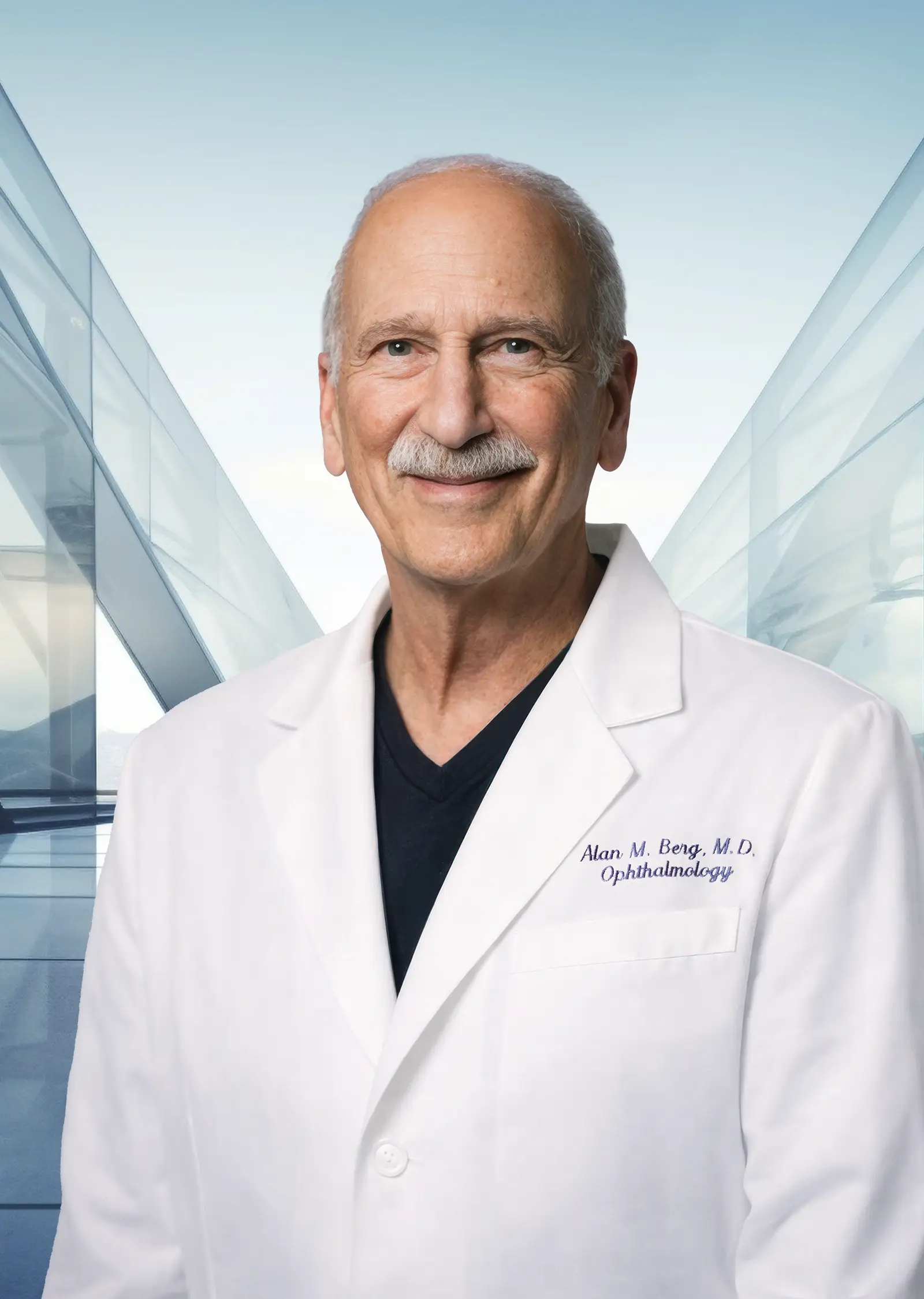
Co-Founder, Berg-Feinfield Vision Correction
The practice's primary surgeon for corneal cross-linking, with 30+ years of keratoconus and corneal surgery expertise. Among the first in Southern California to offer Glaukos's iLink CXL platform, an FDA clinical study participant, and a surgical educator who has trained ophthalmologists nationally. Sees keratoconus patients at our Burbank, Sherman Oaks, and Beverly Hills offices.
Full profile →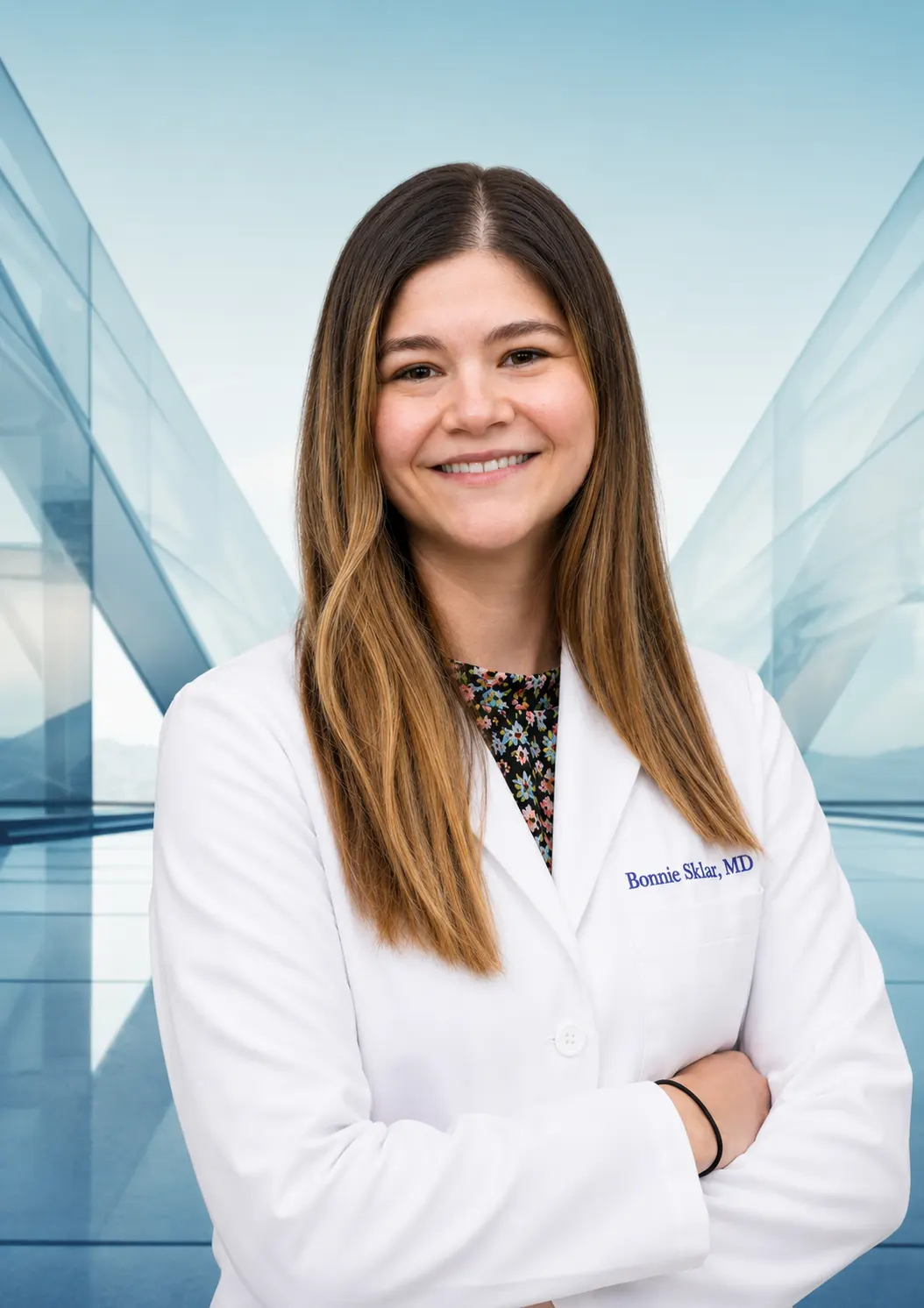
Fellowship-Trained Cornea Specialist
Fellowship-trained at Duke University Eye Center in Cornea & External Disease, with residency at Wills Eye Hospital in Philadelphia. Her focus includes keratoconus evaluation, corneal transplantation (DMEK, DSEK, PKP), ocular surface disease, and advanced-technology cataract surgery. Sees keratoconus patients at our Burbank and Sherman Oaks offices.
Full profile →Berg-Feinfield is the first practice in Los Angeles to offer Epioxa, backed by 30+ years of keratoconus experience and the full range of cross-linking technology.
The first and only practice in Los Angeles to offer FDA-approved epi-on cross-linking — no epithelial removal, no wound, no weeks of painful recovery.
Decades of dedicated keratoconus and cross-linking expertise, led by a surgeon among the first in Southern California to offer CXL.
We offer both epi-on Epioxa and standard epi-off CXL, so your treatment is matched to your corneas rather than a one-size-fits-all protocol.
We evaluate your corneas and build a treatment plan around your schedule, your goals, and your long-term vision.

Keratoconus doesn't have to define your vision. Berg-Feinfield's keratoconus team — with 30+ years of experience and the full spectrum of CXL technology — is ready to evaluate your corneas and build a treatment plan around your life.
BERG-FEINFIELD · AFTER HOURS
Questions about your vision? Talk with our AI assistant about LASIK, cataract surgery, or general eye care.
Talk with ClaireAI assistant for general information, not medical advice or emergency care. AI can make mistakes. Confirm medical information with your eye care professional.