Many Problems Have No Warning Signs
Many serious, vision-threatening problems have no early symptoms. Glaucoma, for example, presents no symptoms until actual vision loss has already occurred.
Comprehensive eye examinations are essential — not only to determine whether you need correction to see well, but also to maintain the health of your eyes. Available by appointment at our Burbank and Sherman Oaks offices.

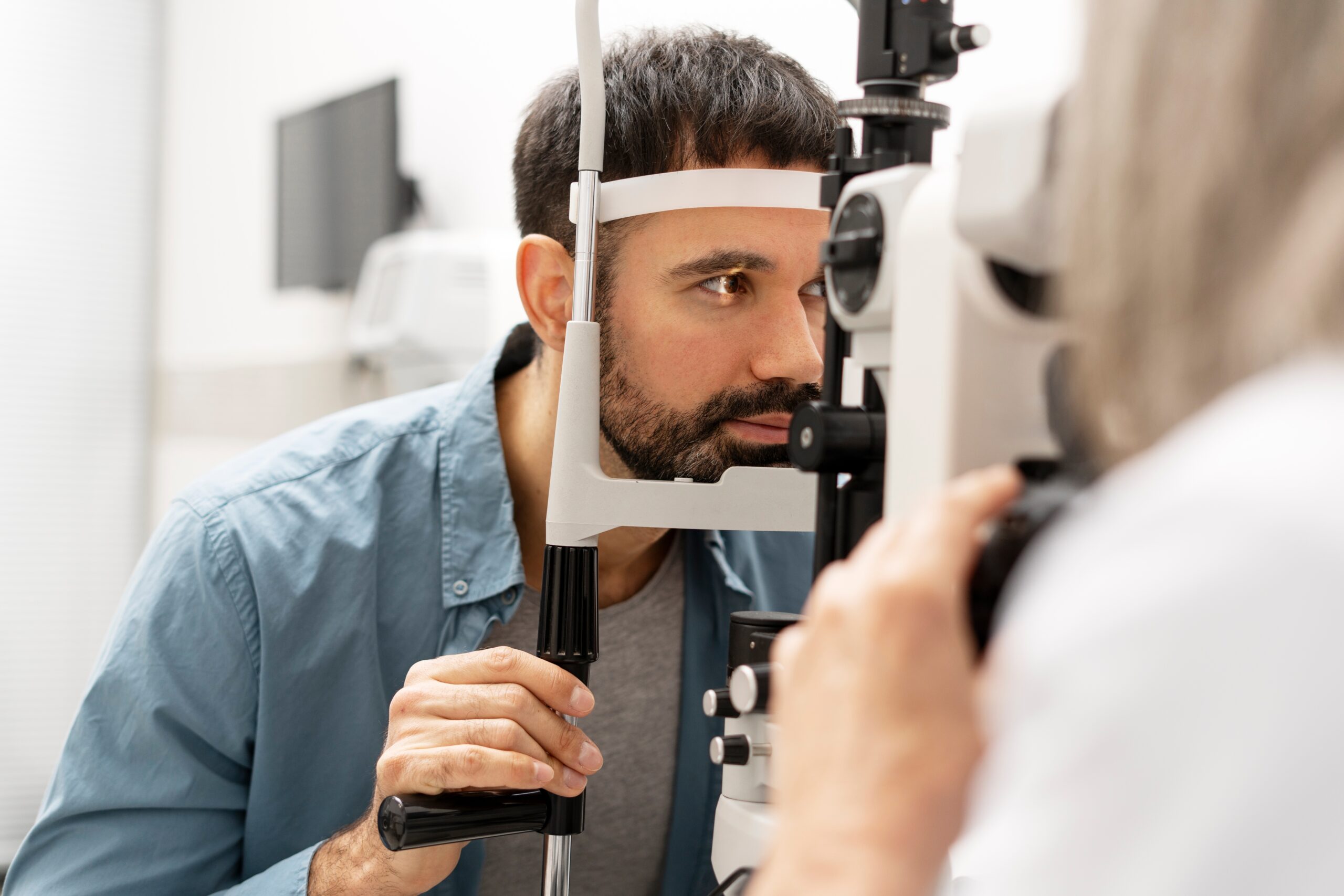
Comprehensive eye examinations are very important not only to determine if you need correction to see well, but also to maintain the health of your eye.
While some eye diseases have obvious symptoms such as red eyes, light sensitivity, or flashing lights, many serious, vision-threatening problems have no warning signs. Glaucoma, for example, presents no symptoms until actual vision loss occurs.
A comprehensive eye examination at Berg-Feinfield Vision Correction involves a series of tests designed to evaluate your vision and check for eye diseases. Each test is necessary and allows your doctor to evaluate a different aspect of your vision.
See What's IncludedRegular eye exams protect more than your vision — they can catch serious problems before you'd ever notice a symptom.
Many serious, vision-threatening problems have no early symptoms. Glaucoma, for example, presents no symptoms until actual vision loss has already occurred.
Comprehensive eye exams can also detect diabetes, hypertension, retinal holes or tears, and other important treatable medical conditions.
Proper eye care and regular evaluations can help prevent vision loss by catching problems early, when they are most treatable.
A series of tests, each evaluating a different aspect of your vision and eye health.
Using a light, your doctor checks the exterior of your eyes — how your pupils respond, the position and movement of your eyes, eyelids, and lashes, and the clarity of your cornea and iris.
Examines the muscles that move your eyes. As you follow an object such as a pen in six directions, your doctor checks for weakness or uncontrolled movement.
Measures how sharply you can see at a distance using an eye chart, one eye at a time. Your acuity is expressed as a fraction, such as 20/20 vision.
Looking through a phoropter, your doctor finds the combination of lenses that gives you the sharpest vision and determines your corrective lens prescription.
Determines whether you have difficulty seeing in any areas of your peripheral vision — the areas at the sides of your visual field.
A microscope with an intense line of light lets your doctor examine the cornea, iris, lens, and anterior chamber at the front of your eye.
Examines the back of your eye — the retina, optic disc, choroid, and blood vessels. Dilating drops may be used; vision stays blurry and light-sensitive for several hours, so sunglasses are recommended.
Measures your intraocular pressure — the pressure inside your eyes. With tests like OCT, a visual field, and a detailed retinal exam, it helps determine your risk for glaucoma.
Ultra-widefield retinal imaging that captures a comprehensive view of the retina in a single, non-invasive capture — often without pupil dilation — supporting early detection of diabetic retinopathy, macular degeneration, and glaucoma.
A comprehensive exam looks for eye and whole-body conditions — many before you'd ever notice a symptom.
Often silent until vision is lost. Tonometry, OCT, visual field testing, and a detailed retinal exam help determine your risk for its development or progression.
Damage to the retina's blood vessels related to diabetes. Ultra-widefield Optomap imaging supports early detection and management.
A leading cause of central vision loss. Advanced retinal imaging helps detect and manage it as early as possible.
A comprehensive eye exam can reveal signs of diabetes and high blood pressure — sometimes before other symptoms appear.
Detected during a dilated retinal examination of the back of the eye, when they are most treatable.
Nearsightedness, farsightedness, and astigmatism are measured during refraction so your doctor can prescribe the correction that gives you the sharpest vision.
A little preparation helps your doctor give you the most accurate assessment. Here's what to gather and bring.
Before your visit, note any current symptoms (flashes of light, difficulty seeing at night, temporary double vision, or loss of vision), past eye injuries or surgeries, and your family history of eye problems such as glaucoma, macular degeneration, or cataracts. Also list all prescription and over-the-counter medications and any general health conditions.
Bring your glasses, contact lenses, or both; a list of all prescription and over-the-counter drugs you currently take; and your medical/health or vision insurance card. It's also worth asking whether the exam will temporarily affect your vision and whether you'll need someone to drive you home.
Comprehensive eye care from an ophthalmology practice with the training and technology to protect your long-term vision.
Your comprehensive exam is performed by the ophthalmologists at Berg-Feinfield Vision Correction, with the training to diagnose and treat eye disease.
From ultra-widefield Optomap retinal imaging to OCT, visual field testing, and tonometry, we use advanced tools to catch problems early.
Many vision-threatening conditions have no warning signs. A thorough exam helps detect glaucoma, diabetic retinopathy, and more before symptoms appear.
If your exam reveals a need for LASIK, cataract surgery, or other treatment, our specialists can guide your next steps.
Comprehensive eye exams are available at our Burbank and Sherman Oaks offices.
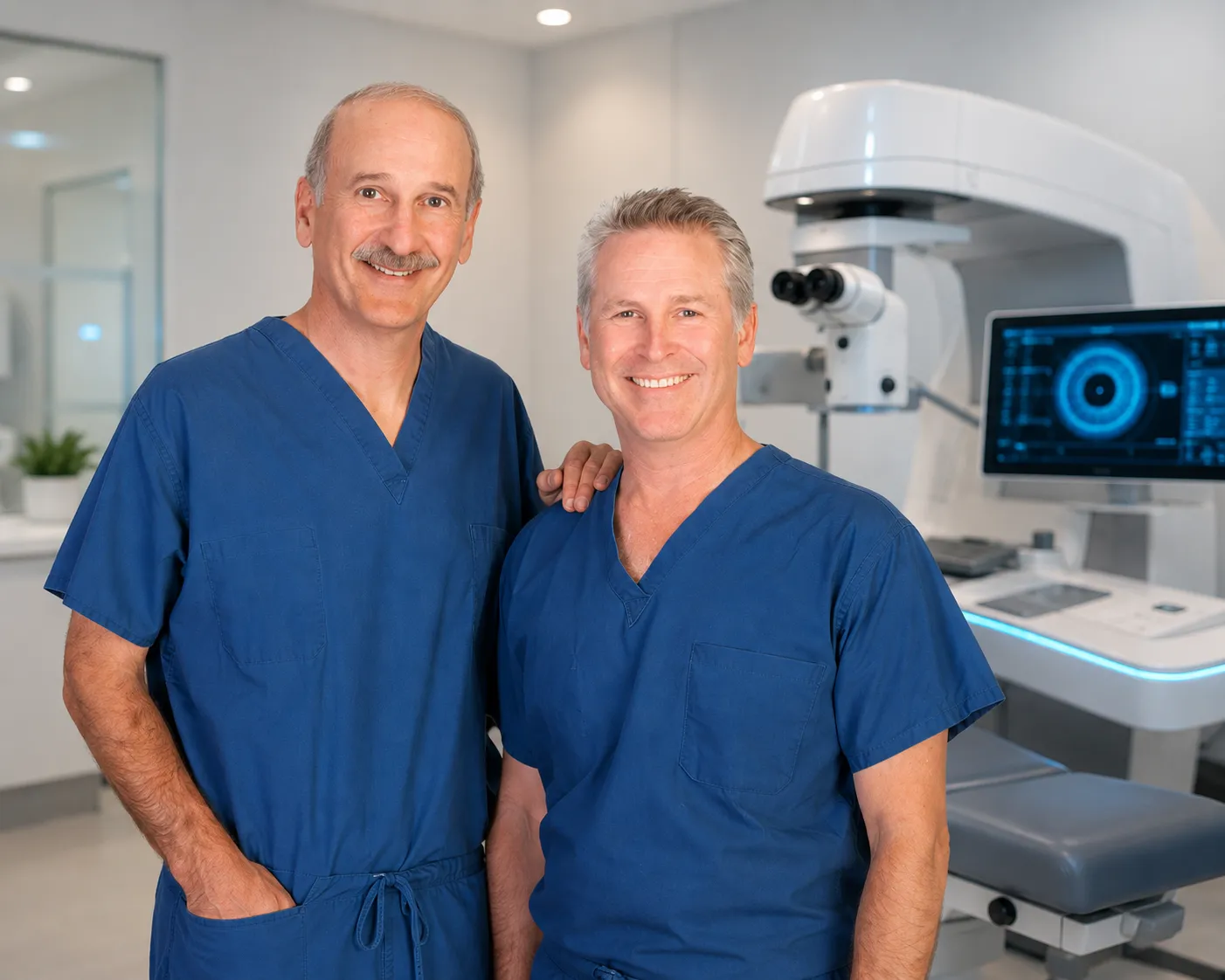
To learn more about our services or to schedule a comprehensive eye exam, LASIK consultation, or cataract evaluation, contact Berg-Feinfield Vision Correction. Our team is here to help you achieve clearer, healthier vision with the highest level of care.
Available at our Burbank and Sherman Oaks offices.
BERG-FEINFIELD · AFTER HOURS
Questions about your vision? Talk with our AI assistant about LASIK, cataract surgery, or general eye care.
Talk with ClaireAI assistant for general information, not medical advice or emergency care. AI can make mistakes. Confirm medical information with your eye care professional.