Vision That Lasts a Lifetime
Once you reach peak clarity, your results are designed to stay — vivid, high-definition vision for your favorite activities.

Tired of glasses and contacts? Refractive Lens Exchange is a modern vision correction procedure — often recommended as an excellent LASIK alternative — that delivers crystal-clear vision built to last a lifetime.

Refractive Lens Exchange (RLE) is a vision correction procedure that removes the natural lens of your eye and replaces it with an artificial intraocular lens (IOL) set to your prescription. It can correct nearsightedness, farsightedness, astigmatism, and presbyopia, and can be customized to your lifestyle and vision goals depending on the IOL you choose.
A unique benefit of RLE is that it can actually prevent cataracts from forming in the future, since cataracts develop on the natural lens — which is removed and replaced during the procedure. In fact, RLE is almost identical to cataract surgery, but performed to correct refractive errors rather than to treat cataracts. After RLE, most patients enjoy complete freedom from glasses and contacts and reliable, high-definition vision.
See If You Qualify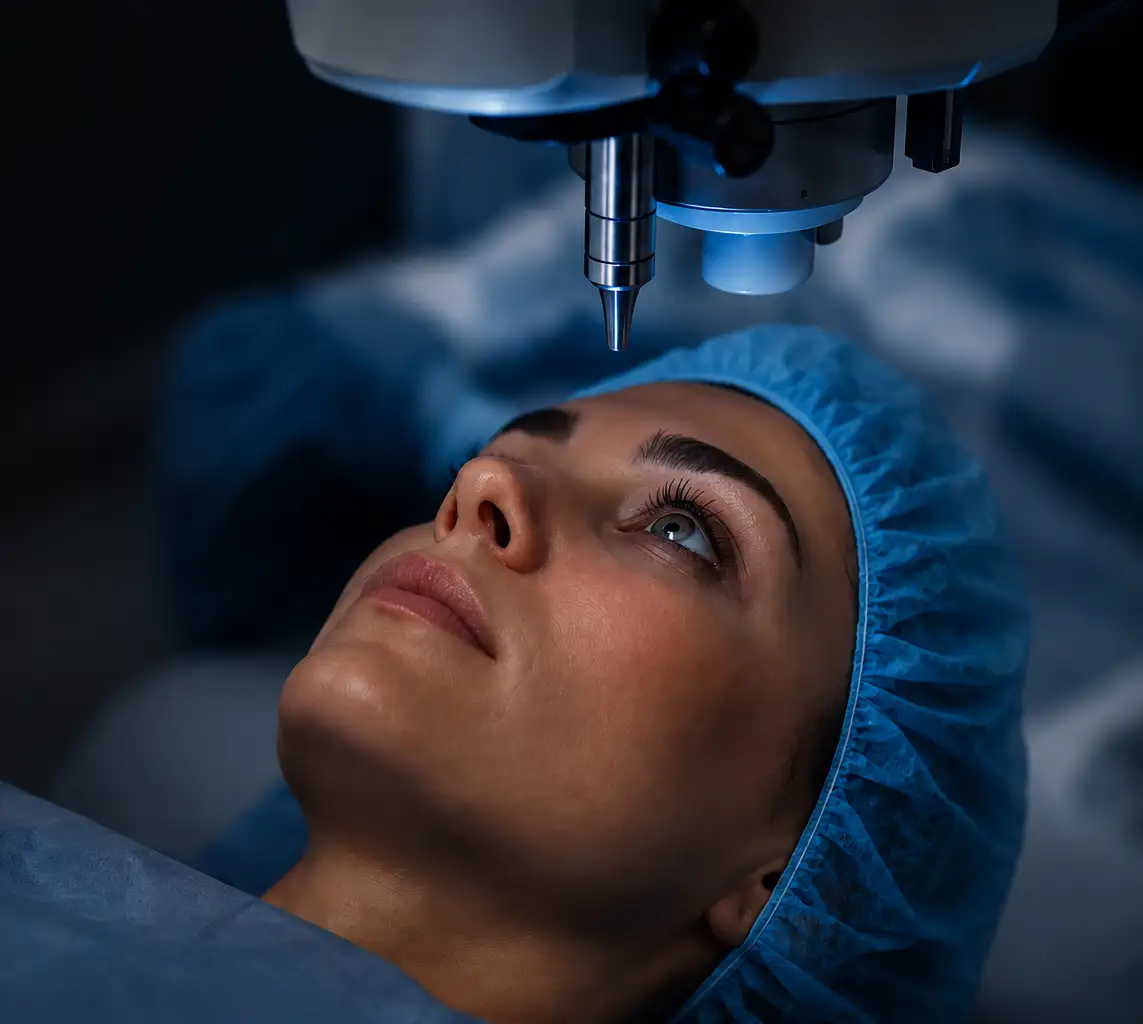
Patients over 40 with presbyopia — the age-related loss of near focus — are often excellent candidates, because most other procedures reshape the cornea rather than replace the lens. You may be a good candidate for RLE if you have:
As the natural lens loses flexibility with age, near focus fades. RLE addresses presbyopia in a way most other procedures cannot.
Severe nearsightedness or farsightedness outside the range LASIK can safely correct is often well suited to RLE.
Because RLE replaces the lens rather than reshaping the cornea, thin corneas that rule out LASIK are not a barrier.
RLE can treat early cataracts while correcting refractive error — and prevents cataracts from returning in the future.
Your surgeon will also confirm that you:
A consultation at Berg-Feinfield — including a comprehensive eye exam, medical history review, and a discussion of your goals — confirms your candidacy and the best lens for you.
Book Your ConsultationA single procedure that corrects your vision, removes future cataract risk, and is tailored to how you actually live.
Once you reach peak clarity, your results are designed to stay — vivid, high-definition vision for your favorite activities.
Because the natural lens is removed and replaced with an IOL, a cataract can never form on it again.
RLE can address nearsightedness, farsightedness, astigmatism, and presbyopia in one procedure.
Most patients enjoy complete independence from glasses and contacts across a full range of vision.
A wide range of premium IOLs lets your surgeon match the lens to your vision goals and daily activities.
Most patients return to normal activities within one to three days, with visual improvement in 24–48 hours.
RLE shares the technique of cataract surgery and the goal of LASIK — replacing the lens to correct vision and remove future cataract risk.
Not sure which procedure fits your eyes? Berg-Feinfield offers the full range and recommends the option best suited to your anatomy, prescription, and goals.
Compare Your OptionsBerg-Feinfield offers a wide range of the latest-technology intraocular lenses to fit different lifestyles, vision needs, and preferences.
A trifocal lens with ENLIGHTEN technology that optimizes near, intermediate, and distance vision at once. Includes UV protection and blue-light filtering; some nighttime halos can be expected.
An extended depth-of-focus lens using non-diffractive X-Wave technology for a broad visual range with few disturbances. Excels at distance and intermediate tasks; readers may help for the finest print.
Merges multifocal versatility with EDOF continuity to reduce visual trade-offs. Chromatic aberration correction and a specialized diffractive pattern minimize aberrations across daily activities.
A trifocal lens with ActivSync Optic technology that responds to changing light for dependable clarity from dawn to dusk — fine print, movies, and evening outings alike.
The only lens you can fine-tune after surgery. Brief, non-invasive UV light treatments let your surgeon adjust your prescription so results align with how you actually live.
Our ophthalmologists have performed thousands of procedures with these advanced IOLs and will help select the lens that offers the best results for your individual needs.

Recovery from RLE is often quick and easy, with most patients returning to normal activities within one to three days. Arrange for someone to drive you to and from the procedure and to your follow-up appointment the next day. Most patients notice visual improvement within 24–48 hours, and after several weeks reach peak clarity designed to last a lifetime.
Our ophthalmologists have performed thousands of procedures with today's most advanced intraocular lenses — and offer every refractive option under one roof.
Deep experience with premium IOLs and advanced lens-based vision correction.
A full range of premium IOLs — from trifocal and EDOF lenses to the Light Adjustable Lens.
LASIK, PRK, EVO ICL, and Refractive Lens Exchange, so the recommendation fits your eyes.
Serving Beverly Hills, Burbank, and the greater Los Angeles area.
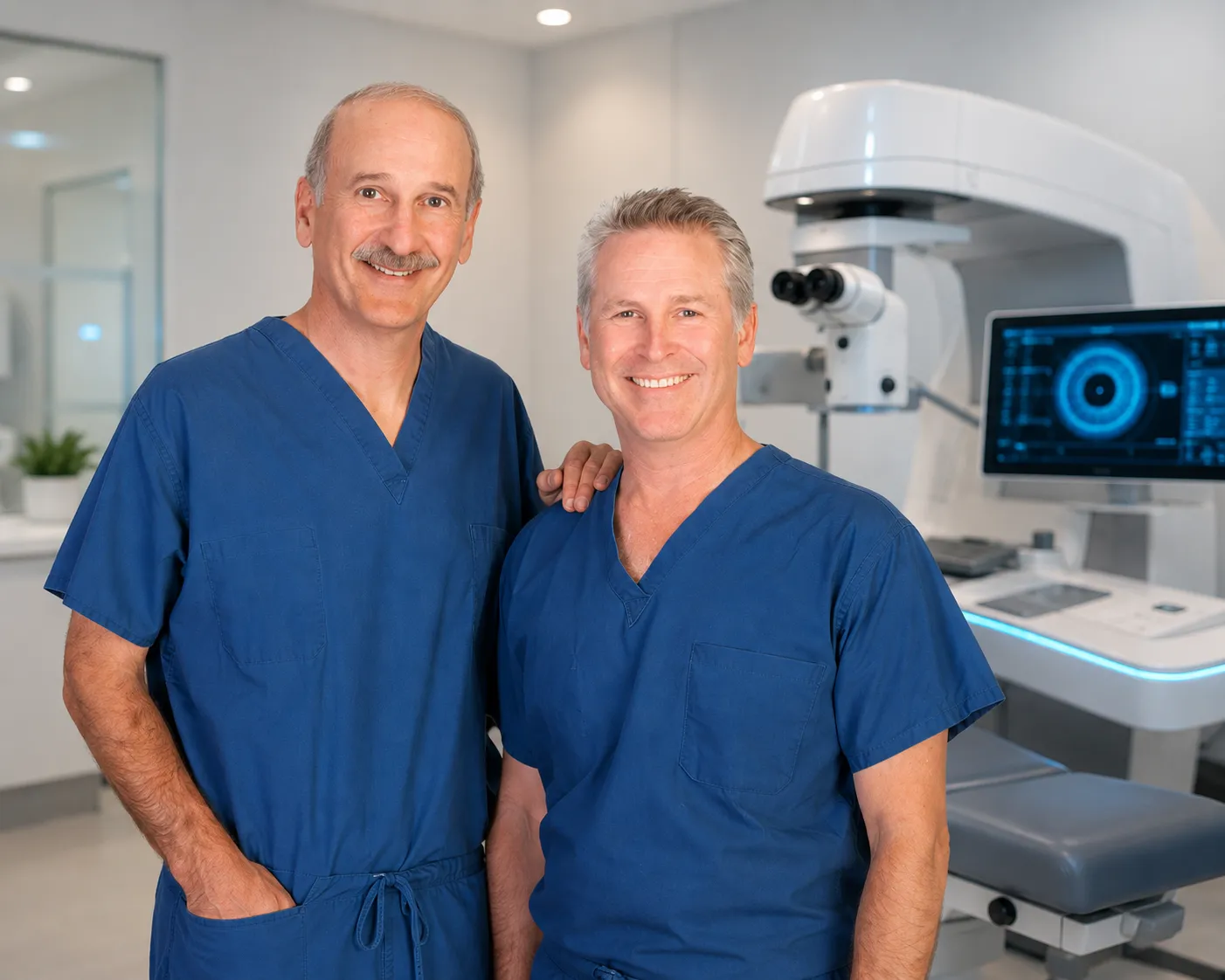
Schedule your Refractive Lens Exchange consultation at Berg-Feinfield today to determine your candidacy and start your journey toward stunningly clear vision.
BERG-FEINFIELD · AFTER HOURS
Questions about your vision? Talk with our AI assistant about LASIK, cataract surgery, or general eye care.
Talk with ClaireAI assistant for general information, not medical advice or emergency care. AI can make mistakes. Confirm medical information with your eye care professional.