

LASIK • Los Angeles
Monovision LASIK for Reading Glasses
Monovision sets one eye for distance and the other for close work, so many people over 40 can read without glasses. It is a trade-off, and it is easy to test before you commit.
Request a consultation
What is monovision LASIK?
Monovision LASIK corrects your dominant eye for distance and leaves the other eye slightly nearsighted for reading. With both eyes open, the brain blends the two, so many people can drive and read a phone without glasses. The trade-off is some loss of depth perception and slightly less crisp vision. The American Academy of Ophthalmology recommends trying monovision with contact lenses first.
How does monovision work?
Monovision, sometimes called blended vision, gives each eye a different job. Your dominant eye, the one you would use to look through a camera, is set for distance. The other eye is set for near, with a small amount of nearsightedness left in place. With both eyes open, the brain pays attention to whichever eye has the clearer image for what you are looking at.
It is not a different laser. It is a treatment plan, decided during your LASIK evaluation, for how much correction each eye receives. Some people choose a milder version, sometimes called mini-monovision, which keeps distance vision sharper and helps with phones and computer screens while readers handle the finest print.
Who is a good candidate for monovision?
- Adults in their 40s and 50s with presbyopia, the age-related loss of near focus
- People who are otherwise good LASIK candidates, with healthy corneas, a stable prescription and a healthy tear film
- People who already wear monovision contact lenses and like them
- People whose close work is mostly phones, menus and labels rather than long hours of fine print
Monovision may be a poor fit if you drive a lot at night, play sports that depend on judging depth, or do precise close work for hours. Some people simply do not adapt to it, which is why testing first matters.
Why try it with contact lenses first?
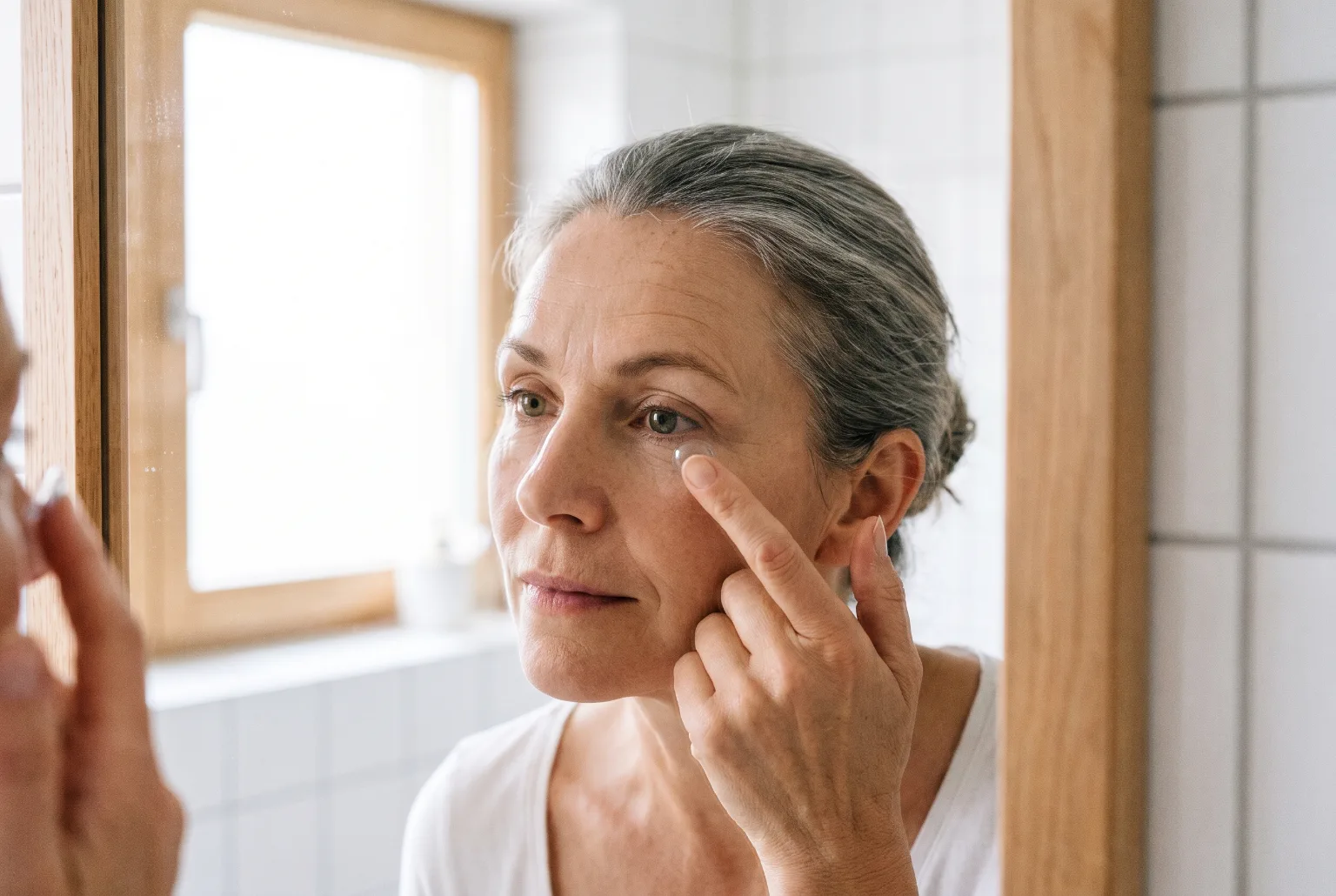
The American Academy of Ophthalmology recommends trying monovision with contact lenses before committing to surgery. A trial lets you live with the result: driving at night, working at your computer, reading in bed and playing your sport. The amount of near correction in the reading eye can be adjusted until it feels right.
If you already wear monovision contacts, bring your current lens prescription to your consultation. It shows your surgeon what you have already adapted to.
What are the trade-offs?
- Depth perception: with each eye focused at a different distance, depth judgment can be slightly reduced. The AAO names this as the main trade-off.
- Sharpness: distance vision with both eyes open may be a little less crisp than if both eyes were set for distance.
- Night driving: some people keep a light pair of driving glasses to bring the reading eye into focus after dark.
- Adjustment time: many people adapt within a few weeks, but some never feel comfortable with it.
- Long or fine close work: hours of reading or very small print may still call for readers.
Can monovision be reversed or adjusted?
Sometimes. If the reading eye is not working for you once your vision has stabilized, an enhancement on that eye may be able to shift it toward distance, depending on how much corneal tissue remains and how healthy the eye is. It is not possible for every eye, which is another reason to try monovision with contacts first.
Does monovision last?
The corneal reshaping is permanent. Presbyopia keeps progressing into your 50s and 60s, though, so the reading eye may not reach as close as it once did and you may want readers for fine print later. When cataracts develop, cataract surgery replaces the natural lens, and monovision can be recreated with lens implants if you liked it. See how long LASIK lasts for what changes with age.
What are the alternatives to monovision?
- Distance LASIK in both eyes, plus readers: the sharpest distance vision and normal depth perception, with readers for close work.
- Refractive lens exchange: a lens implant, including presbyopia-correcting designs, replaces the natural lens and prevents a future cataract. It is usually considered in the mid-40s and later or with early lens changes. See refractive lens exchange.
- Glasses or contact lenses: progressive glasses and multifocal or monovision contacts remain good choices.
Our guide to LASIK over 40 compares these options side by side.
Meet your care team
Who leads refractive care at Berg-Feinfield?

Alan M. Berg, MD
Dr. Berg is a board-certified ophthalmologist who leads LASIK and refractive surgery at Berg-Feinfield. He earned his medical degree at Bowman Gray School of Medicine and finished his ophthalmology residency at the University of Southern California, where he remains on the faculty teaching residents.
He has performed more than 50,000 LASIK procedures. Berg-Feinfield has served Los Angeles since 1980 and offers 100% bladeless LASIK through a practice with five offices. He was one of 50 U.S. surgeons chosen for the clinical trials of the Implantable Collamer Lens (ICL). Your own measurements still decide whether surgery is right for you.
What else do Los Angeles patients ask?
Which eye is set for distance in monovision?
Usually the dominant eye, the one you would use to look through a camera or telescope. Eye dominance is tested during your evaluation, and a contact lens trial confirms the choice.
Will I lose depth perception with monovision?
Some reduction in depth perception is the main trade-off. Many people don't notice it in daily life, but it can matter for sports, night driving or precise work. A contact lens trial shows how it affects you.
How long does it take to adjust to monovision?
Many people adapt within a few weeks. Some take longer, and some never feel comfortable with it, which is why a contact lens trial comes first.
Can I try monovision before LASIK?
Yes. Monovision contact lenses let you test it in your daily routine. The American Academy of Ophthalmology recommends this step before committing to surgery.
Is monovision good for night driving?
Some people find night driving less crisp with monovision. A light pair of driving glasses can help if you drive often after dark.
Can monovision LASIK be reversed?
Sometimes. An enhancement on the reading eye may be possible once your vision is stable, if enough corneal tissue remains. It is not possible for every eye.
Is monovision better than refractive lens exchange?
They solve different problems. Monovision LASIK keeps your natural lens and is a smaller procedure. Refractive lens exchange replaces the lens and prevents a future cataract, which can make more sense in your 50s or with early lens changes.
Which Berg-Feinfield office is convenient for you?
Request an evaluation at one of five offices. Confirm the clinician and location for each appointment when scheduling.
Sherman Oaks
13320 Riverside Dr, Ste 114Monday–Friday
8:30 AM–5:30 PM
Serving San Fernando Valley.
Request a consultationBurbank
2625 W Alameda Ave, Ste 208Monday–Friday
8:30 AM–5:30 PM
Serving Burbank, Glendale and the eastern San Fernando Valley.
Request a consultationBeverly Hills
462 N Linden Dr, Ste 441Monday–Friday
8:30 AM–5:30 PM
Serving Beverly Hills, the Westside and nearby Los Angeles neighborhoods.
Request a consultationArcadia
638 W Duarte Rd, Ste 10Monday–Friday
8:30 AM–5:30 PM
Serving San Gabriel Valley, including Arcadia and nearby Pasadena.
Request a consultationValencia (Santa Clarita)
27335 Tourney Rd, Ste 210Monday–Friday
8:30 AM–5:30 PM
Serving Santa Clarita Valley.
Request a consultationTest-drive monovision before you decide
Request a complimentary LASIK consultation and ask how to set up a monovision trial with contact lenses, so you can see how it fits your daily life.
Request a consultation