

The short answer: Tixel is a device that delivers brief, precisely controlled heat through a titanium tip that touches the skin for a fraction of a second. No laser, no light, no needles. At Berg-Feinfield it is used two ways. Tixel i for dry eye warms the eyelid’s oil glands to treat evaporative dry eye caused by meibomian gland dysfunction, typically in three short sessions two weeks apart. Tixel for facial aesthetics resurfaces the skin in a fractional pattern to soften fine lines, crow’s feet, and crepey eyelid skin, usually as a series of treatments. They use different handpieces, different settings, and different protocols, and a dry eye session does not double as a cosmetic one.
Every so often a technology comes along that sits squarely at the intersection of what an ophthalmology practice does best: the eye itself, and the thin, expressive skin that surrounds it. Tixel is one of those. Patients tend to hear about it from two directions, a friend who finally got relief from burning, gritty eyes, or a friend whose eyelids look smoother without surgery, and then arrive with the reasonable question: wait, is that the same thing?
It is the same technology platform. It is not the same treatment. This post explains both, because understanding the difference is the first step in deciding whether either one is right for you.
What Tixel actually is
Most energy-based treatments in eye care and aesthetics use light. Lasers use a focused beam; intense pulsed light (IPL) uses broad-spectrum flashes. Tixel uses neither. Its handpiece carries a small titanium tip heated to a precise temperature. When the tip touches the skin for a few milliseconds, heat transfers directly by contact. That is the whole mechanism: controlled thermal energy, delivered by touch.
Because there is no light, the treatment does not depend on skin pigment the way IPL does, and there is no laser beam to shield the eye from. The eyes are still protected during treatment, and a topical numbing cream is used, but the physics are simpler than people expect. What changes between the dry eye and aesthetic versions is the tip design, the temperature and contact settings, and where on the face the clinician places it.
Tixel for dry eye: treating the glands, not just the symptoms
The most common form of dry eye is not a shortage of tears. It is evaporative dry eye, driven by meibomian gland dysfunction (MGD). The meibomian glands line the edges of your eyelids and release a thin layer of oil with every blink. That oil keeps the watery layer of your tears from evaporating. When the oil thickens and the glands clog, tears evaporate within seconds, and you get the familiar burning, grittiness, fluctuating vision, and eyes that feel worse the longer you look at a screen.
Artificial tears replace water. They do nothing for clogged oil glands, which is why so many patients use them all day and never feel better. The treatments that work for MGD warm and clear the glands. Berg-Feinfield already offers several in-office options for this, including iLux thermal pulsation, IPL, and BlephEx. Tixel i is the newest addition.
Tixel i is FDA-cleared for localized heat and pressure therapy in adults with evaporative dry eye due to MGD. During treatment, the handpiece briefly touches the outer eyelid skin along the gland line, transferring warmth and gentle pressure to the glands beneath. The actual treatment takes about two minutes per session. The manufacturer’s standard course is three sessions spaced about two weeks apart, and comfort typically improves over that series and the weeks that follow as the glands recover.

Who it is for
Tixel i is intended for adults whose dry eye is driven by gland dysfunction. That includes a lot of people: heavy screen users, contact lens wearers, patients with recurring styes or chalazia, and patients preparing for LASIK or cataract surgery who want the ocular surface in the best possible shape first. It is not a treatment for dry eye caused mainly by low tear production, and it is not used when there is an active eyelid or skin infection or a recent procedure in the area.
That is why every dry eye patient at Berg-Feinfield starts with an evaluation rather than a treatment menu. TearLab osmolarity testing, a slit lamp exam, and a direct look at the meibomian glands tell us whether your dry eye is evaporative, aqueous-deficient, or both, and which treatment, or combination, fits. Tixel is one tool in that program, chosen when it is the right one.
Tixel for facial aesthetics: skin rejuvenation without lasers or needles
The aesthetic version of Tixel uses a tip studded with 81 tiny titanium pyramids. When it touches the skin, only the pyramid points make contact, so the heat is delivered in a fractional grid: microscopic treatment zones surrounded by untouched, healthy skin. As those zones heal over the following weeks, the skin remodels collagen and renews its surface. Fine lines soften, texture smooths, and mildly lax skin looks firmer.
Because the intensity and depth are adjustable, the clinician can choose a gentle setting with minimal downtime or a stronger one for deeper lines. Most patients are treated as a series, commonly three sessions several weeks apart, with occasional maintenance afterward.
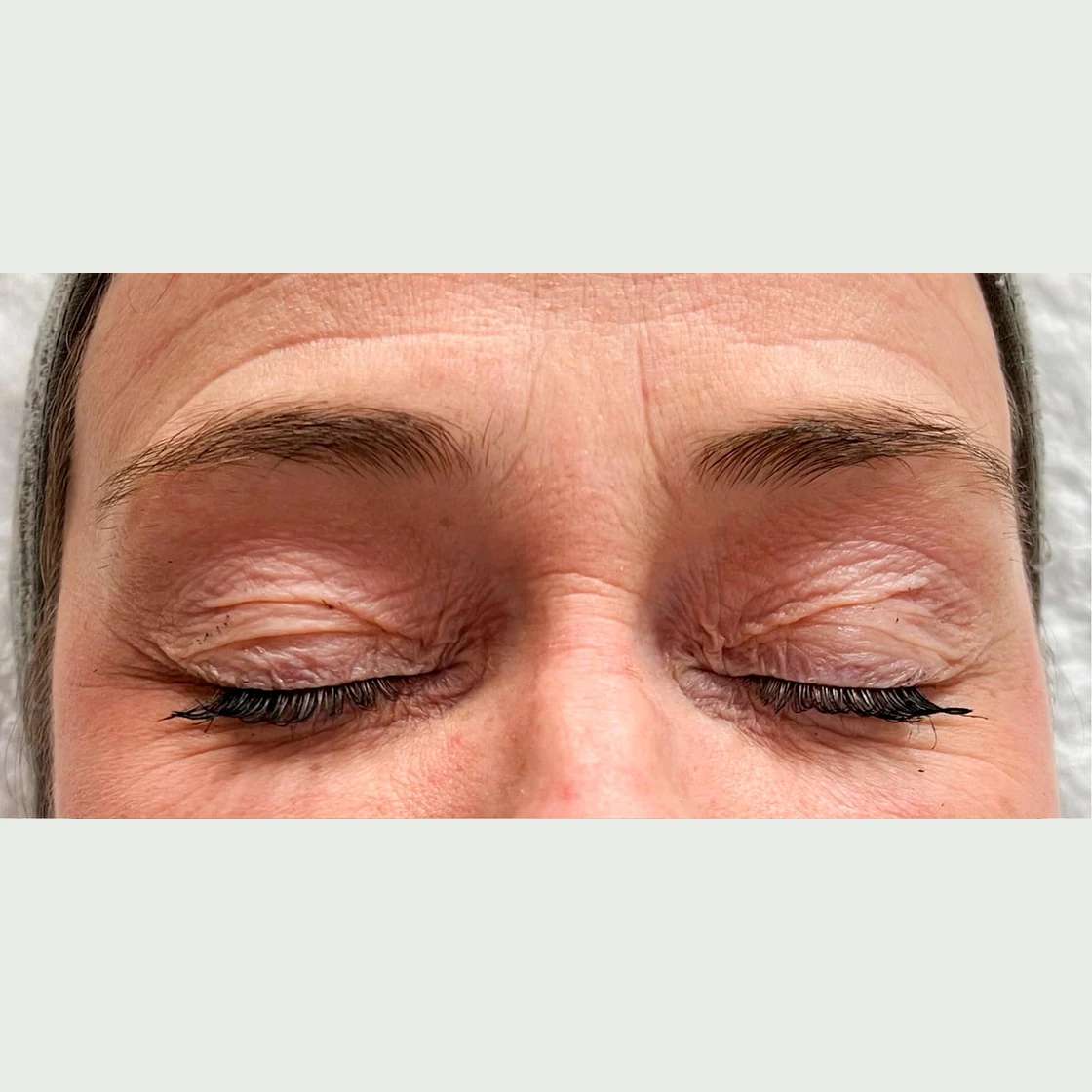
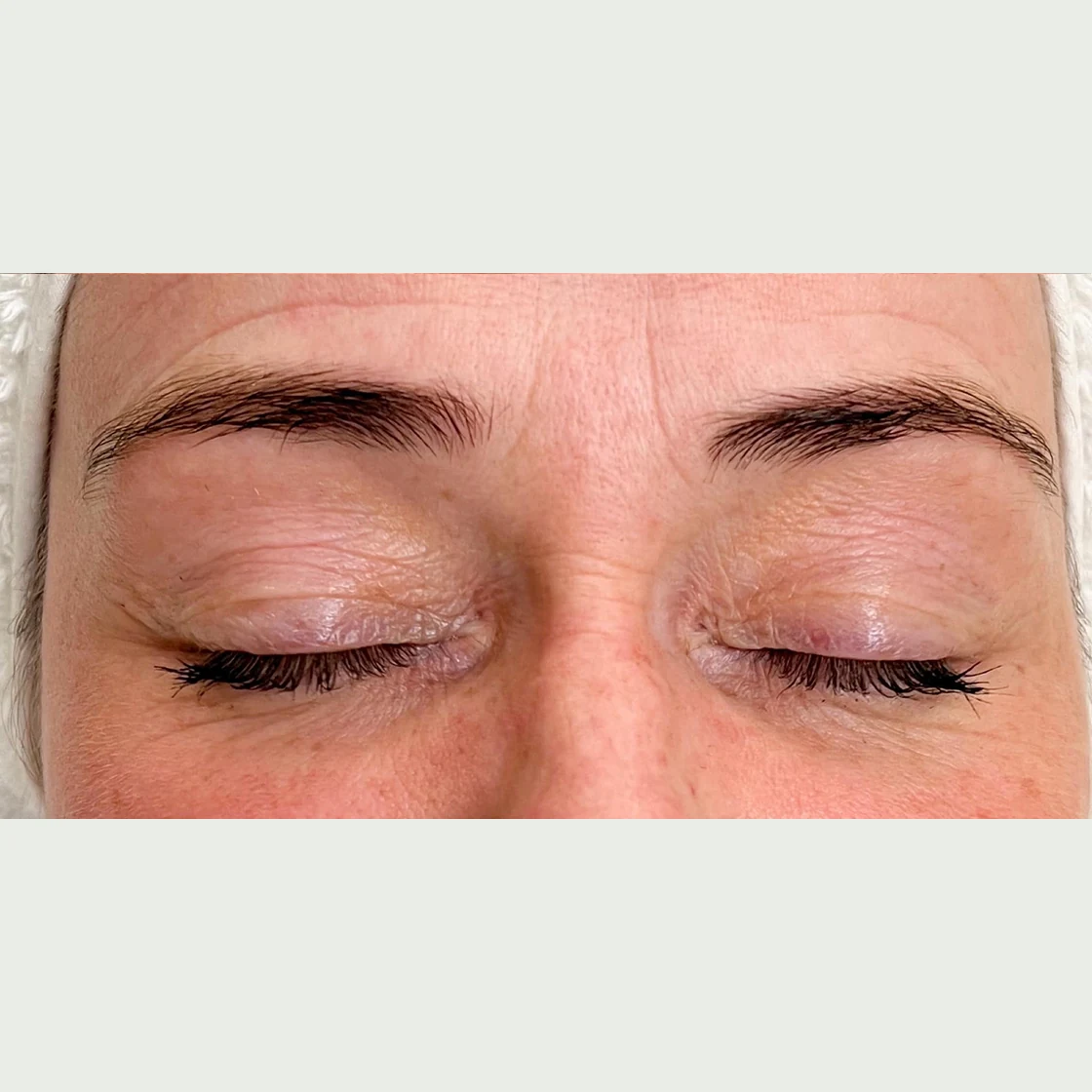
Crepey upper eyelid skin before and after Tixel. Manufacturer-provided photographs courtesy of Tixel / Novoxel; not Berg-Feinfield patients. Individual results vary.
Why the eye area is the point
Tixel can be used across the face, but the areas where it earns its reputation are the ones that are hardest to treat well with other tools: the upper and lower eyelids, crow’s feet, and the under-eye skin. Lasers are difficult to use that close to the eye. Injectables address different problems, muscle movement and volume, not skin quality. And not everyone with crepey eyelid skin wants or needs blepharoplasty.
This is also where Berg-Feinfield’s background matters. Ophthalmologists study the anatomy of the eyelids and orbit in depth and operate on them. Treating skin millimeters from the eye, with the eye properly protected, is familiar ground, and it is the same conservative, eye-first approach the practice takes with Botox, dermal fillers, and eyelid surgery on the facial aesthetics menu. Facial aesthetics are by appointment at the Burbank and Sherman Oaks offices.
Dry eye vs. aesthetics: a side-by-side
| Tixel for dry eye | Tixel for facial aesthetics | |
|---|---|---|
| Goal | Restore meibomian gland function so tears evaporate more slowly and the eyes feel comfortable | Improve the appearance of fine lines, texture, and mild laxity, especially around the eyes |
| Where it is applied | The outer eyelid skin, along the gland line | Eyelids, crow’s feet, under-eye skin, forehead, cheeks, around the mouth |
| What it feels like | Brief warmth or a mild sting at each contact; about two minutes of treatment | Brief heat and prickling at each contact; minutes for small areas, under an hour for the full face |
| Typical course | Three sessions, about two weeks apart | A series, commonly three sessions several weeks apart, plus maintenance |
| Recovery | Mild redness or pinpoint marks on the lids for a day or two | Redness and tiny surface crusts for roughly three to five days; strict sun protection |
| Who evaluates you | A dry eye evaluation with osmolarity testing and gland assessment | An aesthetic consultation covering skin, goals, and alternatives |
General descriptions for education only. Treatment selection and settings are individualized after examination. A dry eye session is not a cosmetic treatment, and a cosmetic session is not a dry eye treatment.
Three things to know before you book
- Start with the right evaluation. If your eyes are the problem, schedule a dry eye evaluation. If your skin is the concern, schedule an aesthetic consultation. If both, say so, and we will plan each one properly rather than blending them.
- Expect a series, not a single visit. Both versions of Tixel work through a biological response that builds over time. The dry eye course is three sessions; aesthetic treatment is usually a series as well.
- Ask about cost up front. In-office dry eye procedures and cosmetic treatments are generally paid out of pocket. Our team will give you the cost of your recommended plan before anything is scheduled, and financing options are available.
Already have an optometrist? Keep seeing them
Most Berg-Feinfield patients continue to see their own optometrist for routine eye care, and many are referred for dry eye treatment by that optometrist. We share findings and treatment plans so care stays coordinated, and your optometrist stays your eye doctor. Patients who do not have an eye doctor are cared for by our in-house team of ophthalmologists and optometrists. Optometrists can learn more on our partnering optometrists page.
Explore Tixel at Berg-Feinfield
Read the full guides to Tixel dry eye treatment and Tixel facial aesthetics, or start with the Tixel overview. When you are ready, request a consultation and tell us which concern brought you in.
Written by Denali Creative, Berg-Feinfield Vision Correction’s marketing partner, from the practice’s published Tixel, dry eye, and facial aesthetics information and the manufacturer’s patient materials (FDA clearance K240512 for Tixel i). Manufacturer photographs are courtesy of Tixel / Novoxel. This article is for general education and is not medical advice; whether Tixel is appropriate for you is decided at an examination with your ophthalmologist.