
Cataracts • Los Angeles
Laser vs. Traditional Cataract Surgery
Both approaches remove the cloudy lens and replace it with a clear implant. The laser changes how a few key steps are done. Here is when that matters, and when it doesn’t.
Request a consultation
What is the difference between laser and traditional cataract surgery?
In traditional cataract surgery, the surgeon makes the incisions and opens the lens capsule by hand, then breaks up the cataract with ultrasound. In laser-assisted surgery, a femtosecond laser such as the LenSx performs those first steps with image guidance and softens the cataract first. Both are safe and effective. The laser is most useful when you are treating astigmatism or choosing a premium lens, and that portion is usually an out-of-pocket cost.
How does traditional cataract surgery work?
Traditional cataract surgery, called phacoemulsification, is one of the most common operations in the world. Your eye is numbed with drops. The surgeon makes a tiny incision at the edge of the cornea, creates a round opening in the thin capsule that holds the lens, and uses an ultrasound probe to break up and remove the cloudy lens. A folded lens implant is then placed in the capsule, where it opens. The incision usually seals on its own without stitches.
How does laser-assisted cataract surgery work?
Laser-assisted surgery starts with imaging. At Berg-Feinfield, the LenSx femtosecond laser maps the front of your eye in 3D and then:
- creates the corneal incisions
- makes the round opening in the lens capsule, called the capsulotomy
- softens and divides the cataract so less ultrasound energy is needed to remove it
- can make small arc-shaped incisions in the cornea to reduce astigmatism
The surgeon then removes the softened cataract and places the lens implant, just as in traditional surgery. Planning is coordinated with the Alcon UNITY Cataract System, and the whole procedure takes about 10 to 20 minutes per eye at Pacific Surgery Center in Burbank.
Is laser cataract surgery better?
For many patients, both approaches give excellent results. Large randomized studies comparing the two have generally found similar overall vision and safety for routine cataracts. Where the laser stands out is precision and consistency in specific steps: a well-centered capsule opening, less ultrasound energy and the option to treat astigmatism with laser incisions.
That precision matters most when your goals go beyond removing the cataract, such as relying less on glasses with a premium lens or correcting astigmatism during surgery. The American Academy of Ophthalmology describes traditional surgery as safe and effective, and encourages patients to talk through the choice with their surgeon.
Who benefits most from laser-assisted surgery?
- People with astigmatism: the laser can make precise arc incisions to reduce it, alone or alongside a toric lens. See cataract surgery with astigmatism.
- People choosing a premium lens: trifocal, extended depth-of-focus and Light Adjustable lenses work best when well centered. Compare them in the premium lens comparison.
- Some dense cataracts: softening the lens first reduces the ultrasound energy needed to remove it.
Some eyes are not good candidates for the laser, for example when the pupil does not dilate well or certain corneal conditions are present. Your surgeon will tell you if that applies to you.

Is recovery different?
Not much. Recovery is similar with both approaches: most people see better within a few days and heal fully over about four to six weeks. Our week-by-week cataract recovery guide covers drops, driving, exercise and what to watch for.
What does insurance cover?
Medicare and most health plans cover medically necessary cataract surgery with a conventional lens. The laser itself is generally not covered. Under Medicare rules, it is offered to patients who choose astigmatism correction or a premium lens, and that portion is paid out of pocket. Your written estimate shows each item separately; see cataract surgery cost in Los Angeles.
How do you decide?
Start with your goals. If you are happy to wear glasses after surgery and have little astigmatism, traditional surgery with a standard lens is an excellent choice. If you want to depend less on glasses, or you have meaningful astigmatism, ask whether laser-assisted surgery would improve your plan. A good surgeon will explain what the laser adds for your eyes specifically, rather than recommending it to everyone. Learn more on our laser cataract surgery page.
Meet your care team
Who can you see for cataract planning?
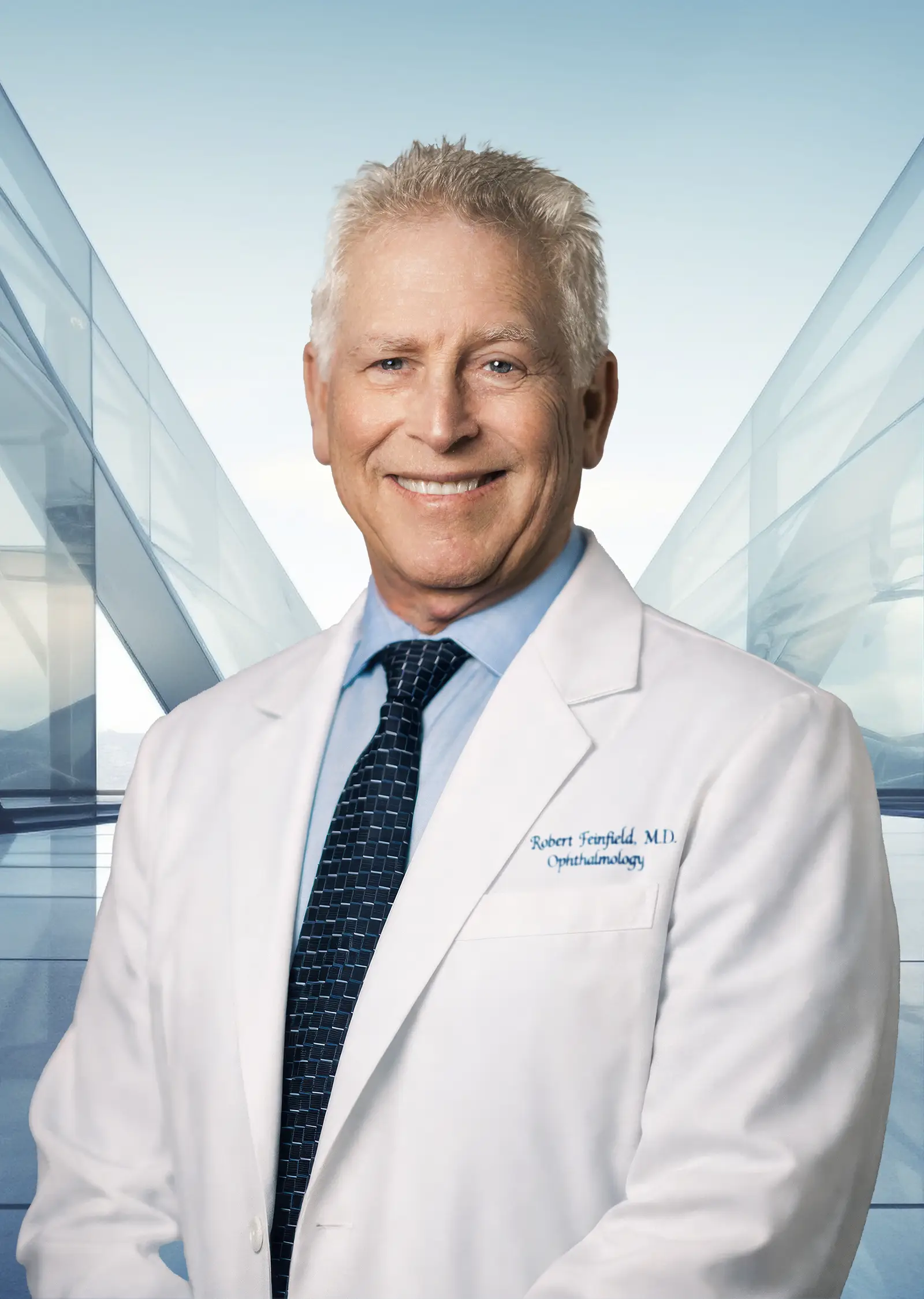
Robert Feinfield, MD
Dr. Feinfield is a board-certified ophthalmologist who sees cataract patients in Burbank and Sherman Oaks. He earned his medical degree with honors from the University of California, San Francisco and completed ophthalmology residency training at the LSU/Ochsner Eye Center.
Berg-Feinfield has served Los Angeles since 1980 and has five offices. Cataract planning includes conventional and premium lens choices, Alcon UNITY technology and LenSx laser options, with surgery at Pacific Surgery Center in Burbank.
What else do Los Angeles patients ask?
Is laser cataract surgery safer than traditional surgery?
Both are safe and effective. Studies comparing them have generally found similar safety for routine cataracts. The laser adds precision to certain steps, which is most useful with astigmatism correction or premium lenses.
Does laser cataract surgery hurt?
No. The eye is numbed and a mild oral sedative is available. Most people feel light pressure rather than pain with either approach.
Is laser cataract surgery covered by Medicare?
Medicare covers medically necessary cataract surgery. The laser is generally not covered on its own; it is offered when you choose astigmatism correction or a premium lens, and that portion is out of pocket.
Is recovery faster after laser cataract surgery?
Recovery is similar. Most people see better within a few days and heal fully over about four to six weeks with either approach.
Can laser cataract surgery fix astigmatism?
It can reduce low to moderate corneal astigmatism with precise arc incisions. Higher amounts are usually treated with a toric lens, sometimes combined with the laser.
Do I need the laser if I choose a premium lens?
Not always, but many surgeons prefer it for premium lenses because a well-centered capsule opening helps those lenses perform. Your surgeon will explain the recommendation for your eyes.
Which laser does Berg-Feinfield use?
Berg-Feinfield uses the Alcon LenSx femtosecond laser with 3D imaging and the Alcon UNITY Cataract System. Surgery is performed at Pacific Surgery Center in Burbank.
Which Berg-Feinfield office is convenient for you?
Request an evaluation at one of five offices. Confirm the clinician and location for each appointment when scheduling.
Sherman Oaks
13320 Riverside Dr, Ste 114Monday–Friday
8:30 AM–5:30 PM
Serving San Fernando Valley.
Request a consultationBurbank
2625 W Alameda Ave, Ste 208Monday–Friday
8:30 AM–5:30 PM
Serving Burbank, Glendale and the eastern San Fernando Valley.
Request a consultationBeverly Hills
462 N Linden Dr, Ste 441Monday–Friday
8:30 AM–5:30 PM
Serving Beverly Hills, the Westside and nearby Los Angeles neighborhoods.
Request a consultationArcadia
638 W Duarte Rd, Ste 10Monday–Friday
8:30 AM–5:30 PM
Serving San Gabriel Valley, including Arcadia and nearby Pasadena.
Request a consultationValencia (Santa Clarita)
27335 Tourney Rd, Ste 210Monday–Friday
8:30 AM–5:30 PM
Serving Santa Clarita Valley.
Request a consultationChoose the approach that fits your eyes
Request a cataract evaluation and ask your surgeon what laser assistance would and would not change for your eyes.
Request a consultation