
Why Contacts Cause Environmental Damage

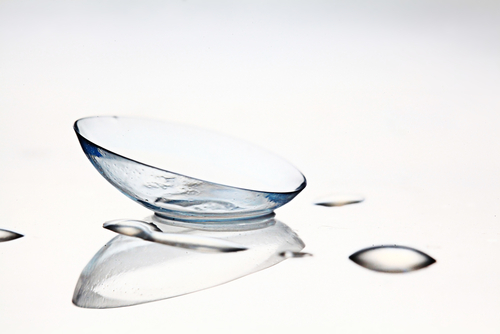
Close-up of Contact Lens on Reflective Surface

A lot of people are conscious of how they handle their trash and waste products. Recycling has become more popular recently. This is especially true when it comes to aluminum, glass, cardboard, and plastic.

Plastic can be tricky to recycle and there are some plastics that aren’t welcome in most recycling bins. There are also some plastics that people don’t think of as contributing to much waste at all. Case in point: contact lenses.

Contact lenses are composed of microplastics. Microplastics actually pose a significant environmental threat.

It’s hard to think of something as small as a contact lens is an issue, but so many people use them. All that waste from using and disposing of them adds up.

The biggest issue, though, is the contacts that you flush down the drain. Contacts going into wastewater systems contribute to a significant amount of environmental damage. Keep reading to learn why contacts cause environmental damage!

Low Biodegradability

When you flush things down a drain in your home, they end up in wastewater treatment plants. Wastewater spends at most 172 hours in treatment plants. It is then flushed out into the soil.

Many things that we flush down drains break down when in wastewater treatment. This is due to microorganisms that feed on the waste.

When researchers studied how contact lenses break down in wastewater treatment, they found that they barely degrade after 172 hours. That means that these microplastics go right into the environment. This is where they start causing problems.

Water and Soil Pollution

Since wastewater gets dumped into the soil after treatment, anything left after treatment incorporates with the soil. Microplastics sit in the soil and dry out and break down into harmful particles.

It also means that when it rains, whole contacts or fragments can drain into water sources. Since contacts absorb liquid, they can absorb harmful chemicals.

These can come from both soil and water. These toxins are then left in the microplastic fragments, causing danger to wildlife.

Danger to Wildlife

Leaving microplastic fragments in soil or water causes a danger to wildlife. The toxins that the microplastics absorb can easily make their way up the food chain.

This can cause something of a domino effect. Smaller creatures that feed on infected sources can get infected. They can then infect whatever creature eats them.

Then those creatures will spread the toxins to whatever animal feeds on them. This can eventually lead to a devastating environmental impact, endangering entire animal populations.

Unfortunately, the exact amount of microplastics left in the environment by contact lenses is hard to pinpoint. This also makes it hard to tell how much of a threat contacts currently are.

But researchers do know one thing. Contacts pose a serious threat to the environment.

Be Smart With Your Contact Lens Disposal

So what should you do? The first step is to always dispose of your contact lenses in the trash. Don’t dispose of them down the sink drain or flush them down the toilet.

It may seem easier but it’s the incorrect way to dispose of your contacts. Contacts are small and when you’re done with them, they can get lost down the sink.

If you think that wearing contact lenses can be wasteful, you’re not wrong. Why not consider another option, like LASIK, instead?

Schedule a LASIK consultation at Berg Feinfield in Burbank, CA today! LASIK is permanent and it can be your way of helping the environment if you’re tired of wearing contact lenses that aren’t helping the planet we live on.
What Does Falling Asleep in Your Contacts Mean for Your Eyes?

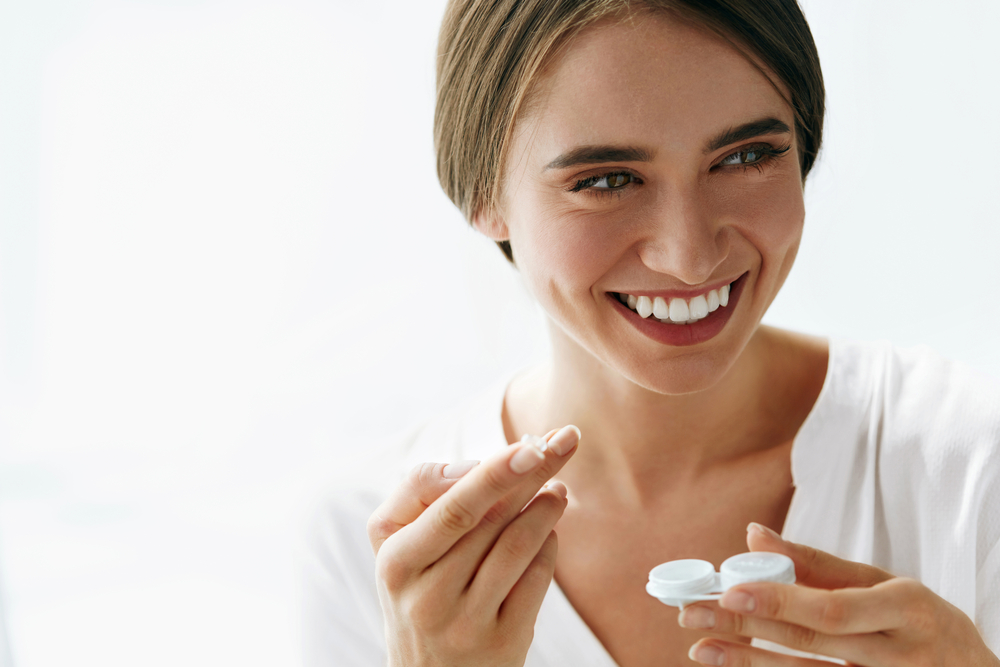
woman holding contact lenses case

We’ve all been there before, you fall asleep on your couch watching TV or get home from a long day at work and wake up with your contacts still in. We know we shouldn’t sleep in our contacts but mistakes are inevitable. But why is it so bad for us to wear our contacts overnight?

Falling asleep with your contacts in causes an oxygen deprivation in your eyes. During the day, it is possible for air to get into your eyes but when you’re asleep your cornea relies on the hydration from your gelatinous fluid and tears to get its nourishment. Your eyes become deprived of oxygen because your contacts are a blockade between your corneas and your eyelids. Bacteria and other potentially dangerous things can build up in your eye and end up causing severe damage.

If you accidentally fall asleep with your contacts still in it is important to not take them out directly after waking up. Taking them out immediately could result in exposure to more bacteria. As soon as you wake up oxygen will begin to reach the surface of your eyes which will result in the swelling of the cornea to go down. It’s recommended to use eye drops to re-wet your eyes and help with the process of removing your contact lenses. After you have followed these steps you can remove the contact and give your eyes time to rest.

Some symptoms that you may experience after sleeping in your contacts include but are not limited to:

  • Eye Pain
  • Redness
  • Sensitivity to light

As a precaution, it is recommended that you remove your contacts at least an hour before bed. This will give your eyes additional recovery time before bed and will help you not to forget to remove them. To make this easier it is also recommended to have an updated pair of glasses you can use during this resting period.

3 Non-Hygienic Habits Most Contact Lens Users Develop

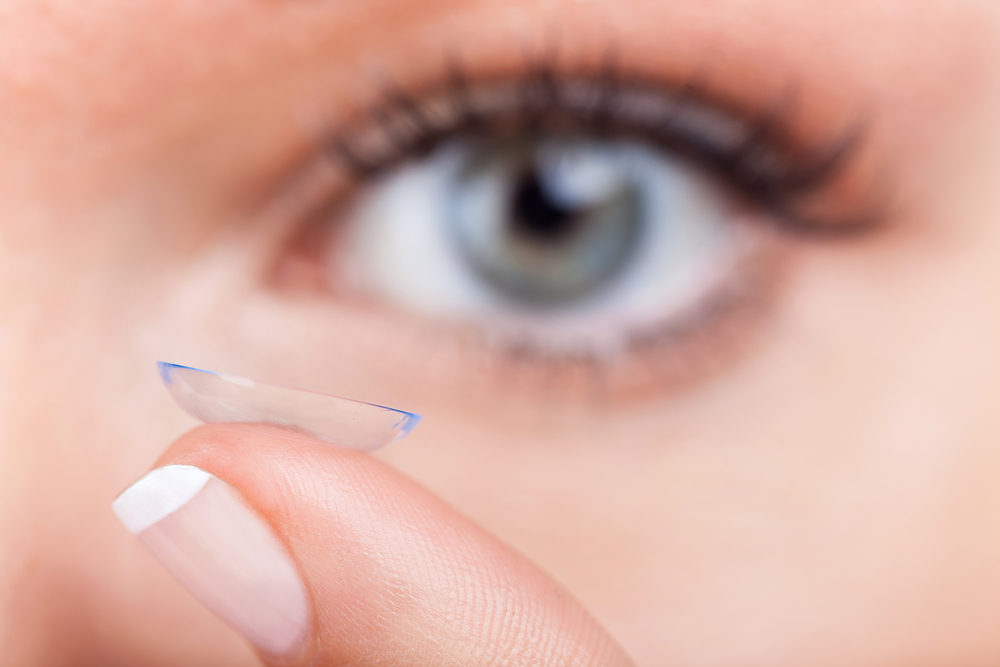
Woman holding contact lens to her eye

Chance are, if you are one of 35+ million contact lens users in America, you were taught all the basics of proper contact lens hygiene when you first received your prescription. There are probably even better odds that you currently aren’t following those contact lens hygiene basics you were taught every single day.

Millions of contact lens users deal with eye complications every year because they wear their contacts in the pool, don’t take them out when they sleep or just don’t take them out ever. It is easy to assume that you’ll be fine, but this really isn’t the case.

Here are three non-hygienic things that you most likely have done at some point as a contact lens user:

Let tap water come in contact with your contacts
This can pose a serious issue for your eyes health, the reason is tap water is not salty like your eyes natural tears, so your contact lenses end up absorbing more of it and swelling. You might be thinking “Well, what does that matter?” It matters because tap water—while safe enough to drink—isn’t sterile and therefore can contain a lot of microorganisms. This creates a double whammy effect because as your lens swells it pulls on your cornea and can cause microscopic openings that allow those microorganisms to get into your eye and cause possible infection. This is why you should absolutely NOT shower or swim with your contact lenses in.

Don’t have contact lens solution, so you use your own saliva in emergency situations
Well, if you thought exposing your contact lenses to tap water was bad, you are in for a real treat with this one. The saliva in your mouth is absolutely ridden with bacteria that can be quite damaging in any place outside of your mouth. You might be better off rubbing your contact lenses into a petri dish at a science lab—which is an absolutely terrible idea.

If your contact lenses are bothering and there isn’t contact lens solution readily available, then you should just take them out of your eyes. If you want to prepare for these emergencies, then you should have a small travel bottle of contact lens solution on your person at all times.

Trying to cut corners on costs, so you re-use contact lens solution.
The purpose of contact lens solution is to clean bacteria and debris off of your contact lenses. These bacteria and debris don’t go away, so if you choose to re-use that dirty contact lens solution you are essentially marinating your contact lenses in filth. 

Here is an analogy for you, as your car runs the oil gets dirtier and dirtier and dirtier until you need to do an oil change. Re-using contact lens solution is like taking that old dirty oil you just took out of your car and deciding to put it back into the car with some new oil mixed in.

5 Things You Should Never Do With Your Contacts

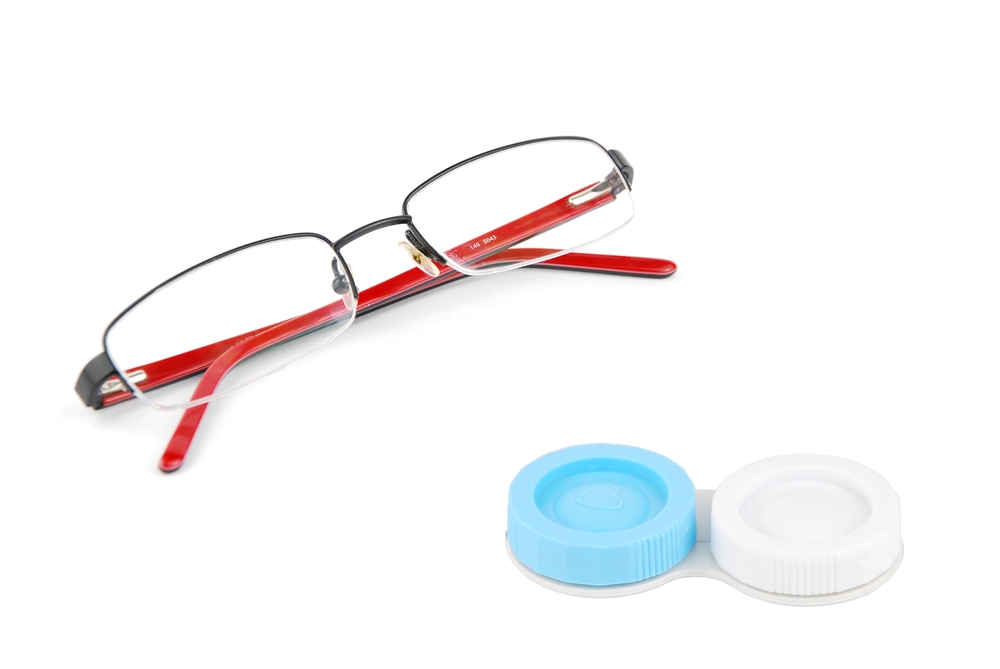
Eye Glasses and Contacts Case

Contact lenses might correct your vision, but they are also hazardous for your eyes if you do not exercise the proper lens hygiene. If you are going to use contacts, then you will need to be very careful about how you are handling them. If the prospect of having to put your fingers onto your eyes every day isn’t enough to turn you off from being a contact lens user, then you might be interested to learn these 5 Things You Should Never Do With Your Contacts.

1.Forget To Wash Your Hands:Yes, you must make sure to wash your hands before you put your contacts in, or take them out. Just because your hands look clean doesn’t mean they are bacteria free! Don’t forget to wash your hands, or you might unleash some unwanted bacteria on your sensitive eyes.

2.Reuse Contact Lens Solution:Contact lens cleaning solution is a pretty effective disinfectant—that is until you leave it sitting around in the open for bacteria to flood in. Believe it or not, bacteria can overpower the disinfectant in the cleaning solution. Reusing the same contact lens solution over and over puts your eye at risk of bacteria that can cause eye infections, which could lead to much more serious eye complications that might require surgery.

3.Leave Your Contacts Case Nice and Wet:One thing to remember is that bacteria love a moist/wet environment. If you forget to dry out your contact lens case, then it will become the new spot in town for all the bad bacteria to hang out in. You don’t want to allow dangerous bacteria into your eye.

4.Neglecting to Clean Your Contact Lenses Every Day:Contact lenses are shaped like little bowls, and like bowls they can collect things in them. Over time your lenses can be filled with microscopic bacteria that are then pressed directly onto your eye for easy access. These deposits of debris and bacteria can cause severe reactions on your eyes and even your eye lids. Don’t allow this to happen, clean your contacts every day and save yourself the potential discomfort.

5.Not Clean Your Contact Lens Case:You will need to do more than just dry your contact lens case to keep the bacteria away! You will need to gently wash it with soap and water at least once a week. Once you are done giving it a thorough wash, make sure to dry it out!