
LASIK • Los Angeles
Thin Corneas and LASIK in Los Angeles
A corneal thickness number is a starting point. Find out how shape, stability and the planned correction determine whether LASIK or another approach makes sense.
Request a consultation
Can you have LASIK with thin corneas?
Thin corneas can rule out LASIK because treatment must leave enough structurally sound tissue. Thickness alone cannot determine safety: corneal shape, prescription, the planned flap and signs of disease also matter. Berg-Feinfield evaluates these together before recommending corneal laser surgery or an alternative.
Why does corneal thickness affect LASIK safety?
LASIK creates a flap in the cornea and reshapes tissue underneath with an excimer laser. Both the flap plan and the tissue removed for your prescription affect the remaining supporting structure. Two people with similar thickness measurements can need very different amounts of correction.
An inadequately supported or vulnerable cornea can weaken and change shape, a complication called ectasia. This can impair vision and require additional care. The FDA lists thin corneas as a concern for LASIK. There is no online thickness cutoff that establishes safety without the rest of an examination.
What measurements matter beyond the central thickness?
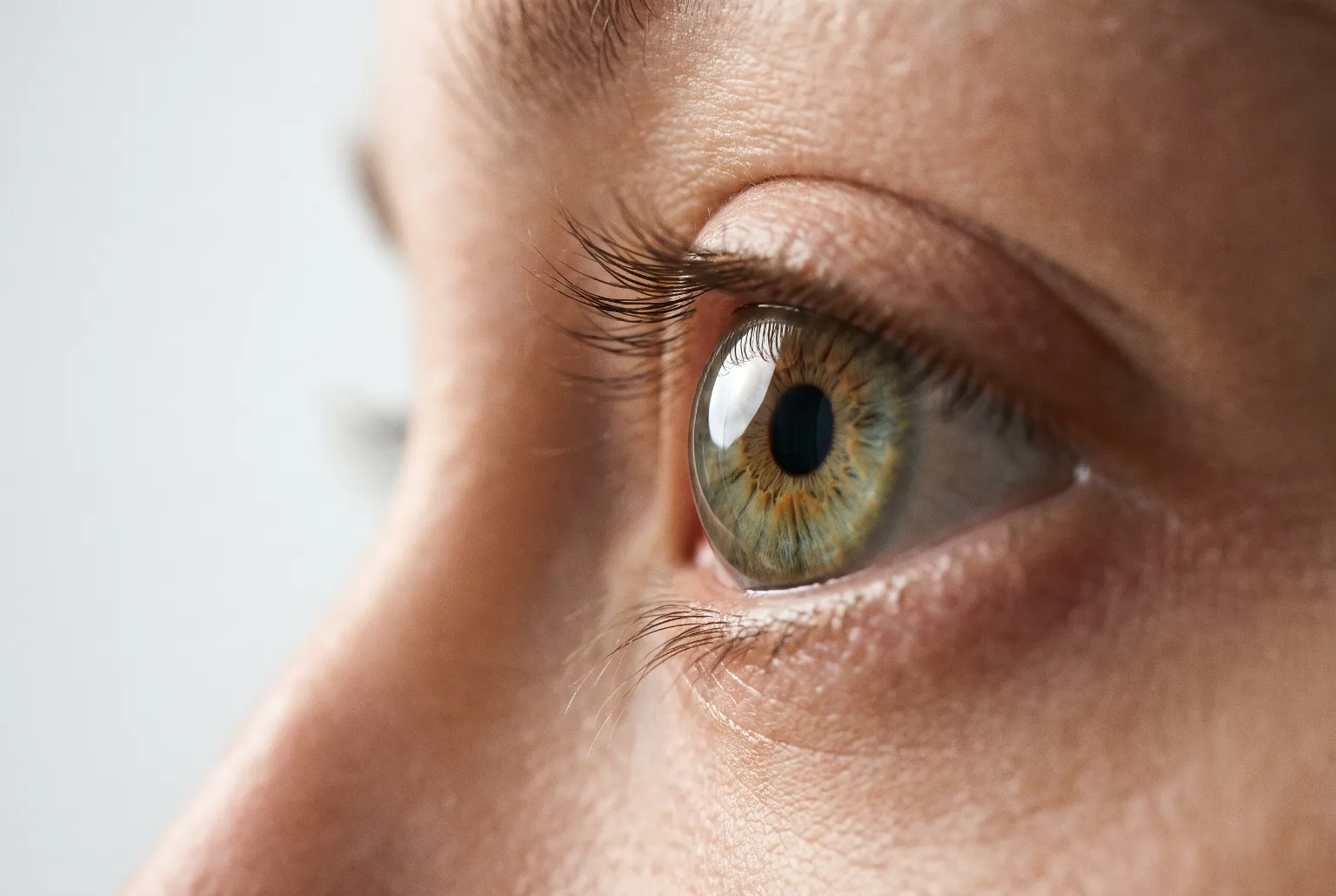
A useful consultation explains why your measurements support or rule out a procedure. Ask to review your corneal maps rather than leaving with only a thickness number. If you have been declined elsewhere, bring the original maps and prescriptions so the clinician can understand the concern.
- Thickness distribution: where the cornea is thinnest and how thickness changes across it can matter alongside the central reading.
- Front and back surface shape: mapping can identify patterns that suggest irregularity or corneal disease.
- Prescription and treatment plan: the correction requested, proposed flap and anticipated remaining tissue must be considered together.
- Stability and eye health: changing prescriptions, prior procedures and an unstable tear film may require more evaluation.
Contact lenses can affect corneal shape. Get lens-specific instructions before testing and disclose when you last wore them. Measurements may need repeating; a single visit does not always resolve candidacy.
Does a thin cornea mean you have keratoconus?
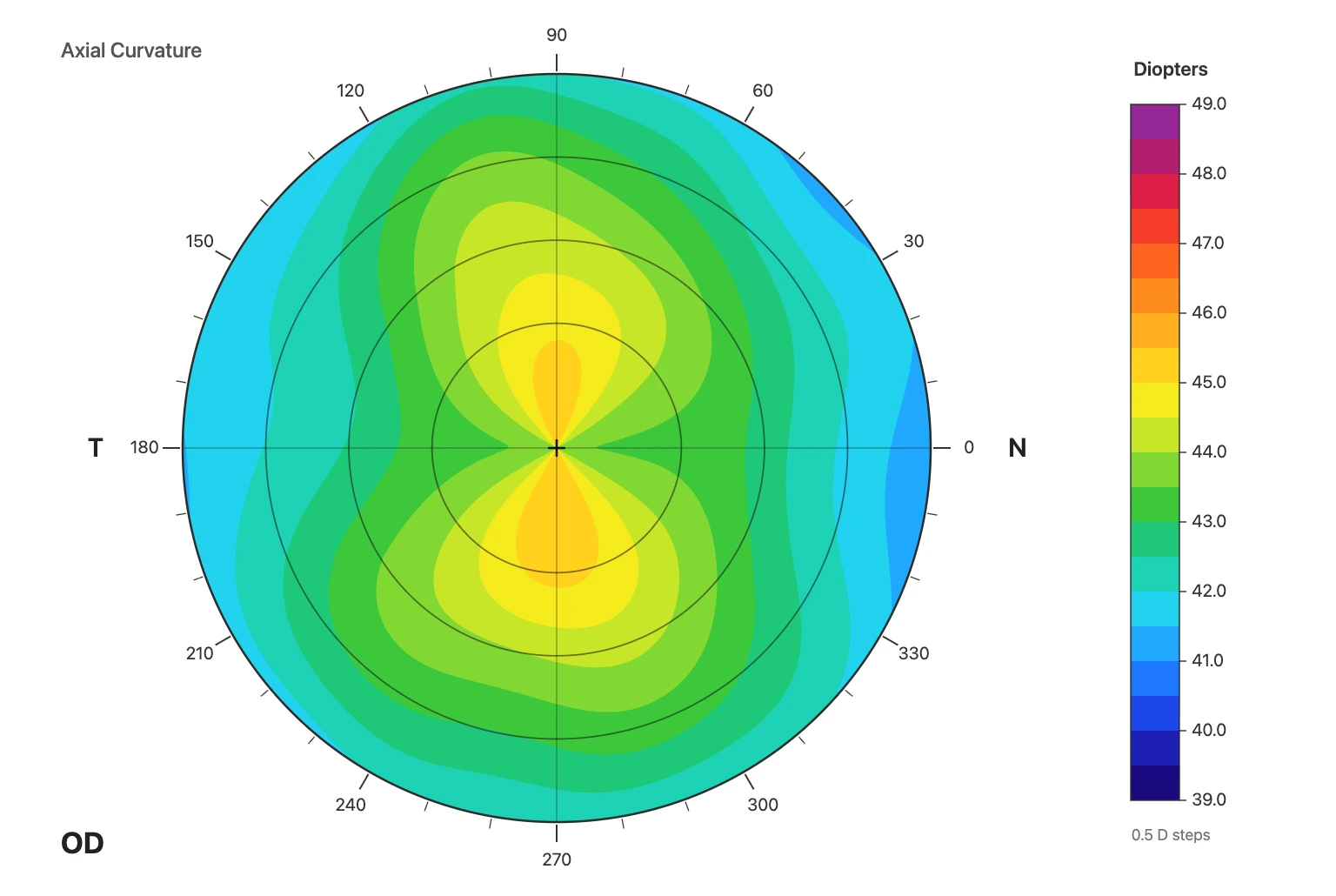
No. A naturally thin cornea is not the same diagnosis as keratoconus. Keratoconus involves thinning and abnormal bulging that can produce irregular astigmatism and changing vision. Suspicious maps, prescription changes or reduced corrected vision call for assessment of the disease itself.
Berg-Feinfield provides keratoconus evaluation and epi-on corneal cross-linking. Its epi-on program includes Epioxa, an FDA-approved treatment for keratoconus used with the specified light-delivery system. Cross-linking aims to strengthen and stabilize the cornea; it does not guarantee sharper unaided vision or make LASIK appropriate afterward.
If keratoconus is suspected, controlling the condition takes priority over elective correction. Glasses or specialty contact lenses may still be needed for vision. Your corneal specialist can explain treatment eligibility, monitoring and alternatives. See the FDA Epioxa prescribing information.
When might PRK be considered instead of LASIK?
PRK reshapes the corneal surface without creating a LASIK flap. Avoiding a flap may make it an option for selected eyes, but PRK still removes tissue. A suspicious or structurally weak cornea can make both procedures inappropriate. It should not be presented as the automatic answer to a low thickness measurement.
Surface healing, discomfort, visual recovery and haze risk differ from LASIK. Read LASIK versus PRK and ask why the proposed option fits your specific maps and prescription. Plan work, driving and follow-up around the recommended recovery schedule.
How do EVO ICL and lens exchange differ?
EVO ICL adds a lens inside the eye without removing corneal tissue for refractive correction. It retains the natural lens and may fit certain prescriptions and eye anatomy. Adequate internal space and healthy eye structures matter. Thin corneas alone do not establish eligibility. Infection, pressure changes and cataract formation are among the separate risks; compare LASIK versus EVO ICL.
Refractive lens exchange replaces the natural lens. For selected patients age 40 and older, especially when near-vision changes are important, it may deserve discussion. It is irreversible and carries cataract-surgery-type risks, including retinal complications. Losing natural focusing ability and choosing a lens with optical trade-offs are significant decisions.
Neither implant surgery nor lens exchange treats an unstable cornea. If corneal disease is present, it requires its own plan. Continuing glasses can be the most appropriate choice even when several surgical technologies are available.
How does Berg-Feinfield coordinate an evaluation in Los Angeles?
Request an appointment at Sherman Oaks, Burbank, Beverly Hills, Arcadia or Valencia and explain that thin corneas were identified. Bring the thickness measurements, full maps if available, prior prescriptions and the reason another clinician advised against LASIK. Ask whether a corneal specialist assessment is needed before a refractive decision.
Most Berg-Feinfield surgical patients see their own optometrist before and after surgery through co-management. Keeping those records connected helps the teams track change over time. Patients who are not co-managed receive care from the in-house MD/OD team.
What should you ask before choosing any procedure?
Ask what finding is limiting LASIK, whether it is stable, and which risks would remain with each alternative. Separate a desire for fewer glasses from the need to protect long-term corneal health. No procedure guarantees freedom from glasses or prevents later age-related vision changes.
Use the Los Angeles LASIK cost guide to prepare financial questions, but obtain an estimate for the procedure actually recommended. Coverage for medically necessary corneal disease care differs from coverage for elective vision correction. Verify both before scheduling treatment.
Meet your care team
Who leads refractive care at Berg-Feinfield?
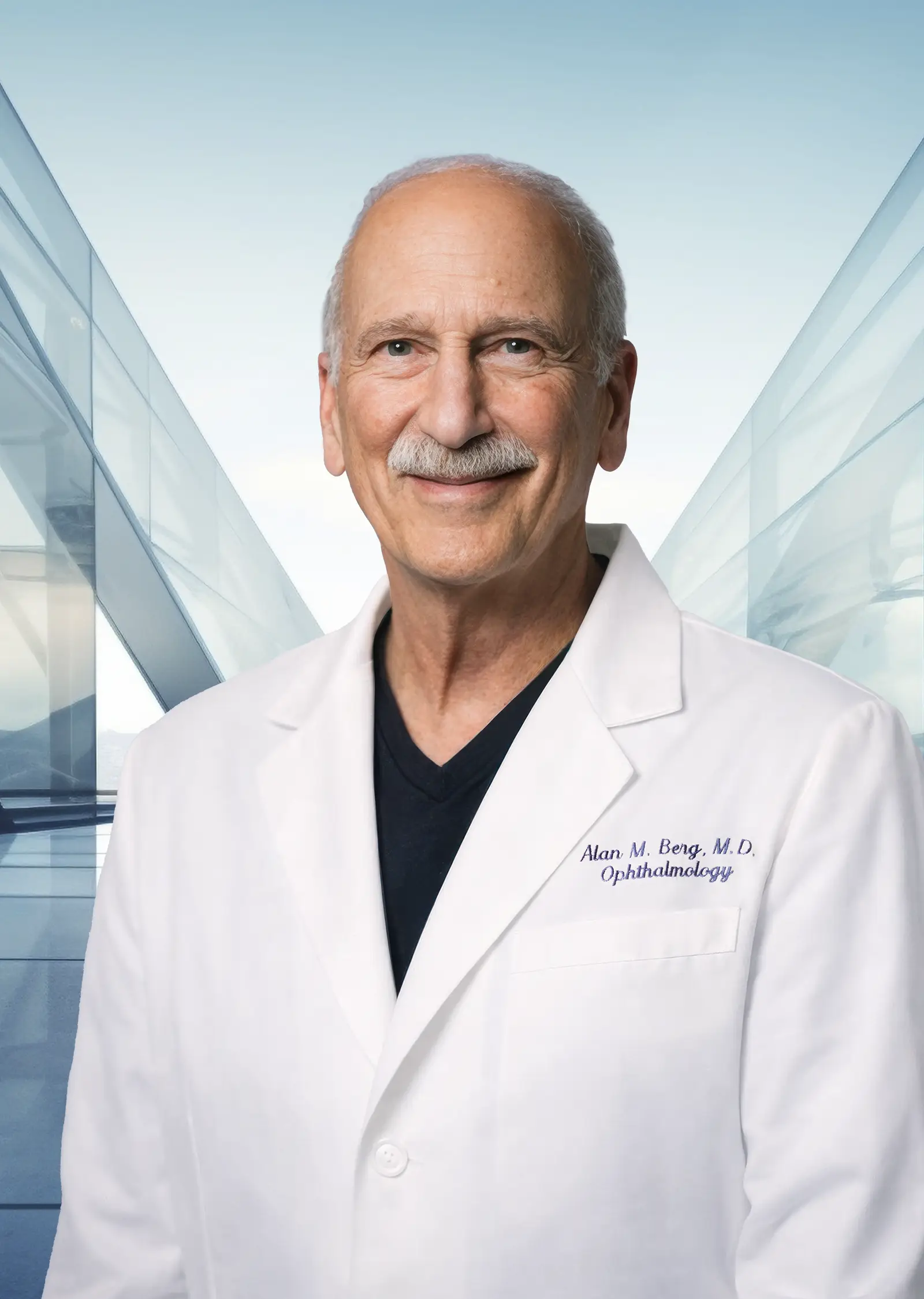
Alan M. Berg, MD
Dr. Berg is a board-certified ophthalmologist who leads LASIK and refractive surgery at Berg-Feinfield. He earned his medical degree at Bowman Gray School of Medicine and finished his ophthalmology residency at the University of Southern California, where he remains on the faculty teaching residents.
He has performed more than 50,000 LASIK procedures. Berg-Feinfield has served Los Angeles since 1980 and offers 100% bladeless LASIK through a practice with five offices. He was one of 50 U.S. surgeons chosen for the clinical trials of the Implantable Collamer Lens (ICL). Your own measurements still decide whether surgery is right for you.
What else do Los Angeles patients ask?
What is the minimum corneal thickness for LASIK?
There is no single minimum thickness that proves LASIK is safe for every eye. The surgeon must also consider corneal shape, prescription, flap planning, remaining tissue and signs of disease. A number from a previous screening is useful information to bring, but it cannot replace the complete candidacy assessment.
Can PRK treat everyone with a thin cornea?
No. PRK avoids a LASIK flap but still removes corneal tissue. Some thin or abnormal corneas are unsuitable for both procedures, particularly when weakening or disease is a concern. Berg-Feinfield can explain whether PRK, a lens-based procedure or continued glasses best fits the findings from your examination.
Does a thin cornea mean my vision will keep getting worse?
No. Naturally thin corneas do not automatically mean progressive disease. Changing vision or suspicious corneal maps need evaluation for causes such as keratoconus. Prior measurements help the clinician assess stability. If disease is identified, monitoring or treatment is directed at that condition rather than simply correcting the glasses prescription.
Can I request a second evaluation after being declined for LASIK?
Yes. Bring your previous corneal maps, thickness measurements and prescriptions, along with the explanation you received. A second evaluation can clarify the concern and available options. It may confirm that LASIK should be avoided; the purpose is an informed decision, not a promise that another surgeon will approve surgery.
Does Berg-Feinfield offer epi-on cross-linking for keratoconus?
Yes. Berg-Feinfield offers epi-on corneal cross-linking, including its Epioxa program, for appropriately evaluated keratoconus patients. Cross-linking aims to stabilize the cornea and has its own eligibility requirements and risks. It does not guarantee improved unaided vision or turn an eye with keratoconus into a routine LASIK candidate.
Can patients over 40 consider lens exchange for thin corneas?
Yes, selected patients can discuss refractive lens exchange, particularly when age-related near-vision changes affect their goals. Being over 40 or having thin corneas is not enough to recommend it. The surgeon must assess the natural lens, retina, remaining focusing ability and risks before comparing it with other options.
Which Los Angeles-area office should I contact about thin corneas?
You can request an evaluation through Sherman Oaks, Burbank, Beverly Hills, Arcadia or Valencia. Mention thin corneas or suspected keratoconus when booking so the team can confirm the appropriate clinician and location. Your existing optometrist can share records and remain involved before and after surgery through co-management.
Which Berg-Feinfield office is convenient for you?
Request an evaluation at one of five offices. Confirm the clinician and location for each appointment when scheduling.
Sherman Oaks
13320 Riverside Dr, Ste 114Monday–Friday
8:30 AM–5:30 PM
Serving San Fernando Valley.
Request a consultationBurbank
2625 W Alameda Ave, Ste 208Monday–Friday
8:30 AM–5:30 PM
Serving Burbank, Glendale and the eastern San Fernando Valley.
Request a consultationBeverly Hills
462 N Linden Dr, Ste 441Monday–Friday
8:30 AM–5:30 PM
Serving Beverly Hills, the Westside and nearby Los Angeles neighborhoods.
Request a consultationArcadia
638 W Duarte Rd, Ste 10Monday–Friday
8:30 AM–5:30 PM
Serving San Gabriel Valley, including Arcadia and nearby Pasadena.
Request a consultationValencia (Santa Clarita)
27335 Tourney Rd, Ste 210Monday–Friday
8:30 AM–5:30 PM
Serving Santa Clarita Valley.
Request a consultationBring your corneal maps and get a clear explanation
Discuss what your measurements mean, whether further corneal care is needed and which options fit your eyes.
Request a consultation