PRK Surgery
The same excimer laser as LASIK, with no corneal flap. Often the best option for thinner corneas and certain lifestyles and professions.

LASIK is excellent, but it isn't the right procedure for every patient. Berg-Feinfield offers the full range of refractive alternatives, so the recommendation is always based on your eyes, not on what is simplest to offer.

Three proven alternatives — PRK, EVO ICL, and Refractive Lens Exchange — each suited to a different patient profile. Berg-Feinfield offers all three, alongside bladeless LASIK, under one roof at five Los Angeles area locations.
The same excimer laser as LASIK, with no corneal flap. Often the best option for thinner corneas and certain lifestyles and professions.
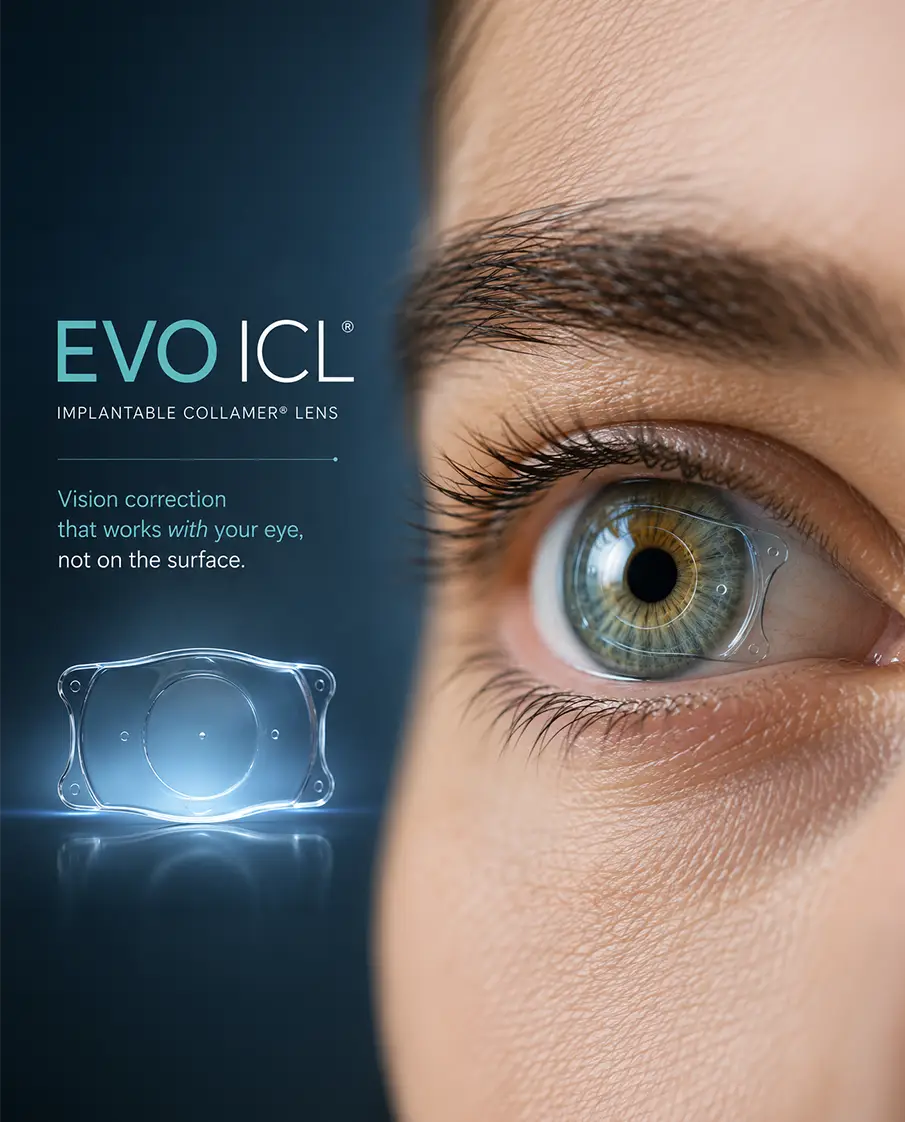
An implantable collamer lens placed inside the eye. No corneal tissue is removed, and the lens can be removed if needed.
Replaces the eye's natural lens with an advanced IOL. Corrects vision and eliminates any future risk of cataracts.
LASIK candidacy depends on factors not every patient meets: corneal thickness, prescription range, dry eye severity, age, and lifestyle all play a role. Patients who are not right for LASIK are redirected, not pressured.
LASIK requires sufficient corneal tissue. Patients with thinner corneas may be better candidates for PRK or EVO ICL.
Very high myopia or hyperopia may exceed the safe range for corneal reshaping. EVO ICL handles prescriptions LASIK cannot.
LASIK can worsen existing dry eye. EVO ICL and RLE do not affect the corneal nerve supply the same way.
Patients over 45 developing presbyopia may benefit more from Refractive Lens Exchange, which addresses near and distance vision at once.

PRK and LASIK use the same excimer laser to reshape the cornea and correct refractive error. The difference is how the cornea is accessed: LASIK creates a corneal flap, while PRK treats the corneal surface directly after the outer epithelial layer is removed.
Because PRK removes no internal tissue to create a flap, it is the preferred choice for patients with thinner corneas, those whose profession or sport makes flap-related risk a concern, and patients with corneal surface irregularities. The tradeoff is recovery time — typically one to two weeks for initial clarity versus one to two days with LASIK — but final outcomes are equivalent for most patients. At Berg-Feinfield, PRK is performed with the same iDESIGN 2.0 wavefront-guided platform used for LASIK.
EVO ICL takes a fundamentally different approach. Rather than reshaping the cornea with laser energy, a small, flexible corrective lens is placed inside the eye — between the iris and the natural crystalline lens — where it stays permanently but can be removed if needed.
Because no corneal tissue is removed, EVO ICL is an excellent option for higher prescriptions beyond the safe range for laser correction, borderline corneal thickness, or significant dry eye disease. The lens has a built-in UV filter, and many patients report exceptional visual quality — particularly in low light — thanks to a larger optical zone than corneal laser procedures. Berg-Feinfield offers EVO ICL at its Beverly Hills location and serves patients throughout the Los Angeles area.

Refractive Lens Exchange replaces the eye's natural crystalline lens with a precision artificial intraocular lens (IOL). The procedure is identical to cataract surgery, but performed electively — before cataracts develop — to correct refractive error and reduce dependence on glasses or contacts.
Because the natural lens is removed and replaced, the eye can never develop a cataract afterward, combining refractive correction and lifetime cataract prevention in a single procedure. Advanced multifocal and extended depth-of-focus IOLs can address both distance and near vision simultaneously. RLE is typically best for patients in their mid-40s and beyond who are beginning to develop presbyopia and want a comprehensive solution LASIK alone cannot fully provide.
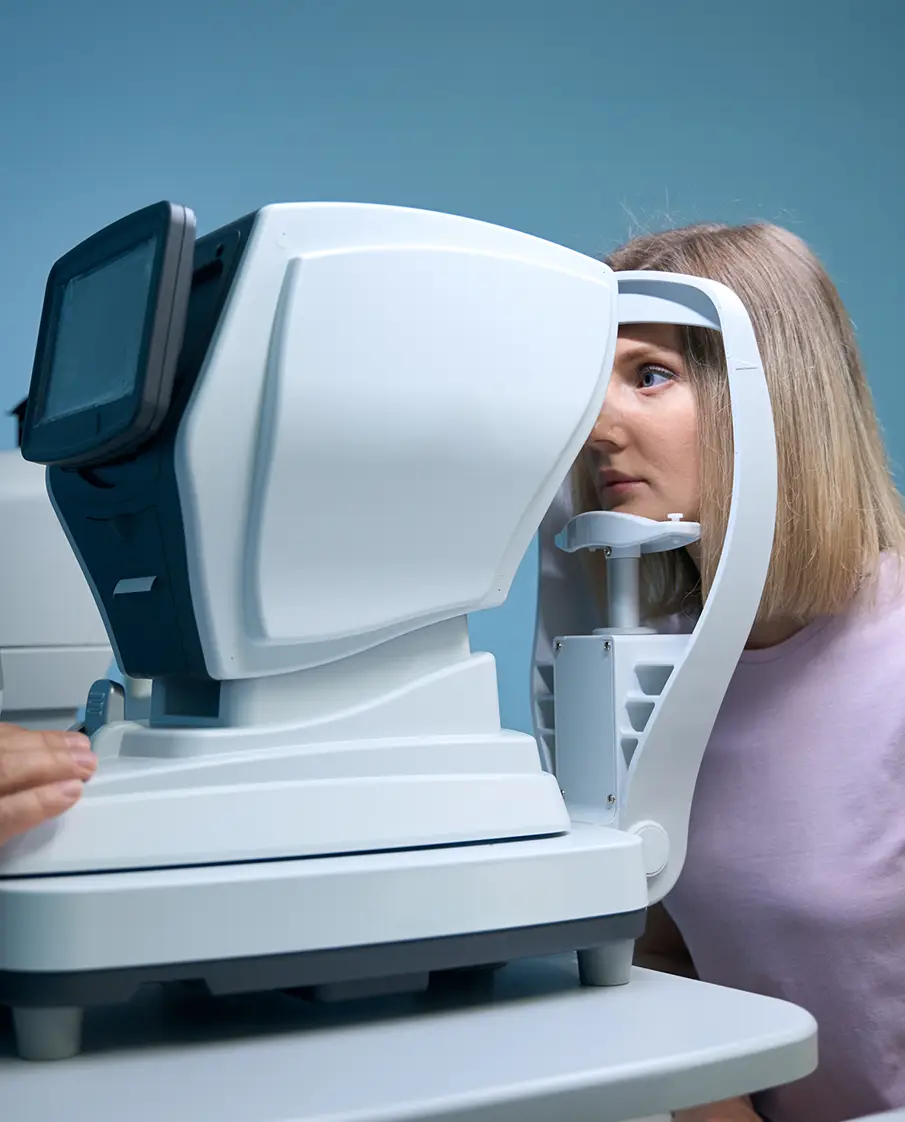
The only reliable way to know which procedure fits your eyes is a comprehensive in-office evaluation. Here is what the screening considers, and what points toward each option.
Berg-Feinfield offers complimentary consultations at five Los Angeles area locations. You will leave knowing exactly which procedure — if any — is the right fit for your eyes.
Schedule Your EvaluationDr. Alan M. Berg co-founded Berg-Feinfield and has performed refractive surgery in Los Angeles for over three decades — tens of thousands of LASIK, PRK, and advanced lens procedures.
LASIK, PRK, EVO ICL, and Refractive Lens Exchange — all offered under one roof.
The advice reflects what is best for your eyes, not what is convenient to offer.
A co-founder who has trained ophthalmologists leading practices across the country.
Burbank, Sherman Oaks, Beverly Hills, Arcadia, and Valencia — complimentary consultations at each.
See exactly how LASIK stacks up against each alternative — recovery, candidacy, cost, and long-term outlook.
Same laser, different surface access — how recovery and candidacy differ.
Compare →Reshaping the cornea vs. an implantable lens for higher prescriptions.
Compare →Corneal correction vs. replacing the lens for presbyopia and beyond.
Compare →The full overview of bladeless, all-laser LASIK at Berg-Feinfield.
Explore →Answer a few questions to see which procedures may suit your eyes.
Take the test →Our implantable collamer lens option for the Westside and beyond.
Explore →A complimentary evaluation at Berg-Feinfield covers all options — LASIK, PRK, EVO ICL, and Refractive Lens Exchange — so you leave with a clear answer, not just a referral elsewhere.