The New BergFeinfield.com Is Live

Our New Website Is Live | Berg-Feinfield Vision Correction

The New BergFeinfield.com Is Live

After more than four decades of caring for Los Angeles eyes, we’ve rebuilt our home on the web from the ground up — faster, clearer, and designed around the questions you actually ask us. Here’s a quick tour of what’s new.

The new Berg-Feinfield Vision Correction website on desktop and mobile

Same Doctors. Same Care. A Much Better Website.

Our goal was simple: whatever brought you here — blurry menus, a LASIK question, a cataract diagnosis — you should find a clear answer in two clicks or less.

The new site is built for how patients actually research eye care in 2026. Every procedure page answers the most-asked questions up front, every treatment has an honest “who it’s for and who it isn’t” section, and everything works beautifully on your phone. Whether you’re comparing LASIK to its alternatives or weighing lens options for cataract surgery, the information you need is finally all in one place.

Answers First. Jargon Never.

Every procedure page on the new site opens with a plain-English quick answer, then goes as deep as you want to go — candidacy, technology, recovery, and honest “who this isn’t for” guidance. Wondering whether LASIK fits your eyes, what the laser actually does in cataract surgery, or how LASIK pricing really works? It’s all written the way we’d explain it across the exam-room table.

And because no two eyes are alike, the site is organized around your situation — not our org chart. Start from a symptom, a procedure, a doctor, or your neighborhood, and you’ll land in the right place.

Berg-Feinfield doctor explaining vision correction options to a Los Angeles patient

Six Things Worth Exploring First

Easier Appointment Requests

Our new secure contact form gets your request straight to the right office — or call any location directly from its page.

Find Your Path by Stage of Life

The new site maps vision correction the way it actually works: what’s right at 30 is rarely what’s right at 65.

Young adult exploring LASIK, PRK, and EVO ICL options in Los Angeles

18–45: Ditch the Lenses

LASIK, PRK, and EVO ICL — modern correction for active years.

Explore LASIK →
Patient in his 50s reducing dependence on reading glasses with refractive lens exchange

45–60: Lose the Readers

Refractive Lens Exchange and advanced lens implants for presbyopia.

Explore RLE →
Cataract surgery patient over 65 with restored vision in Los Angeles

65+: See Clearly Again

Laser cataract surgery with lenses chosen for your lifestyle — start with the self-test.

Explore Cataract Care →
Berg-Feinfield surgeons who co-manage patients with referring optometrists across Los Angeles
New for Optometrists

A Brand-New Portal for Referring Doctors

One of the biggest additions to the new site isn’t for patients at all. Our new Partnering Optometrists portal gives referring ODs a dedicated home: streamlined referral tools, co-management protocols, direct lines to our surgical coordinators, and a first look at the technology your patients will be treated with.

If you co-manage LASIK, cataract, or cornea patients with us — or you’d like to start — the portal is the fastest way to work with our surgeons. Every referred patient is evaluated promptly and returns to your chair for ongoing care.

Five Offices. One Standard of Care.

From the San Fernando Valley to the San Gabriel Valley to Santa Clarita, every location page now includes maps, hours, and the services offered there.

Advanced diagnostic and surgical technology at Berg-Feinfield Vision Correction

See the Technology Behind the Care

The new site finally shows what happens behind the exam room door: the diagnostic imaging that maps your eye before any recommendation, the wavefront-guided LASIK platform, and the femtosecond laser that brings computer-guided precision to cataract surgery.

Technology pages aren’t there to impress you with acronyms — they exist so you can understand exactly what will happen to your eyes, and why we chose the platforms we did.

Questions About Finding Us & the New Site

Berg-Feinfield Vision Correction has five offices across the greater Los Angeles area: Burbank (2625 W. Alameda Ave., Suite 208), Sherman Oaks (13320 Riverside Drive, Suite 114), Beverly Hills (462 N. Linden Drive, Suite 441), Arcadia (638 W. Duarte Road, Suite 10), and Valencia (27335 Tourney Road, Suite 210). Call 866-2-SEE-FAR to reach any location.
Yes. Our Burbank and Sherman Oaks offices serve LASIK patients across the San Fernando Valley — Studio City, North Hollywood, Van Nuys, Encino, Glendale, and beyond — with all-laser, bladeless LASIK and complimentary consultations. See our San Fernando Valley LASIK page for details.
Yes. Our Arcadia office serves the San Gabriel Valley — Pasadena, Monrovia, Temple City, San Marino, Alhambra, and surrounding communities — with the same surgeons and technology as every Berg-Feinfield location. Start with our San Gabriel Valley LASIK page.
Our Valencia office at 27335 Tourney Road serves Santa Clarita, Valencia, Newhall, Saugus, Canyon Country, and the surrounding Santa Clarita Valley — no drive into Los Angeles required for consultations or follow-up care.
Yes. Old bookmarks and links redirect automatically to the matching page on the new site. If you can’t find something you used before — a form, a resource, a page — contact us and we’ll point you to it directly.
Three ways: use the secure appointment request form, call 866-2-SEE-FAR (866-273-3327), or start with a free online self-test — the vision correction self-test or the cataract self-test — and request your consultation from your results.

Take a Look Around — Then Come See Us

The website is new, but the promise is the one we’ve kept since 1980: personalized care, top technology, and honest recommendations for your eyes.

Is LASIK Right for You? How Age, Prescription & Lifestyle Decide

Is LASIK Right for You? Options by Age & Lifestyle | Berg-Feinfield

Is LASIK Right for You? How Age, Prescription & Lifestyle Decide

LASIK is not the only vision correction option. The right procedure depends on how old you are, how strong your prescription is, and what you want your vision to do for the next few decades. Here’s how our Los Angeles surgeons think it through.

Los Angeles patient deciding between LASIK and other vision correction options

Quick Answer

LASIK is typically the best fit for adults 21–45 with a stable prescription, adequate corneal thickness, and healthy eyes. Thin corneas or an active lifestyle may point to PRK; very high prescriptions to the EVO ICL; and patients 45+ developing presbyopia often do better with Refractive Lens Exchange. The only way to know for sure is a comprehensive evaluation — Berg-Feinfield offers them free at five Los Angeles area offices.

What Actually Determines Whether LASIK Is Right for You?

Four factors do most of the deciding. None of them is about age alone — but age changes how the factors stack up.

01

Prescription & Stability

Your refractive error must sit within LASIK’s treatable range and hold steady for 1–2 years. Very high myopia points instead to the EVO ICL, which treats up to −20.00 D.

02

Corneal Thickness & Shape

LASIK reshapes the cornea, so there must be enough healthy tissue. Thin corneas often do beautifully with PRK; irregular shapes like keratoconus rule out laser reshaping entirely.

03

Eye Health

Significant dry eye, corneal disease, or early lens changes shift the recommendation. Often the dry eye gets treated first — then candidacy is re-checked.

04

Age & Vision Goals

The same eyes need different solutions at 25, 50, and 70 — because the eye’s natural lens keeps changing long after the cornea stops. That’s why we map options by stage of life below.

LASIK candidate in her 20s considering vision correction in Los Angeles
Ages 18–45

In Your 20s or 30s? This Is LASIK’s Prime Window

Once your prescription has been stable for a year or two, the years between your early 20s and mid-40s are the ideal stretch for LASIK in Los Angeles: your natural lens still focuses at all distances, so correcting the cornea corrects everything. Berg-Feinfield performs all-laser, bladeless LASIK using the iDESIGN 2.0 wavefront-guided platform, mapping your eye’s unique optical fingerprint before a single pulse of treatment.

LASIK isn’t automatic at this age, though. Two common detours:

  • Thin corneas, contact sports, or tactical careersPRK delivers equivalent final vision with no corneal flap. See LASIK vs. PRK.
  • High myopia beyond LASIK’s range → the EVO ICL corrects up to −20.00 D, removes no tissue, and is reversible. See LASIK vs. EVO ICL.
Ages 45–60

In Your 40s or 50s? The Question Changes

Somewhere in the mid-40s, nearly everyone starts holding menus farther away. That’s presbyopia — and it happens in the eye’s natural lens, not the cornea. LASIK can still deliver crisp distance vision at this age, and monovision LASIK (one eye tuned for near) works well for many patients. But if reading glasses are the real frustration, reshaping the cornea treats the wrong part of the eye.

That’s why patients 45+ increasingly choose Refractive Lens Exchange (RLE): the aging natural lens is replaced with a precision IOL — the same advanced lens implants used in modern cataract surgery — correcting distance and near vision in one procedure and eliminating any future cataract. Compare the two approaches side by side in our LASIK vs. RLE guide.

Patient in his 50s exploring refractive lens exchange as a LASIK alternative
Cataract surgery patient over 60 with restored clear vision in Los Angeles
Ages 60+

Over 60? Check the Lens Before the Laser

Past 60, the most common reason vision blurs isn’t refractive error at all — it’s the early clouding of the natural lens. If a cataract is forming, LASIK is the wrong operation: it would sharpen a lens that’s about to cloud over anyway. The right move is laser-assisted cataract surgery, which removes the clouding lens and replaces it with an advanced IOL chosen for your lifestyle.

Modern premium lens options — trifocal, extended depth-of-focus, full-visual-range, and even light-adjustable lenses that are fine-tuned after surgery — mean cataract surgery today often ends decades of glasses dependence, not just the cataract. Not sure whether your symptoms point to a cataract? Our cataract self-test takes about a minute.

Getting LASIK in the Valleys — Without the Drive

You don’t need to cross the hills for surgeon-level LASIK care. Berg-Feinfield has served Valley patients for over four decades.

San Fernando Valley

Our Burbank and Sherman Oaks offices serve LASIK patients from Studio City, North Hollywood, Van Nuys, Encino, Glendale, and across the Valley — same surgeons, same all-laser technology, minutes from home.

LASIK in the San Fernando Valley

San Gabriel Valley

Our Arcadia office serves Pasadena, Monrovia, Temple City, San Marino, Alhambra, and the greater San Gabriel Valley — complimentary consultations without the trip downtown.

LASIK in the San Gabriel Valley

What About Cost?

The honest answer: the right procedure at the right time is cheaper than the wrong one twice.

LASIK pricing in Los Angeles varies with technology and the complexity of your prescription — our LASIK cost guide breaks down what’s included and what to watch for in too-good-to-be-true pricing. Lens-based procedures are priced by the IOL technology selected. Every option can be financed with flexible monthly plans through CareCredit — see financing options — and every consultation at Berg-Feinfield is complimentary, so finding out where you stand costs nothing.

Your Questions, Answered

Most LASIK patients are between 21 and 45 — old enough for the prescription to have stabilized for one to two years, and young enough that presbyopia (age-related loss of near focus) has not yet set in. LASIK can still be an excellent option after 45, but at that point lens-based procedures like Refractive Lens Exchange often address both distance and near vision at once.
Often, yes — healthy eyes with adequate corneal thickness can qualify for LASIK at 50 and beyond. The bigger question is whether LASIK is the best tool: it cannot stop presbyopia or future cataracts. Many patients over 50 get a more complete, longer-lasting result from Refractive Lens Exchange with an advanced intraocular lens, which corrects vision and prevents cataracts from ever forming.
LASIK safely treats most common prescriptions, but very high myopia, hyperopia, or astigmatism can exceed the range of safe corneal reshaping. For high myopia — up to −20.00 D — the EVO ICL implantable lens corrects prescriptions well beyond LASIK’s limit without removing corneal tissue. A corneal-mapping evaluation determines your exact range.
It can be — options like monovision LASIK correct one eye for distance and one for near. But if reading glasses are your main frustration, the underlying cause is presbyopia, which happens in the lens of the eye, not the cornea. Lens-based procedures such as Refractive Lens Exchange with a full-visual-range or extended depth-of-focus IOL treat the actual cause and often deliver the result patients are really after.
Berg-Feinfield Vision Correction serves San Fernando Valley LASIK patients from offices in Burbank and Sherman Oaks, with all-laser, bladeless LASIK and complimentary consultations. Patients come from Studio City, North Hollywood, Van Nuys, Encino, Glendale, and across the Valley.
Berg-Feinfield’s Arcadia office serves San Gabriel Valley LASIK patients from Pasadena, Monrovia, Temple City, San Marino, Alhambra, and surrounding communities — with the same surgeons and all-laser LASIK technology as our other Los Angeles locations.
Start with our free 60-second online self-test to see which procedures may suit your eyes, then schedule a complimentary in-office consultation. The evaluation includes corneal mapping, prescription assessment, and a candidacy review across every option — LASIK, PRK, EVO ICL, and Refractive Lens Exchange — so you leave with a clear answer.

Get a Clear Answer — Free

One complimentary evaluation with our Los Angeles eye surgeons covers every option — LASIK, PRK, EVO ICL, and lens-based surgery — at Burbank, Sherman Oaks, Beverly Hills, Arcadia, or Valencia.

Our Cornea Center

When to See a Cornea Specialist in Los Angeles | Berg-Feinfield
Advanced Cornea Care

When to See a Cornea Specialist in Los Angeles

Eye pain, cloudy vision, redness, light sensitivity, or a visible growth on the eye may be signs of a corneal condition that needs expert evaluation.

June 2026 7 min read

The cornea is the clear front surface of the eye. When it is healthy, light enters the eye cleanly and focuses properly. When the cornea becomes infected, swollen, scarred, irregular, or damaged, vision can become blurry, distorted, painful, or cloudy.

Because the cornea plays such an important role in focusing vision, corneal symptoms should not be ignored. Some conditions develop gradually over years. Others, such as a corneal ulcer, can progress quickly and require urgent care.

At Berg-Feinfield Vision Correction, patients in Los Angeles have access to advanced cornea evaluation and treatment for conditions such as corneal ulcers, pterygium, Fuchs’ dystrophy, corneal scarring, and corneal transplant needs.

What Does the Cornea Do?

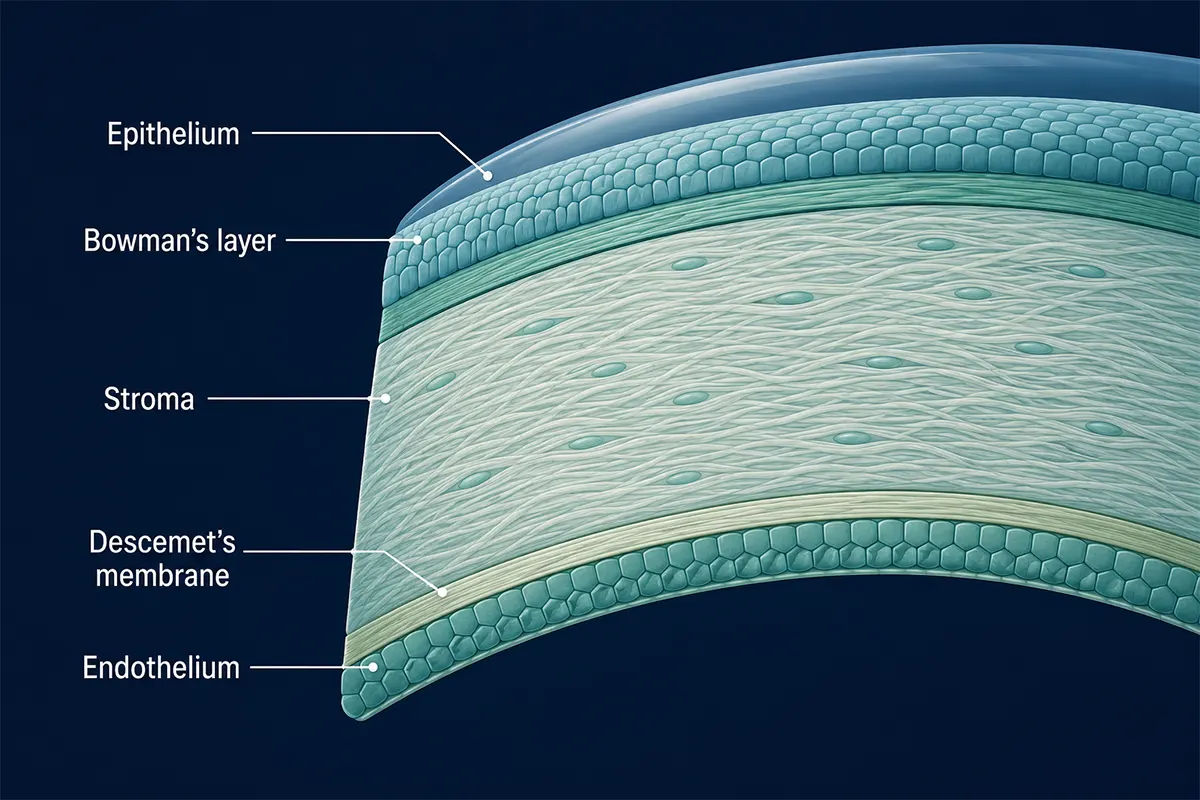
The cornea is the transparent, dome-shaped tissue at the front of the eye. It protects the eye and helps focus light onto the retina. Even small changes in the cornea can have a major effect on vision.

When the cornea is damaged, patients may experience symptoms such as blurry vision, glare, halos, redness, pain, tearing, light sensitivity, or a foreign body sensation. In some cases, patients notice a visible spot, haze, scar, or growth on the eye.

A painful red eye should never be ignored. If you have eye pain, light sensitivity, blurred vision, discharge, or a white spot on the cornea, you should seek prompt evaluation.

Cornea Care with Bonnie Sklar, MD

Bonnie Sklar, MD — Cornea Specialist at Berg-Feinfield Vision Correction

Bonnie Sklar, MD

Cornea · External Disease · Cataract & Refractive Surgery

Dr. Sklar provides advanced care for corneal disease, including corneal infections, Fuchs’ dystrophy, pterygium, corneal scarring, and corneal transplant evaluation.

Full Bio

Cornea specialists receive advanced training in the diagnosis and treatment of diseases affecting the cornea and the surface of the eye. This includes infections, inflammatory conditions, corneal dystrophies, corneal scars, degenerations, and surgical treatments such as corneal transplantation.

1. Corneal Ulcer: A Serious Eye Emergency

A corneal ulcer is an open sore on the cornea, often caused by infection. It may develop after a scratch, contact lens complication, trauma, severe dry eye, or exposure to bacteria, viruses, fungi, or parasites.

Symptoms may include:

  • Eye pain, often moderate to severe
  • Redness that does not quickly improve
  • Light sensitivity or difficulty keeping the eye open
  • Blurred vision or a sudden decrease in vision
  • Tearing or discharge
  • A white, gray, or cloudy spot on the cornea

Contact lens wearers should be especially cautious. Sleeping in contact lenses, poor lens hygiene, swimming in contacts, or overwearing lenses can increase the risk of corneal infection.

Bottom line: a corneal ulcer can threaten vision if not treated quickly. If you have symptoms of a corneal ulcer, schedule an urgent eye evaluation.

2. Pterygium: A Growth on the Surface of the Eye

A pterygium is a raised, fleshy growth that starts on the white part of the eye and may extend onto the cornea. It is sometimes associated with long-term exposure to sunlight, wind, dust, and dry conditions.

In Southern California, pterygium can be common among people who spend significant time outdoors, including beachgoers, golfers, runners, cyclists, construction workers, and anyone with frequent UV exposure.

A pterygium may cause:

  • Chronic redness or irritation
  • Burning, dryness, or foreign body sensation
  • A visible growth on the eye
  • Blurred or distorted vision if it grows onto the cornea
  • Cosmetic concern because of the appearance of the eye

Not every pterygium requires surgery. Mild cases may be monitored or treated with lubrication and anti-inflammatory medications. If the growth becomes visually significant, chronically inflamed, or cosmetically bothersome, pterygium surgery may be recommended.

3. Fuchs’ Dystrophy: Cloudy Vision from Corneal Swelling

Fuchs’ dystrophy is a progressive corneal condition that affects the endothelium, the inner layer of cells that helps keep the cornea clear. When these cells weaken, fluid can build up in the cornea, causing swelling and cloudy vision.

Patients with Fuchs’ dystrophy often notice that their vision is worse in the morning and improves as the day goes on. Over time, the cloudy vision may become more constant.

Symptoms may include:

  • Cloudy or hazy vision
  • Morning blur that gradually improves
  • Glare or halos around lights
  • Difficulty with night driving
  • Fluctuating vision
  • Eye discomfort or a gritty sensation

Early Fuchs’ dystrophy may be monitored or managed with medication. More advanced cases may require a partial-thickness corneal transplant procedure that replaces the unhealthy inner layer of the cornea.

4. Corneal Transplant: When the Cornea Cannot Stay Clear

A corneal transplant may be recommended when the cornea is too scarred, swollen, irregular, or damaged to provide clear vision. The goal is to replace diseased corneal tissue with healthy donor tissue.

Modern corneal transplantation is not one single procedure. The right technique depends on which layer of the cornea is affected and how advanced the disease has become.

Partial-Thickness

Endothelial Keratoplasty

Used for conditions affecting the inner corneal layer, such as advanced Fuchs’ dystrophy. These procedures replace the diseased inner layer while leaving healthy corneal tissue intact.

Full-Thickness

Penetrating Keratoplasty

Used when deeper or more extensive corneal damage requires replacement of the full corneal thickness.

A corneal transplant may be considered for advanced Fuchs’ dystrophy, corneal scarring, severe keratoconus, prior trauma, corneal swelling after surgery, or certain infections after the eye has stabilized.

When Should You See a Cornea Specialist?

You may need to see a cornea specialist if you have symptoms or a diagnosis involving the front surface of the eye. Some patients are referred by their optometrist or general ophthalmologist. Others seek care because their symptoms are persistent, worsening, or interfering with daily activities.

Common reasons to schedule a cornea evaluation include:

  • Persistent eye pain, redness, or irritation
  • Cloudy, hazy, or fluctuating vision
  • Light sensitivity
  • A visible growth, white spot, scar, or haze on the eye
  • History of contact lens complications
  • Known Fuchs’ dystrophy, keratoconus, or corneal scarring
  • Need for corneal transplant evaluation
  • Second opinion for a corneal diagnosis

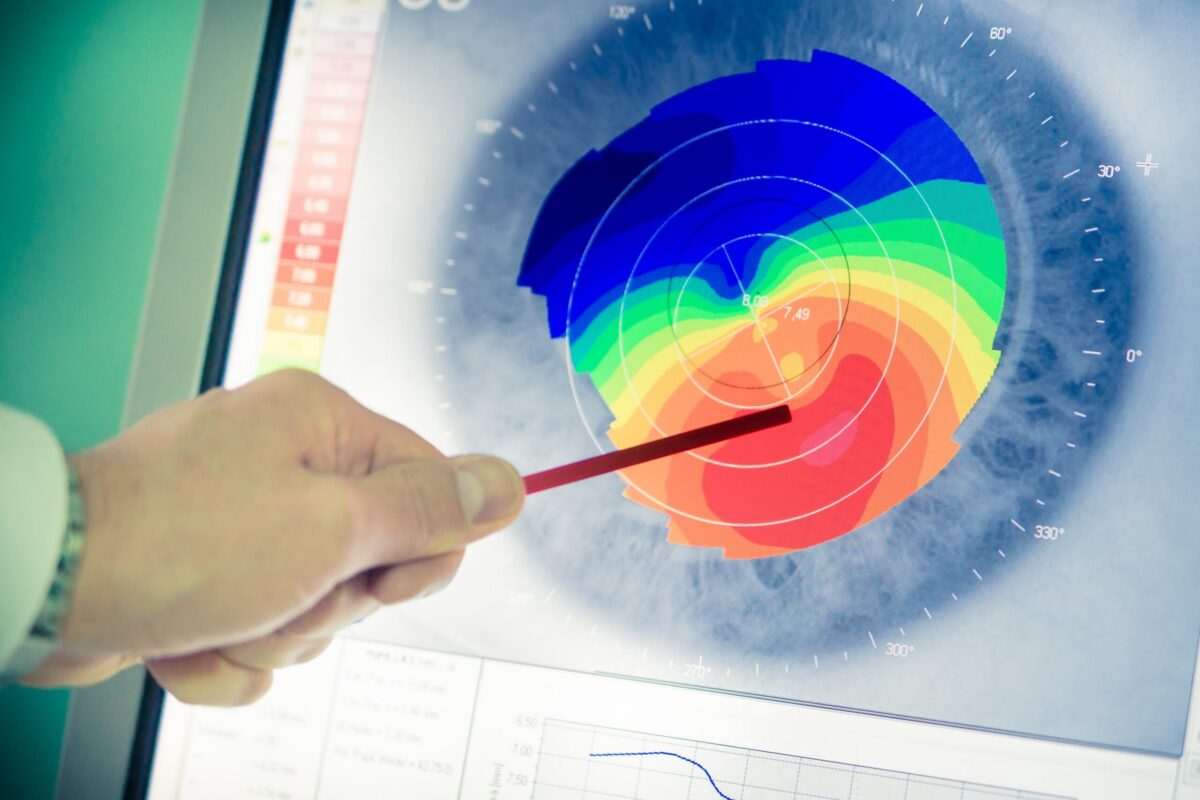
Corneal conditions can often be treated more effectively when diagnosed early. A thorough evaluation may include slit-lamp examination, corneal imaging, corneal thickness measurements, tear film evaluation, and other diagnostic testing based on your symptoms.

Frequently Asked Questions

What does a cornea specialist treat?

A cornea specialist treats diseases and injuries affecting the clear front surface of the eye. This may include corneal ulcers, pterygium, Fuchs’ dystrophy, keratoconus, corneal scarring, corneal swelling, dry eye-related surface disease, and corneal transplant evaluation.

Is a corneal ulcer an emergency?

Yes. A corneal ulcer can be vision-threatening and should be evaluated promptly. Symptoms such as eye pain, redness, light sensitivity, discharge, blurry vision, or a white spot on the cornea should not be ignored.

Can pterygium go away on its own?

A pterygium usually does not disappear on its own. Mild cases may be managed with lubrication or anti-inflammatory drops, but surgery may be recommended if the growth affects vision, causes chronic irritation, or becomes cosmetically concerning.

What are the early symptoms of Fuchs’ dystrophy?

Early Fuchs’ dystrophy may cause cloudy or hazy vision, glare, halos around lights, and vision that is worse in the morning. Symptoms may become more constant as the condition progresses.

When is a corneal transplant needed?

A corneal transplant may be needed when the cornea is too scarred, swollen, irregular, or damaged to provide clear vision. The type of transplant depends on which layer of the cornea is affected.

Schedule a Cornea Evaluation

If you have eye pain, redness, cloudy vision, corneal disease, or have been told you may need a corneal transplant, Berg-Feinfield can help.

Why an Ophthalmologist May Be the Best Botox & Filler Injector in Los Angeles

Ophthalmologist Botox & Fillers Los Angeles | Berg-Feinfield
Ophthalmologist-Led Aesthetics

Why an Ophthalmologist May Be the Best Botox & Filler Injector in Los Angeles

Dr. Robert Feinfield has been working with botulinum toxin since 1986 — sixteen years before it was approved for cosmetic use. Nearly 40 years later, he brings that same surgical precision to every injection at Berg-Feinfield.

May 2026 8 min read

In a city where Botox and dermal fillers are available at virtually every medspa, dermatology office, and dental practice within a five-mile radius, the question most patients in Los Angeles never think to ask is the one that matters most: what kind of doctor is actually holding the needle?

At Berg-Feinfield Vision Correction, facial aesthetics — including Botox, Juvéderm, and Restylane — are performed by Dr. Robert Feinfield, a board-certified ophthalmologist who was one of the original FDA investigators for Botox. He has been working with botulinum toxin since 1986 — sixteen years before the drug was approved for cosmetic use. By the time the aesthetics industry caught up, Dr. Feinfield had already spent two decades studying how the drug behaved in the most sensitive tissue on the human face.

That background — surgical training in the periorbital anatomy, thousands of eyelid surgeries, and nearly 40 years of hands-on experience with botulinum toxin — is what separates an ophthalmologist-led aesthetics practice from the volume injection model that dominates Los Angeles.

Who Is Dr. Robert Feinfield?

Robert Feinfield, MD — Ophthalmologist, Berg-Feinfield Vision Correction

Robert Feinfield, MD

Board-Certified Ophthalmologist · Original FDA Botox Investigator · UCSF School of Medicine

Cataract surgery, cosmetic eyelid surgery (blepharoplasty), Botox, Juvéderm, Restylane, and Latisse. Available in Burbank and Sherman Oaks.

Full Bio

Dr. Robert Feinfield is a board-certified ophthalmologist at Berg-Feinfield Vision Correction in Los Angeles. He graduated with honors from the University of California, San Francisco School of Medicine and magna cum laude from UC San Diego and the University of Bergen, Norway. He completed his ophthalmology residency at the LSU/Ochsner Eye Center in New Orleans — where the first laser vision correction surgery in the world was performed.

Dr. Feinfield has served as Chairman of Ophthalmology at Providence Saint Joseph Medical Center in Burbank and is an appointed Expert Reviewer for the Medical Board of California. He serves on the board of directors for Pacific Surgery Center and has been a consultant and instructor for Alcon Surgical, teaching cataract surgery techniques to residents. He is fluent in English and Spanish.

Beyond vision correction and cataract surgery, Dr. Feinfield is known for his expertise in cosmetic eyelid plastic surgery (blepharoplasty) and non-surgical cosmetic treatments. As one of the original FDA investigators for Botox, he has been working with botulinum toxin longer than most aesthetic injectors in Los Angeles have been practicing medicine. His approach to Botox and fillers is informed by an operating surgeon’s understanding of the facial anatomy — specifically the muscles, nerves, blood vessels, and fascial layers around the eye, brow, and midface.

Why Do Ophthalmologists Make Good Botox Injectors?

Ophthalmologists are uniquely qualified to perform facial aesthetic injections because they spend years training on the exact anatomy most commonly treated with Botox and fillers — the upper face and periorbital region. The forehead, the glabella (between the eyebrows), the crow’s feet area, the brow, the temples, and the under-eyes are the most requested treatment zones for both Botox and dermal fillers, and they are the same structures an ophthalmologist operates on for conditions like blepharospasm, strabismus, ptosis, and eyelid reconstruction.

This isn’t theoretical knowledge. It’s surgical knowledge — acquired under a microscope, refined across thousands of cases, and applied at a level of anatomical precision that most cosmetic injection training programs don’t come close to replicating. An ophthalmologist knows exactly which muscles move the brow, which nerve branches supply sensation across the forehead, and where the blood vessels run that should never be compromised with a needle.

The goal isn’t to remove all expression — it’s to preserve the expressions that make a face look like itself, while quieting the ones that make it look tired or angry. The forehead still moves. The brow stays mobile. Crow’s feet soften without flattening the smile.

What Does Botox Treat?

Botox (onabotulinumtoxinA) is an injectable neuromodulator that temporarily relaxes specific facial muscles to smooth dynamic wrinkles — lines and creases caused by repeated muscle contraction over time. At Berg-Feinfield in Los Angeles, Botox is used to treat:

  • Forehead lines — horizontal lines across the forehead caused by the frontalis muscle
  • Frown lines — the vertical “11” lines between the eyebrows caused by the procerus and corrugator muscles
  • Crow’s feet — fan-shaped lines at the outer corners of the eyes caused by the orbicularis oculi
  • Brow asymmetry and brow shaping
  • Bunny lines on the nose
  • Downturned mouth or “gummy smile”

Botox results typically become visible within three to seven days and last three to four months. Repeat treatments are required to maintain results, and many patients find that with consistent treatment, they need less product over time as the muscles gradually weaken from disuse.

Dr. Feinfield’s injection technique prioritizes preserving natural facial expression. In practical terms, this means the lateral brow stays mobile, the forehead can still express surprise when surprise is the point, and the result looks rested rather than frozen.

What Are Dermal Fillers and What Do They Treat?

Dermal fillers are injectable gels — most commonly hyaluronic acid (HA) — that restore volume, smooth wrinkles, and contour facial structures. Unlike Botox, which relaxes muscles, fillers physically add volume beneath the skin to replace what age, gravity, and bone resorption have taken away.

At Berg-Feinfield’s Los Angeles offices, Dr. Feinfield uses the full Juvéderm and Restylane product families, selecting the specific formulation based on the treatment zone and the patient’s anatomy. Treatment areas include:

  • Cheeks and midface — to restore projection and lift that diminishes with age
  • Under-eyes and tear troughs — one of the highest-risk and most technically demanding injection zones on the face
  • Nasolabial folds — lines running from the nose to the corners of the mouth
  • Lips — volume enhancement and border definition
  • Jawline and chin — contour and structural support
  • Temples — where volume loss creates a hollowed, aged appearance

Results are visible immediately and typically last six months to two years depending on the product used, the treatment area, and the patient’s metabolism.

What Is the Difference Between Botox and Fillers?

Botox and dermal fillers are complementary treatments that address different causes of facial aging.

Neuromodulator

Botox

Relaxes muscles that cause dynamic wrinkles — the lines created by repeated facial movement such as frowning, squinting, and raising the eyebrows. Results in 3–7 days, lasts 3–4 months.

Dermal Filler

Juvéderm & Restylane

Replaces volume lost through aging, adding structure and fullness to areas that have deflated or descended. Immediate results, lasts 6–24 months depending on formulation and area.

Many patients in Los Angeles benefit from both. A typical combination at Berg-Feinfield might include Botox to the forehead and crow’s feet to soften expression lines, paired with filler to the cheeks and tear troughs to restore midface volume. The two treatments work on different mechanisms and are often performed in the same visit.

Why Is Under-Eye Filler Risky and Why Does Injector Expertise Matter?

The under-eye and tear trough area is considered one of the highest-risk zones for dermal filler injection. The skin is extremely thin, the tissue has minimal fat between the skin surface and the underlying bone, and the area is dense with blood vessels — including branches of the angular artery and inferior palpebral arteries. Injecting too superficially causes visible lumps and a bluish discoloration (the Tyndall effect). Injecting too deep or in the wrong plane risks vascular occlusion.

This is exactly where an ophthalmologist’s background becomes the most relevant differentiator. Dr. Feinfield has performed thousands of surgical procedures on the eyelids and periorbital region — he knows the tissue planes, the vascular anatomy, and the structural variations between patients at a level that can’t be replicated in a weekend injection course. Under-eye filler at Berg-Feinfield is placed conservatively, in the appropriate tissue plane, by a physician whose primary specialty is operating on this exact anatomy.

Frequently Asked Questions

What facial aesthetics services are available at Berg-Feinfield in Los Angeles?

Berg-Feinfield offers ophthalmologist-led facial aesthetics at their Burbank and Sherman Oaks locations in Los Angeles. Available treatments include Botox for dynamic wrinkles of the upper face, Juvéderm and Restylane dermal fillers for volume restoration and facial contouring, cosmetic eyelid surgery (blepharoplasty) for upper and lower lid rejuvenation, and Latisse for eyelash growth. All injectable treatments are performed personally by Dr. Robert Feinfield — not delegated to a nurse injector, physician assistant, or aesthetician.

How long does Botox last?

Botox results typically become visible within three to seven days after injection and last three to four months. Repeat treatments are needed to maintain the result. Many patients find that with consistent, regular Botox treatment, they gradually need less product as the targeted muscles weaken from disuse over time.

How long do dermal fillers last?

Dermal filler results are visible immediately and typically last six months to two years, depending on the specific product used, the treatment area, and the individual patient’s metabolism. Lip fillers tend to metabolize faster (6–12 months), while cheek and jawline fillers often last 12–24 months.

Can Botox and fillers be done at the same appointment?

Yes. Botox and dermal fillers address different causes of facial aging and are frequently performed in the same visit at Berg-Feinfield. A typical combination might include Botox to the forehead and crow’s feet paired with filler to the cheeks and tear troughs. Dr. Feinfield will recommend the appropriate combination based on your anatomy and goals during your consultation.

Is under-eye filler safe?

Under-eye filler is safe when performed by an injector with advanced knowledge of periorbital anatomy. The tear trough area is considered high-risk because the skin is thin, vasculature is dense, and there is minimal tissue between the surface and the bone. Complications from inexperienced injectors include visible lumps, the Tyndall effect (bluish discoloration), and vascular occlusion. At Berg-Feinfield, under-eye filler is performed by Dr. Feinfield, an ophthalmic surgeon whose primary specialty is operating on this exact anatomy.

Who should consider an ophthalmologist for Botox and fillers in Los Angeles?

A consultation at Berg-Feinfield is particularly appropriate for patients who want Botox or fillers performed by a physician with surgical training in facial anatomy rather than a nurse injector or aesthetician; are interested in under-eye filler, brow treatment, or any periorbital injection; have had a previous result that looked overdone or frozen and want a more conservative, anatomy-first approach; are considering cosmetic eyelid surgery and want to explore injectables first; or simply want the confidence that their injector has been working with these products for nearly 40 years.

Schedule a Consultation with Dr. Feinfield

Ophthalmologist-led Botox, Juvéderm, Restylane, and cosmetic eyelid surgery in Burbank and Sherman Oaks.

Why Your Dry Eye Treatment Isn’t Working — And What to Do About It in Los Angeles

Why Your Dry Eye Treatment Isn’t Working — And What to Do About It in Los Angeles

Most dry eye patients in Los Angeles have already tried something before they find the right doctor. Artificial tears. Restasis for six months with no noticeable improvement. A warm compress. A sample of something from an optometrist. They’re still burning, still blurring out by mid-afternoon, and still waiting for someone to explain what’s actually going on.

The most common reason dry eye treatment fails is that no one has identified which type of dry eye is driving the problem before reaching for a prescription. That’s the starting point at the Dry Eye Center at Berg-Feinfield Vision Correction — the first diagnosis-first dry eye practice in the Los Angeles area, with dedicated dry eye care at their Burbank and Sherman Oaks locations.

What Causes Dry Eye Disease?

Dry eye disease is caused by one of two mechanisms — or, in most cases, a combination of both. Understanding which mechanism is dominant is the single most important factor in choosing the right treatment.

Aqueous-deficient dry eye occurs when the lacrimal glands don’t produce enough tears. It’s more common with age, autoimmune conditions like Sjögren’s syndrome, certain medications (antihistamines, antidepressants, blood pressure medications), and sometimes after LASIK surgery.

Evaporative dry eye is caused by meibomian gland dysfunction (MGD), where the oil-producing glands in the eyelids become clogged or underperform. Without a healthy oil layer, tears evaporate too quickly — even when production is normal. MGD is the most common cause of dry eye disease today and the form most frequently missed in a routine eye exam.

Most patients have elements of both. An anti-inflammatory drop designed to increase tear production won’t help if the real problem is that tears are evaporating in three seconds because the meibomian glands are blocked. A gland-clearing treatment won’t resolve symptoms driven primarily by inflammation. Artificial tears — regardless of brand or frequency — only manage symptoms without addressing the underlying cause.

What Are the Symptoms of Dry Eye Disease?

The most common symptoms of dry eye disease include burning, stinging, or a scratchy sensation in the eyes; a persistent gritty feeling like something is in the eye; fluctuating or blurred vision that worsens in the evening or after extended screen time; excessive watering (a paradoxical reflex response to underlying dryness); stringy mucus, redness, or sensitivity to light and wind; difficulty wearing contact lenses comfortably; and eye fatigue by mid-afternoon.

If three or more of these symptoms are present, dry eye disease is likely contributing to the problem — and a comprehensive evaluation, not another bottle of artificial tears, is the appropriate next step.

How Is Dry Eye Diagnosed in Los Angeles?

A proper dry eye diagnosis requires more than a brief slit lamp exam and a prescription. At Berg-Feinfield’s Dry Eye Center in Los Angeles, every evaluation includes six diagnostic tests designed to identify which mechanism is driving each patient’s case.

Tear osmolarity testing measures the salt concentration in the tears — elevated osmolarity is one of the most reliable objective markers of dry eye disease. Tear breakup time (TBUT) measures how quickly the tear film destabilizes between blinks, pointing directly to evaporative dry eye when the result is short. Meibomian gland imaging and expression assesses the structure and function of the oil-producing glands, identifying MGD. Corneal and conjunctival staining with fluorescein and lissamine green reveals actual surface damage on the eye that may not be visible without dye. Schirmer testing measures tear production volume directly when aqueous deficiency is suspected. And the Ocular Surface Disease Index (OSDI) questionnaire provides a validated severity score that serves as a baseline for tracking treatment response over time.

This combination tells the full story — which mechanism is dominant, how advanced the disease is, and which treatments are appropriate — before anything is prescribed.

What Are the Best Dry Eye Treatments Available in Los Angeles?

The Dry Eye Center at Berg-Feinfield offers 11 targeted treatments for dry eye disease, organized in tiers and selected based on what the diagnostic workup reveals. Most patients in Los Angeles who visit the center end up on a tailored combination of two or three treatments matched to their specific mechanism.

For inflammation-driven dry eye, prescription options include Restasis (cyclosporine 0.05%), Vevye (a newer water-free cyclosporine 0.1% formulation that is better tolerated and shows efficacy in as few as four weeks), and Tryptyr — a newer mechanism of action for patients who haven’t responded to traditional anti-inflammatory drops.

For evaporative dry eye caused by meibomian gland dysfunction, Miebo is a first-in-class, preservative-free, water-free drop that directly reduces tear evaporation by stabilizing the lipid layer — it’s not an anti-inflammatory and addresses a completely different part of the problem. iLux thermal gland expression is an in-office procedure that heats and clears blocked meibomian glands in a single visit, treating the root cause of evaporative dry eye rather than just managing symptoms.

For aqueous-deficient dry eye, punctal plugs — tiny devices inserted into the tear drainage ducts — help retain more natural tears on the ocular surface. Berg-Feinfield also offers Lacrifill, a hyaluronic acid canalicular gel that conforms to each patient’s anatomy, stays effective for approximately six months, and dissolves naturally — without the extrusion, sizing issues, or foreign body sensation common with traditional plugs.

Preservative-free artificial tears serve as foundation and bridge therapy for mild cases and between treatments.

What Is Meibomian Gland Dysfunction (MGD)?

Meibomian gland dysfunction is a chronic condition in which the meibomian glands — small oil-producing glands located along the upper and lower eyelid margins — become blocked, atrophied, or produce poor-quality oil. Because the oil (meibum) layer is responsible for preventing tear evaporation, MGD leads to an unstable tear film that breaks apart too quickly between blinks. This is the primary driver of evaporative dry eye, which accounts for the majority of dry eye disease cases.

MGD is frequently underdiagnosed because it doesn’t always present with obvious redness or discomfort in early stages, and standard eye exams don’t always include gland imaging or expression testing. By the time symptoms become significant, structural gland damage may already be present — which is why early diagnosis and treatment matter.

In Los Angeles, Berg-Feinfield’s Dry Eye Center evaluates meibomian gland function as part of every dry eye workup, using both imaging and manual expression to assess gland health before recommending treatment.

What Is the Difference Between Restasis, Vevye, Miebo, and Tryptyr?

These four prescription dry eye medications each work through different mechanisms and target different aspects of dry eye disease. They are not interchangeable, and the right choice depends on which type of dry eye a patient has.

Restasis (cyclosporine 0.05%) is an anti-inflammatory immunomodulator that increases natural tear production over time. It has been available the longest but can take three to six months to show full effect and causes stinging on instillation for many patients.

Vevye (cyclosporine 0.1%) is a newer, water-free formulation that delivers a higher concentration of cyclosporine in a perfluorobutylpentane vehicle. Because the formulation contains no water, it has no pH and no osmolarity — making it significantly more comfortable on instillation. Clinical data shows efficacy in as little as four weeks.

Miebo (perfluorohexyloctane) is not an anti-inflammatory. It is the first FDA-approved drop specifically designed to reduce tear film evaporation in patients with meibomian gland dysfunction. It works by supplementing the lipid layer of the tear film, addressing the evaporative mechanism directly.

Tryptyr (acoltremon ophthalmic solution 0.003%) represents a newer mechanism of action for dry eye disease, particularly for patients who have not responded adequately to cyclosporine-based therapies.

A diagnosis-first practice like Berg-Feinfield’s Dry Eye Center in Los Angeles determines which of these medications — alone or in combination — is appropriate based on objective testing, not trial and error.

What Is Lacrifill and How Does It Compare to Punctal Plugs?

Lacrifill is a cross-linked hyaluronic acid canalicular gel that provides punctal occlusion — the same function as traditional punctal plugs — through a different delivery method. Instead of inserting a solid silicone or collagen plug into the punctum, the gel is injected into the canalicular system where it conforms to the individual anatomy of each patient’s tear drainage ducts.

Lacrifill stays effective for approximately six months and dissolves naturally. It does not cause the foreign body sensation, self-extrusion, or sizing complications associated with traditional plugs. Because hyaluronic acid is a natural component of the tear film, the gel is well tolerated and provides continuous lubrication as it gradually breaks down.

At Berg-Feinfield’s Los Angeles Dry Eye Center, Lacrifill is offered as an alternative to traditional punctal plugs for patients with aqueous-deficient dry eye who need tear conservation but have had issues with conventional plug approaches.

Who Should See a Dry Eye Specialist in Los Angeles?

A dry eye evaluation at a dedicated center like Berg-Feinfield is appropriate for anyone in the Los Angeles area who has tried over-the-counter drops or a single prescription without meaningful improvement; experiences burning, stinging, grittiness, or blurred vision that worsens through the day or with screen use; has been told they have dry eye but was never told which type; has watery eyes that seem contradictory to a dry eye diagnosis; wears contact lenses that have become increasingly uncomfortable; or is preparing for LASIK or cataract surgery and needs to optimize the ocular surface before the procedure.

Where Is the Berg-Feinfield Dry Eye Center Located?

The Dry Eye Center at Berg-Feinfield Vision Correction offers comprehensive dry eye evaluations and treatment at two dedicated locations in Los Angeles: Burbank and Sherman Oaks. The practice serves patients throughout Los Angeles, Beverly Hills, Studio City, Encino, Toluca Lake, Pasadena, Arcadia, and Valencia. Berg-Feinfield has been in practice for over 30 years.

To schedule a dry eye evaluation, visit bergfeinfield.com/los-angeles-dry-eye-center or call 866-2-SEE FAR.

What Is the Best Age for LASIK in Los Angeles?

What Is the Best Age for LASIK in Los Angeles? | Berg-Feinfield Vision Correction
Berg-Feinfield Vision Correction

What Is the Best Age for LASIK in Los Angeles?

LASIK is not the only vision correction option. Depending on your age, prescription, corneal anatomy, and long-term visual goals, the best refractive procedure may be LASIK, PRK, EVO ICL, or Refractive Lens Exchange.

Los Angeles LASIK LASIK in LA Best LA LASIK Surgeon Refractive Surgery Guide

If you are researching Los Angeles LASIK, one of the most important questions is not just whether you qualify. It is also this: Which refractive procedure makes the most sense for your age and your eyes?

At Berg-Feinfield Vision Correction, the answer is not always LASIK. For some patients, LASIK is the clear front-runner. For others, PRK, EVO ICL, or Refractive Lens Exchange may be the better long-term fit.

That is why patients searching for LASIK in LA or the best LA LASIK surgeon should look for a practice that does more than offer one popular procedure. They should look for a team that evaluates the full picture and recommends the right solution for the right stage of life.

The Short Answer: Age Matters, But It Is Not the Only Factor

There is no single perfect age for LASIK. In general, strong candidates are adults with stable prescriptions, healthy eyes, and adequate corneal thickness. But age does influence which procedure may fit best.

Age-Based Refractive Snapshot

20s to 30s LASIK is often an excellent option if the prescription is stable and the cornea is a good fit.
20s to 40s with corneal limitations PRK may be better for patients with thin corneas, moderately dry eyes, or other flap-related concerns.
Younger to middle-aged adults with higher myopia EVO ICL can be a strong alternative when LASIK is not the ideal corneal procedure.
Mid-40s and beyond Refractive Lens Exchange may offer a more complete long-term solution when presbyopia or lens changes begin.

In Your 20s: Is LASIK in Los Angeles the Right Move?

For many patients in their 20s, LASIK in Los Angeles is the first procedure they consider. If your prescription has been stable for at least one to two years, your corneas are healthy, and your eyes are otherwise a good fit, LASIK can be an outstanding option for reducing dependence on glasses or contacts.

This is often the stage of life when convenience matters most. You may be working long hours, traveling often, exercising regularly, or simply tired of dry contact lenses at the end of the day. LASIK is appealing because visual recovery is often quick, making it a popular choice for patients who want minimal interruption to daily life.

That said, being young does not automatically mean LASIK is the best answer. If your prescription is still changing or your corneas are not ideal for a flap-based procedure, another option may make more sense.

In Your 30s: Often the Prime LASIK Years in LA

For many patients, the 30s can be an ideal time to seriously consider LASIK in LA. Prescriptions are often more stable than they were in the late teens or early 20s, and most patients still have not begun dealing with presbyopia, the age-related loss of near focus that tends to show up later.

If you want fast recovery, strong distance vision, and a streamlined return to your routine, LASIK may be the leading option. Patients researching the best LA LASIK surgeon should look beyond price alone and evaluate diagnostic technology, customization, surgeon experience, and whether the practice offers honest alternatives when LASIK is not ideal.

Learn more about the procedure here: Los Angeles LASIK.

When PRK May Be Better Than LASIK

Some Los Angeles patients come in asking specifically for LASIK, only to learn that PRK may be safer or more appropriate.

PRK uses the same excimer laser concept as LASIK, but without creating a corneal flap. That can make PRK a smart option for patients with thinner corneas, steeper corneas, or certain dry eye concerns. The tradeoff is that PRK typically involves a longer healing timeline than LASIK.

If you have been told you are borderline for LASIK candidacy, PRK is not a fallback. For the right patient, it may be the better refractive procedure.

Explore more options here: LASIK Alternatives in Los Angeles.

High Myopia or Corneal Limitations? EVO ICL May Deserve a Serious Look

Not every patient seeking freedom from glasses is a great corneal laser candidate. Some patients are highly myopic, meaning their prescription is too strong or their corneal profile makes LASIK less ideal. That is where EVO ICL can become a compelling option.

Unlike LASIK and PRK, EVO ICL does not reshape the cornea. Instead, an implantable lens is placed inside the eye. For some patients, that means excellent visual quality without corneal tissue removal. It can be especially attractive for younger to middle-aged adults who want long-term correction but are not ideal LASIK candidates.

If you have long assumed you were too nearsighted for refractive surgery, EVO ICL may prove otherwise.

In Your Mid-40s and Beyond: LASIK vs. Refractive Lens Exchange

This is where age becomes especially important. Patients over 40 often begin experiencing presbyopia, which means that even after successful LASIK for distance vision, reading glasses may still be needed.

For some patients, LASIK may still make sense. But for others, Refractive Lens Exchange may be the more strategic long-term solution. RLE replaces the eye’s natural lens with an intraocular lens, addressing refractive error while also eliminating the future development of cataracts in that lens.

That is a major distinction. If you are searching for the best LA LASIK surgeon, the right provider is not just someone who performs LASIK well. It is someone who knows when LASIK is no longer the most effective long-term recommendation.

Is There a “Best Age” for LASIK?

A better way to frame the question is this: There is a best age range for each refractive procedure.

  • LASIK often fits younger adults with stable prescriptions, healthy corneas, and strong distance-vision goals.
  • PRK often fits patients who want laser correction but are not ideal LASIK flap candidates.
  • EVO ICL often fits patients with higher prescriptions or corneal limitations.
  • RLE often fits patients in the presbyopia years who want a broader long-term vision solution.

That is why the better question is not just whether you are old enough or too old for LASIK. It is whether your current anatomy and future visual needs point toward LASIK, PRK, EVO ICL, or RLE.

What Los Angeles Patients Should Look for When Choosing a LASIK Surgeon

When people search for the best LA LASIK surgeon, they are usually searching for confidence. They want to know whether they are a candidate, whether LASIK is truly right for them, what recovery looks like, and what happens if LASIK is not the best option.

That is why comprehensive evaluation matters. The strongest refractive surgery practices do not try to fit every patient into the same procedure. They use advanced diagnostics, evaluate the full visual picture, and recommend the treatment that makes sense for your eyes now and later.

If you are still comparing options, these pages can help:

What About LASIK Cost in Los Angeles?

Cost matters, but it should not be the only deciding factor. When patients compare LASIK cost in Los Angeles, they should also consider surgeon experience, pre-operative diagnostics, technology, post-operative care, and whether the procedure recommended is truly the best fit for their age and prescription.

The right question is not just, “What is the cheapest LASIK in LA?” It is, “What procedure gives me the best long-term value for my eyes?”

The Best Next Step

If you are exploring Los Angeles LASIK, do not get too locked in on one procedure before you have had a proper evaluation. The right procedure may be LASIK. It may also be PRK, EVO ICL, or Refractive Lens Exchange.

In your 20s or 30s, that may be LASIK. If your corneas are thinner or drier, it may be PRK. If your prescription is higher, it may be EVO ICL. If you are in your mid-40s or beyond and want a broader long-term solution, it may be RLE.

The right question is not just, “Am I old enough for LASIK?” or “Am I too old for LASIK?” It is: Which refractive procedure is right for me now?

Frequently Asked Questions

What is the best age for LASIK in Los Angeles?

The best age for LASIK is usually when your prescription is stable and your eyes are healthy, often in your 20s to 30s, but the right procedure depends on more than age alone.

Am I too old for LASIK in LA?

Not necessarily. Patients over 40 may still qualify for LASIK, but presbyopia and early lens changes can make Refractive Lens Exchange a better option for some people.

What if I am not a LASIK candidate?

You may still be a candidate for PRK, EVO ICL, or Refractive Lens Exchange depending on your corneas, prescription, and visual goals.

Is EVO ICL better than LASIK for high myopia?

For some patients with high myopia, EVO ICL may be a better fit because it does not remove corneal tissue and is designed for patients who may not be ideal LASIK candidates.

Is PRK better than LASIK for thin corneas?

PRK may be the better choice for some patients with thin corneas because it does not require creation of a corneal flap.

The Keratoconus Treatment That Finally Doesn’t Require Weeks of Recovery

Epi-On Corneal Cross-Linking with Epioxa | Berg-Feinfield Vision Correction
First in Los Angeles

The Keratoconus Treatment That Finally Doesn’t Require Weeks of Recovery

Berg-Feinfield is the first practice in Los Angeles to offer Epioxa — the first FDA-approved epi-on corneal cross-linking therapy for keratoconus.

April 2026 6 min read

If you’ve been diagnosed with keratoconus and told you need corneal cross-linking, there’s a good chance you’ve been putting it off. That’s not a character flaw — it’s a logical response to what the procedure has historically required: scraping off the outer surface of your cornea, then spending one to four weeks in real pain while it heals back. For a working adult, a student, or especially a teenager, that kind of recovery isn’t easy to plan around.

That’s now changed. Berg-Feinfield Vision Correction is the first practice in Los Angeles to offer Epioxa — the first FDA-approved epi-on corneal cross-linking therapy for keratoconus. It’s the same goal as the procedure you may have been dreading, with one significant difference: no epithelium removal, no open wound, and no weeks-long recovery.

Why So Many Patients Have Been Delaying Cross‑Linking

Corneal cross-linking works. That part isn’t in dispute. The procedure uses riboflavin eye drops activated by UV light to create new collagen bonds in the cornea, strengthening the tissue and halting the progression of keratoconus. In the vast majority of patients, it stops the disease.

The problem was always the standard approach, known as epi-off CXL. To get the riboflavin to penetrate deep enough to work, surgeons had to remove the epithelium — the clear outer layer of the cornea — before applying the drops. That left an open wound on the eye that took anywhere from one to four weeks to fully heal. During that time, patients dealt with significant discomfort, light sensitivity, blurred vision, and an elevated risk of infection.

For patients who were already scared about their eyes, that recovery was often the deciding factor in delaying treatment. And every month of delay is a month keratoconus can continue to progress.

What Epi-On Cross-Linking Actually Means

Epi-on means the epithelium stays on. That’s it. That’s the difference — and it’s a significant one.

Epioxa uses a specially formulated riboflavin solution that penetrates the intact epithelium on its own, saturating the corneal tissue underneath without any scraping or removal. Patients wear oxygen-delivery goggles during the UV light treatment phase, which makes the photochemical reaction effective without needing to disturb the corneal surface. The result: the same cross-linking mechanism, without the wound.

In clinical trials involving more than 400 patients, Epioxa successfully halted keratoconus progression in the vast majority of cases, with a tolerability rate of 91.5%. Most patients return to normal activity within days, not weeks.

Who Is a Good Candidate for Epioxa

Epioxa received FDA approval in October 2025 for adults and pediatric patients aged 13 and older with progressive keratoconus. The ideal candidate is someone who:

  • Has documented progression confirmed by corneal topography
  • Has adequate corneal thickness for the procedure
  • Wants to minimize recovery time and discomfort
  • Has been delaying or avoiding epi-off CXL specifically because of the recovery
  • Is in the early-to-moderate range of keratoconus, where Epioxa’s efficacy is optimal

Young patients are particularly important to treat promptly. Keratoconus is most commonly diagnosed in the teenage years and progresses most aggressively in younger patients — meaning every year of delay represents real, cumulative vision loss that can’t be reversed. Epioxa’s FDA indication for patients 13+ makes earlier intervention significantly more practical.

Standard epi-off CXL (Photrexa/iLink) remains available at Berg-Feinfield for patients where it’s the more clinically appropriate choice, including advanced keratoconus or post-refractive ectasia. Your surgeon will evaluate your tomography, corneal thickness, and disease stage to recommend the right approach.

Berg-Feinfield: First in Los Angeles to Offer Epioxa

Epioxa became commercially available in early 2026, and Berg-Feinfield was ready. The practice has been managing keratoconus for more than 30 years — Dr. Alan Berg was among the first surgeons in Southern California to offer Glaukos’s original iLink CXL platform — and the practice’s cornea specialist leads Epioxa treatment.

Bonnie Sklar, MD

Cornea Specialist · Duke Fellowship · Wills Eye Residency

Dr. Sklar serves as Berg-Feinfield’s lead Epioxa physician, bringing fellowship-level cornea expertise to every keratoconus evaluation and cross-linking procedure.

Berg-Feinfield offers Epioxa across all five of its Los Angeles area locations:

Burbank Sherman Oaks Beverly Hills Arcadia Valencia

If you’ve been told you have keratoconus — or if you’ve been monitoring it and wondering when to act — now is a good time to get a real evaluation.

Ready to Learn More About Epioxa?

Schedule a keratoconus consultation at any of our five Los Angeles area locations.

Vision Correction · Beverly Hills · Burbank · Sherman Oaks · Arcadia · Valencia

© 2026 Berg-Feinfield, P.A. All Rights Reserved.
This website is for informational purposes only and is not intended to be medical advice.

Are the Effects of Botox Permanent?

Considering Botox for the first time raises practical questions. You want smoother skin, but you also need to know what you’re signing up for. Will one treatment be enough, or does maintaining results require regular visits? These questions matter when you’re making decisions about your appearance and budget.

Keep reading to learn how long Botox lasts, what factors influence its duration, and when you’ll need follow-up treatments to maintain your refreshed appearance.

Read More about Are the Effects of Botox Permanent?

Does Glaucoma Have Symptoms or Warning Signs?

Glaucoma is a serious eye condition that can lead to permanent vision loss if left untreated. Often referred to as the “silent thief of sight,” glaucoma can develop without noticeable symptoms, making it difficult for you to know if you have the condition until significant damage has already occurred. 

This is why understanding the nature of glaucoma, its potential warning signs and the importance of regular eye exams is crucial for maintaining healthy vision. Keep reading to learn more about glaucoma and its possible symptoms!

What is Glaucoma?

Glaucoma is a group of eye conditions that can cause progressive damage to the optic nerve, which is the vital connection between the eye and the brain. This damage is often caused by increased pressure within the eye, known as intraocular pressure or IOP. 

Increased eye pressure happens when there is too much fluid inside the eye. This can happen due to an overproduction of fluid or a blockage in the outflow of fluid. 

Since your eye is constantly creating fluid, this fluid must cycle out of the eye to maintain healthy eye pressure levels. If left untreated, glaucoma can lead to vision loss and even blindness. 

What Are the Warning Signs of Glaucoma?

One of the most challenging aspects of glaucoma is that it often develops without noticeable symptoms, especially in its early stages. This is why glaucoma is often referred to as the “silent thief of sight.” 

However, as the condition progresses, some warning signs may appear:

  • Gradual loss of peripheral (side) vision
  • Seeing halos around lights
  • Eye pain or discomfort
  • Redness in the eye
  • Blurred vision
  • Tunnel vision (in advanced stages)

It is important to note that these symptoms may not occur in all cases, and just because you don’t have these symptoms, it does not necessarily mean you do not have glaucoma. Regular eye exams are the best way to detect glaucoma early and prevent vision loss.

How Can You Tell if You Have Glaucoma?

The best way to determine if you have glaucoma is through a comprehensive eye exam with your eye doctor at Berg Feinfield Vision Correction. During the exam, your eye doctor will:

  • Measure your intraocular pressure (tonometry)
  • Inspect the drainage angle of your eye (gonioscopy)
  • Evaluate your optic nerve for damage (ophthalmoscopy)
  • Test your peripheral vision (visual field test)
  • Measure the thickness of your cornea (pachymetry)

These tests are painless and non-invasive, and they provide your eye doctor with the information needed to determine your risk for glaucoma and plan the best course of treatment, if necessary.

Could I Be at Risk For Glaucoma?

Several factors can increase your risk of developing glaucoma, such as:

Age

The risk of glaucoma increases with age, particularly after sixty.

Family History

Having a family member with glaucoma increases your risk.

Race

African Americans, Hispanics, and Asians are at a higher risk for certain types of glaucoma.

Certain Medical Conditions

Diabetes, high blood pressure, and heart disease can increase your risk.

Eye Injuries 

Trauma to the eye can lead to glaucoma.

Prolonged Corticosteroid Use 

Long-term use of corticosteroids, particularly eye drops, can increase your risk.

If you have any of these risk factors, it is especially important to have regular eye exams to monitor your eye health and detect any signs of glaucoma early.

At Berg Feinfield Vision Correction, we understand the importance of early detection and treatment of glaucoma. Our experienced team of eye care professionals is dedicated to providing comprehensive eye exams and state-of-the-art treatment options to help preserve your vision.

Do you have questions about glaucoma or want to determine if you may be at risk? Schedule an appointment at Berg Feinfield Vision Correction in Burbank, CA, today!

Which Dermal Filler Is Right For Me?

Do you want a little something to reduce the lines on your face that you’re noticing more and more? A dermal filler may be just what you’re looking for.

Dermal filler can offer temporary results, so ongoing treatments are recommended for long-term effects. At Berg Feinfield, we offer three natural cosmetic fillers: Restylane, Juvederm, and Perlane.

Before learning about the pros and cons of each, it helps to know how dermal fillers work and what you should consider in making your choice. Keep reading to learn which dermal filler may be right for you!

Signs of Aging

Smile lines, crow’s feet, forehead worry lines: these early signs of aging become visible when our faces lose subcutaneous fat. This fat loss is a natural part of growing older, but when we lose facial plumpness, our facial muscles underneath become more prominent.

The skin on our faces stretches, which makes lines even more apparent. And if you’ve had unprotected sun exposure, that will cause premature aging. Heredity and lifestyle also play a role.

The Top Dermal Filler

Hyaluronic acid is the dermal filler of choice at Berg Feinfield. Over 90% of patients in the U.S. who use dermal fillers receive a hyaluronic acid dermal filler.

Hyaluronic acid is a natural substance that already exists in the human body and is found in soft connective tissues and the fluid surrounding your eyes. It’s also in skin tissue and some cartilage and joint fluids.

Hyaluronic acid injections are used to provide volume and fullness to the skin, improve contours and reduce depressions in the skin due to scars, injuries, or lines.

It works well in significantly reducing the appearance of:
• Frown lines between the eyebrows
• Forehead worry lines
• Crow’s feet by the eyes
• Deep smile lines
• Marionette lines at the corners of the mouth
• Burn, acne, and wound scars
• Smoker’s lines on the mouth

Non-Animal Based

Restylane, Juvederm, and Perlane are natural cosmetic fillers made of non-animal based hyaluronic acid. Hyaluronic acid is used to provide volume and fullness to the skin.

Because dermal fillers are non-animal bases with virtually no risk of an allergic reaction, allergy testing is not required. All three last up to twice as long as collagen.

Restylane: The First

Restylane was the first hyaluronic acid filler, approved by the U.S. Food and Drug Administration in 2003. Restylane is most commonly used to add volume and contouring to lips.

It also reduces facial wrinkles and lines, such as the nasolabial folds, which are the lines between the nose and mouth, and lines at the corners of the mouth. It also fills facial hollows, the orbital troughs under and around the eye, and adds volume to cheeks and contouring to the chin and nose.

Restylane is effective in sensitive areas with finer wrinkles and thinner skin.

Juvederm: the Most Popular

Juvederm is the most popular and most widely used facial filler. It’s primarily used for contouring the face in the cheeks and around the mouth. It is also a popular lip filler.

Perlane: the Longest Lasting

Perlane is a part of the Restylane line. However, Perlane is three times thicker than Restylane.

This thickness is more visible at the sites of injection, so Perlane is best used in those areas that have more subcutaneous fat, which will better hide the filler. It is designed to be injected into more heavily lined areas and effectively adds volume to the cheeks, chin, and nasolabial folds.

Perlane’s thickness means it will stay in the tissue longer, and an injection typically lasts six months longer than Restylane.

Expectations

While all three are long-lasting, dermal fillers are temporary and additional injections will be required to maintain fullness and keep wrinkles at bay. Discuss with your doctor your expectations and what you’d like to achieve.

Together you can work out a plan to reduce the physical signs of aging and maintain your youthful appearance.

Do you want to learn more about your options for dermal fillers? Schedule an appointment at Berg Feinfield Vision Correction in Sherman Oaks, CA, today!