
Exercise and Your Eye Health

Happy Couple Stretching Outdoors

There are many reasons that people exercise – increased energy, weight loss, and several additional benefits. But have you ever heard how regular exercise can keep your eyes on their A game? Here is how regular exercise is helping your vision!
Living a sedentary lifestyle can put you at risk of developing conditions like cataracts, glaucoma, and age-related macular degeneration. By increasing the amount of exercise, you are doing daily it will help increase your health and avoid falling victim to conditions such as diabetes and high blood pressure that can put your overall health and vision at risk.
Here are some tips on how to increase your physical activity throughout the week:

Give yourself a step goal: 
Life gets busy and usually exercising becomes less of a priority then it should be. By giving yourself a realistic goal of how many steps you should take in a single day it can really help you get moving more and increase your activity level! Walking more throughout the day will have an impact on decreasing your chances developing age-related macular degeneration.

Give yourself rewards: 
People are easy to become discouraged and give up on exercising completely. By setting goals that are followed up with rewards you can motivate yourself to stay on track and not fall behind!

By increasing the amount of activity in your life it will help you keep your blood pressure and cholesterol in check and decrease your chances of developing glaucoma, cataracts, or age-related macular degeneration!

3 Tips That Can Help You Decrease Your Risk Of Spring Allergies

Woman outdoors blowing her nose

With the long months of Winter coming to an end – we are all ready for it to be spring. But the rising temperatures also come with an increase of pollen and with that comes the negative side effects of spring allergies. You have probably found yourself, a victim, to spring allergies and the annoying side effects. A runny nose, and the dreaded red, itchy, watery eyes. Here are 3 tips you can use to decrease your risk of getting spring allergies this year.

Avoid Allergens
When the pollen level in your area is high it is important to avoid allergens as much as possible. A good way to reduce the amount of pollen you are encountering is by keeping your windows shut during high pollen periods and use a fan or air conditioning as an alternative in your home as well as your car. If you are using an air conditioning unit it is also important to make sure that you are replacing and cleaning the filters frequently.

Wear Sunglasses 
When spring rolls around you can’t avoid going outside and facing the pollen forever, so when you do go outside it is important to keep your eyes protected. By wearing sunglasses you can shield your eyes and decrease the risk of getting pollen directly into your eyes causing irritation.

Wash Your Hands 
Washing your hands frequently is important to do for a number of reasons but becomes increasingly important as the pollen levels increase. If you come in contact with pollen it is easy to forget to wash your hands – also making it easier to rub your eyes and unknowingly introduce it to your body. This will cause them to become irritated and leave you dealing with the annoying side effects of spring allergies.

Your Eye Health and Your Diet

A tray full of processed foods

It is important to ensure that you are eating foods that are good for your overall health as well as your eye health! I’m sure you’ve heard to eat more carrots if you want strong eyes or fill your diet with leafy greens but what are you eating that could be harming your eye health? Since your eyes are vascular it is important to have a diet that is heart healthy in order to keep them on their A game! Don’t worry, we’ve got you covered – here are 3 things in your diet that are damaging your eye health!

Sweetened Drinks

The first thing in your diet that will contribute to negative eye health is sweetened drinks. These sweetened drinks are unhealthy for your eyes because they have a negative impact on your blood pressure level. The source of these sugars commonly comes from additives such as high fructose corn syrup, which raises your blood pressure. In addition to an effect on your blood pressure level, these sugary drinks also increase your triglyceride level making them a poor choice for a heart-healthy and eye-friendly diet.

Processed Foods

Consuming a diet that is high in processed foods has a negative impact on multiple aspects of your health, including your vision. These foods are full of additives that negatively impact your overall health and take a toll on your cardiovascular health. By limiting the number of processed foods, you consume you can help keep your eyes healthy and prevent many eye diseases such as macular degeneration.

Margarine

Nutritionists have stated that margarine is a source of unhealthy trans fatty acids which increases your chance of developing a cardiovascular disease. The processing and chemicals that are used to make margarine can lead to clogged arteries putting your eyes, heart, and whole body at risk.

By cutting back or cutting these 3 things out of your diet you can decrease your chances of developing an eye disease such as macular degeneration, cataracts and many more!

These 4 Habits Are Damaging Your Eyes

Smartphone and Computer

We all have a couple bad habits that we can’t seem to kick – whether it is biting your fingernails or skipping flossing we are all guilty of something. But what if you found out your bad habits were affecting your eye health? We are here to help! Here are 4 bad habits that could be negatively impacting your eyes.

Constantly Being Behind A Screen

Whether it’s your cell phone, computer, or TV most people spent a lot of their time behind a screen. This can be harmful to your eyes because of the blue light that is emitted from these screens that can cause an increase in your eye strain. It is important to take breaks from looking at these screens throughout the day to ensure you are giving your eyes a rest.

Rubbing Your Eyes 

Rubbing your eyes can have a negative impact on your eye health for multiple reasons. Firstly, your hands are covered in germs and bacteria and by rubbing your eyes with them you are exposing your eyes to these germs. In addition to this, you can end up damaging your cornea from the constant rubbing motion which can result in loss of vision. Your eyes will naturally use tears to wash away debris that may be in your eyes, so trust your eyes and try to keep your hands away from them as much as possible.

Sleeping In Cosmetics 

If you wear makeup you have had this experience before – you are already in bed and realize you forgot to wash your makeup off. What next? Some will peel themselves out of bed to remove the day’s makeup but others will shrug it off and go to bed. When you sleep in makeup you are also sleeping in all the collected bacteria throughout the day. To protect your eyes make sure you are removing away your makeup before falling asleep at night to reduce your risk of an eye infection.

Not Wearing Sunglasses 

It is important to take preventative steps to protect your vision. By wearing sunglasses outside you not only will protect your eyes from damaging UV rays but you will reduce your exposure to the wind and direct sunlight that can dry out your eyes. The longer that your unprotected eyes are exposed to UV rays the higher your chances of developing cataracts or macular degeneration later in your life are. Next time you are headed outside don’t forget to grab your sunglasses on the way out!

4 Easy Steps To Take To Protect Your Vision

Woman Laughing

There are many steps you can take to keep your body healthy, including your eye health and vision. There are many factors that contribute to your eye health and these are a couple ways you can protect your vision!

Eat Healthy: 

It is no secret that what we fuel our body with has an effect on every aspect of our health. To keep your eyes on their A game it is important to keep your diet rich in many things including Lutein, Zinc, Omega-3 Fatty Acids, and Vitamins C and E.

Some examples of food you can eat to fill your diet with these nutrients are:

• Fish (salmon, tuna, mackerel)
• Nuts & Seeds (walnuts, flaxseed, chia seeds)
• Whole Grains (brown rice, whole wheat pasta, quinoa)
• Leafy Greens (kale, spinach, collards)
• Citrus Fruits & Vegetables

Stay Hydrated: 
It is important to keep your body not only fueled with the right food but plenty of water. Your eyes can only properly function when they have plenty of fluid that is keeping them hydrated. When you become dehydrated you can run into issues with tear production which will result in dry eyes. Drinking at least eight ounces of water every few hours is an easy way to keep hydration at the front of your mind. One way to make sure you are drinking water throughout the day is to keep a water bottle handy, filling it up whenever it may be getting low.

Wear Sunglasses: 
Wearing sunglasses outside helps protect your eyes from the damaging ultraviolet (UV) rays that come from the sun. The longer that your unprotected eyes are exposed to UV rays the higher your chances of developing cataracts or macular degeneration later in your life are. When buying a new pair of sunglasses, it is important to make sure that they block out 99 to 100 percent of both UV-A and UV-B radiation.

Quit Smoking:
It is well known that smoking is the leading cause of serious health conditions that affect your lungs, heart, and much more. What most people don’t know is how smoking negatively impacts your eyes and puts you at an increased risk of developing cataracts, diabetic retinopathy, age-related macular degeneration, and dry eye syndrome. It is important to know the risks that are associated with smoking when it comes to your total health, including your eyes. By quitting smoking, you can help reduce your risks of developing one of these eye conditions!

Common Eye Injuries: What Are They and How Can You Prevent Them

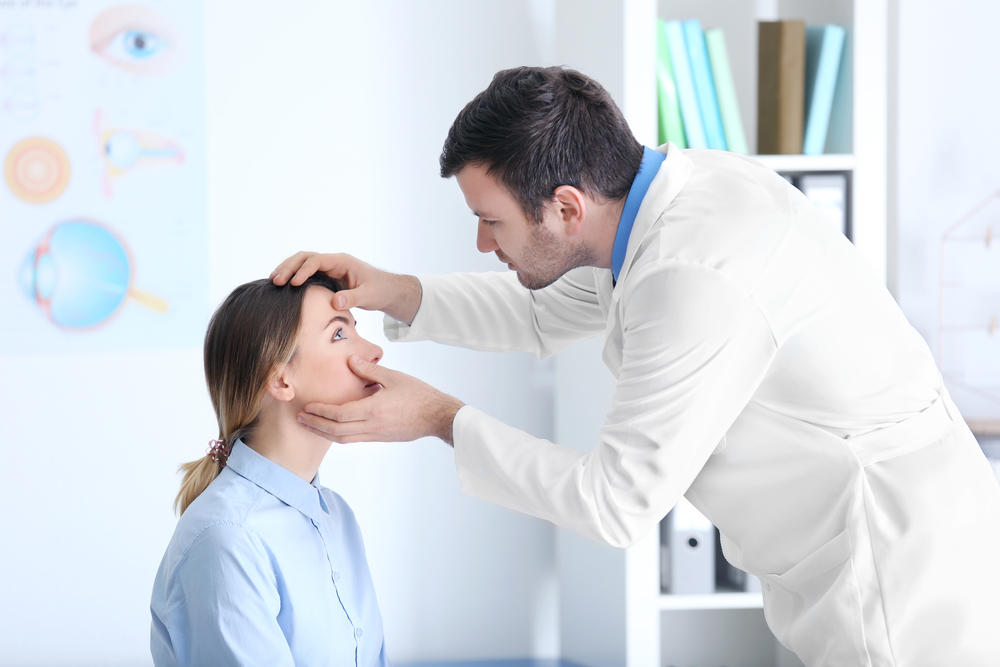
Woman having eye examined

There are many scenarios you may find yourself in where you are at risk for an eye injury. Whether you are playing a sport, handling chemicals, or in the way of any foreign objects you could find yourself dealing with an eye injury. Don’t worry – they are common and with the right information and care they are usually manageable and easily taken care of. Here are 4 of the most common eye injuries and how you can prevent them!

Scratched Eye:

There are many things that occur that can leave you with an irritated, scratched eye. Whether its dirt particles that got into your eye, an accidental slip of a makeup brush to your eye or even a paper cut there are endless possibilities of what’s to blame for your irritated eye. To prevent scratching your eye it is important to be extremely careful when handling anything around your eye and to protect yourself from an object that can cause damage to your eyes. If you think something may have gotten in your eye it is important not to rub or dig at your eyes. Instead try blinking or washing your eye with saline solution or clean water in an effort to get out what is scratching your eye. If you have scratched your eye it is important to call your eye doctor to get it taken care of safely and quickly.

Chemical Exposure:

The next common eye injury involves substances or chemicals getting into your eyes and causing discomfort and damage. When you are surrounded by chemicals there is a chance that some of the substance could get splashed or sprayed in your eyes. It is important to protect yourself from chemicals and be cautious but if find yourself in this situation don’t panic. You should immediately rest your head under a stream of water (slightly warm) to try and wash the chemicals away from your eye. It is also very important to call your eye doctor or an urgent care center to see what they recommend as the next steps, make sure to tell them as much detail about the incident as possible including what chemical you’ve been exposed, how it entered your eye and how long ago it occurred.

Sports-Related Injuries:

When playing sports, you are putting yourself at risk on many injuries. Especially injuries related to your eyes. It is important to take steps to reduce your chances of an injury by wearing the protective gear necessary. It is estimated that 90% of sports-related eye injuries can be avoided by wearing the correct protective gear. If you do find yourself in a situation where you have injured your eyes while playing a sport it is important to call your eye doctor to get an over the phone evaluation and figure out what the next steps are to treating your injury. Each sports-related eye injury is going to vary in steps to take and seriousness that’s why it is very important to treat every eye injury as an emergency at first.

Now that you have learned more about different types of common eye injuries we hope that this will help you further protect your eyes and vision down the road. Some injuries are unavoidable and when you do find yourself in a situation like that give us a call so we can help you take the next steps towards healthy eyes!

Helpful Tips to Protect Your Eyes from Digital Eye Strain

Man Working At Table

Growing up in today’s day and age it’s not if you will use technology throughout the day – it’s about how long your day will be consumed behind a screen. Whether you’re sitting at work behind a computer for 8 hours or lounging on the couch scrolling through your newsfeed you could be experiencing the side effects of Digital Eye Strain.

Digital Eye strain is also known as computer vision syndrome and is the physical discomfort you may experience from looking at a screen for too long throughout your day. As technology has become increasingly popular over the years there has been an increase in the number of people who experience the side effects of this condition. Luckily for you, there are many steps you can take to help relieve and reduce your symptoms of digital eye strain.

Some symptoms of digital eye strain that you may experience include:

  • Dry eyes
  • Squinting
  • Headache
  • Neck, shoulder, or back stiffness
  • Double or blurred vision
  • Increased sensitivity to light
  • Difficulty concentrating
  • Feeling like you cannot keep your eyes open

Tip 1: The first suggestion we have to give you in an effort to reduce your symptoms is to try and follow the 20-20-20 rule. The 20-20-20 rule states that if you are working behind a screen for an extended amount of time it is important to take a break after 20 minutes for 20 seconds to look at something that is at least 20 feet away from you. In doing this you are giving your eyes a chance to completely relax and to focus on something other than your device.

Tip 2: Blink. This is a very important step to follow when looking at a screen for a long time because it’s something people often forget to do. As natural and easy as it is to blink a lot of times when using a computer, smartphone, or tablet our blinks are incomplete. Incomplete blinks can result in a number of the symptoms listed above. In order to reduce dryness in your eyes, it is important to keep blinking and keep your eyes hydrated.

Tip 3: Adjust your work area. It is important to make sure that you are reducing the amount of overhead lighting in your work area which will decrease the glare that reflects off your screen. This is a big advantage for your eyes. Another crucial step to take is to make sure that you are not sitting too close to your screen which can cause additional eye damage. To reduce eye strain make sure you are positioned slightly above your screen when doing this you cut down on the amount of stress that you are putting on your eyes throughout the day.

Tip 4: Schedule an eye exam. It is important to regularly get your eyes examined. At your next appointment talk with us about how much digital use you are having so, we can discuss viable solutions and alternative steps you can take to reduce your symptoms of digital eye strain.

The Difference Between Nearsightedness and Farsightedness

Woman Being Fitted For Glasses

You go to any appointment and you hear an abundance of medical terminology that you might not understand – we’ve been there too. When you are at your eye appointment you might hear the terms nearsightedness and farsightedness. You might even be dealing with one of these conditions. But what do they both mean?

First, let’s start off with nearsightedness. Nearsightedness, also known as myopia is a condition where you have trouble clearly seeing objects that are far away from you but have no issues seeing objects up close. For example, if you are dealing with myopia you generally won’t have any problems when you are using a computer or reading. People who suffer from myopia may have trouble reading road signs while driving, a white board at school, or being able to make out objects that are at a distance away from you. In most cases, people generally start experiencing blurry vision caused by nearsightedness at an early age. It was reported that 40% of the world’s population suffers from this condition and that percent will only continue to grow over the years.

Next up is farsightedness. Farsightedness also known as hyperopia is the condition where people have no problem seeing things at a distance but struggle when they are trying to see things close up. Someone with this condition may have trouble reading or using a computer but will have no problem seeing objects that are further away from them. Farsightedness tends to run in families and is commonly present at birth.

Luckily for people dealing with nearsightedness and farsightedness, there are many options you have to enhance your vision. Some options you have are getting prescription eyeglasses or contacts in order to see clearly again!

How Smoking Is Negatively Impacting Your Vision

Fist Smashing Cigarettes

It is well known that smoking is the leading cause of serious health conditions that affect your lungs, heart, and much more. What most people don’t know is how smoking negatively impacts your eyes and puts you at an increased risk of developing cataracts, diabetic retinopathy, age-related macular degeneration, and dry eye syndrome. Read more about how smoking increases the risks of developing these conditions.

Cataracts is an eye disease that causes your natural lens to cloud. Studies have shown that smoking doubles your chances of developing cataracts. These chances continue to rise as you smoke more and more. Right now Cataracts is the leading cause of blindness in the world and smoking only continues to put you at a higher risk of developing a Cataract.

Diabetic Retinopathy is a condition that occurs when there is damage to the blood vessels in the tissue at the retina. This disease occurs in people who suffer from diabetes and is the leading cause of vision loss in people who are dealing with diabetes. By smoking, you’re twice as likely to develop diabetes which puts you at risk for Diabetic Retinopathy, as well as numerous other diabetes complications.

Age-Related Macular Degeneration (AMD) is when your macula, the small center of the retina starts to deteriorate. When this part of your eye starts to deteriorate you start to lose your sharp, central vision making it difficult to do everyday tasks. Smoking puts you at three times the risk of developing Age-Related Macular Degeneration.

Dry Eye Syndrome occurs when your eyes aren’t producing enough tears to lubricate the eye. Smoking cigarettes is known to cause dry eye because the smoke is a well-known eye irritant. When your eyes are exposed to tobacco smoke it increases your symptoms of Dry Eye which include eye redness and itchiness.

It is important to know the risks that are associated with smoking when it comes to your total health, including your eyes. By quitting smoking you can help reduce your risks of developing one of these eye conditions!

Foods That Will Help Keep Your Eyes Healthy!

Healthy Foods

We fuel our body with foods for our overall health but have you ever put in any thought about which foods have the best impact on our eye health? We are here to help! Check out which food groups will help keep you and your eyes healthy!

Fish, Nuts & Seeds: The first suggestion we have for you is to consume foods that contain omega 3 fatty acids!  It is important to get a general intake of omega 3 fatty acid because of the overall health benefits you get. These benefits include maintaining cardiovascular health by lowering blood pressure, cholesterol levels, and triglyceride levels. Not only are omega 3 fatty acids good for the rest of your body they are also great for your eyes. It is proven that they can help with dry eyes, macular degeneration, and cataracts. Some foods that you can eat to ensure you are getting this nutrient are Fish such as salmon, tuna, mackerel as well as nuts and seeds like walnuts, flaxseed, and chia seeds.

Whole Grains: Keeping your diet rich in whole grains can be beneficial to your overall health as well as your eye health! By substituting white flour products with whole grain options such as brown rice, whole wheat pasta, quinoa you can help reduce your risk of age-related macular degeneration.

Leafy Greens: It is vital to your eyesight that you have a diet that is rich in Lutein and Zeaxanthin. These nutrients help keep your eyes on their A game. Some foods that would fall under this category and give you the nutrients you need would be kale, spinach, collards, as well as a number of other greens.

Citrus Fruits and Veggies: Keep your diet rich by fueling your body with an assortment of citrus fruits and berries! This gives your body the Vitamin A and C that it needs and helps keep your eyes in the best shape. Vitamin A and C have proven to be very beneficial for your eye health and by keeping your diet full of them your eyes will thank you! Some examples of common foods you could eat to get your fix of Vitamin A and C are oranges, grapefruit, apricots, plums, carrots, peppers, and many others.