
Eye Care Blog · LASIK
LASIK Consultation in Los Angeles: Tests & Preparation
What the eye tests tell us, how to prepare, and the questions worth asking before you make a decision.
What happens at a LASIK consultation? A LASIK consultation checks your prescription, corneal shape and thickness, tear film and overall eye health. The goal is to decide whether laser vision correction is appropriate and explain the likely benefits, risks and alternatives. For your LASIK consultation in Los Angeles, ask about contact lens instructions before the appointment and bring your glasses, prescription history and questions.
A useful consultation should leave you with a clear explanation of your eyes. My advice is to arrive ready to discuss both what you hope to change and what matters most in your daily life: driving across LA after dark, spending hours at a computer, or enjoying exercise with less dependence on contacts.
This guide explains how to prepare for that conversation. For an overview of the procedure itself, see our LASIK in Los Angeles guide.
What tests are done before LASIK?
A glasses prescription is only part of the evaluation. Several findings need to agree before a surgical plan makes sense.
- Prescription and vision testing: How well do you see with correction, and has your prescription changed? Bring previous prescriptions if you have them.
- Corneal mapping and thickness: These measurements examine the clear front surface of your eye and help identify an irregular shape or insufficient tissue for treatment.
- Tear film and eye surface: Dryness, irritation and eyelid problems deserve attention before a procedure is selected.
- Pupil measurements and an eye health examination: Your surgeon considers vision in dim light and looks for conditions that could affect the safety or value of surgery.
Ask what each finding means for you. WashU Medicine’s LASIK FAQ also explains why preoperative testing and individual candidacy matter.
How should I prepare for a LASIK consultation in Los Angeles?
Get your contact lens instructions first
Contact lenses can temporarily alter corneal shape, which affects measurements. Call before your appointment and tell the team whether you wear soft, toric, rigid or other specialty lenses. Follow the interval the practice gives you; a general online timetable cannot account for every eye. Repeat measurements may be needed to confirm stability.
The FDA’s guide to preparing for LASIK discusses this issue and the importance of a baseline examination.
Bring a short, useful checklist
- Your current glasses and any available older prescriptions.
- A list of medicines, supplements, eye drops, allergies and previous eye procedures.
- Notes about dryness, fluctuating vision, glare or trouble wearing contacts.
- Two or three everyday tasks you most want to do with less dependence on glasses.
Tell the clinician about relevant health conditions, pregnancy or nursing. Do not stop prescribed medication on your own. Ask whether your eyes will be dilated, how long to allow for the visit and whether you should arrange a driver.
What could change the recommendation?
An unstable prescription may mean waiting. Dry eye may mean treatment before repeating tests. A thin or irregular cornea may make LASIK unsuitable. A finding is useful only when someone explains how it changes your options.
LASIK can cause or worsen dry eye. Glare, halos, difficulty seeing at night, undercorrection and overcorrection are possible; some complications can cause lasting vision problems. Your risk discussion should be specific to your examination. The FDA’s LASIK checklist is a helpful companion for that conversation.
If LASIK is unsuitable, ask whether glasses, contacts, PRK, EVO ICL or a lens-based procedure deserves consideration. Each has its own eligibility requirements and risks. Our comparison of vision correction procedures can help you prepare, but it cannot choose a procedure for you.
Five questions to ask before you decide
- Which test results make me a good candidate—or make you cautious?
- What outcome is realistic for my prescription, age and eye health?
- How could treatment affect reading vision and night driving?
- Who handles follow-up, and how do I reach the team if I have a problem?
- What does the written price include, and what happens if further treatment is considered?
For planning costs, use our Los Angeles LASIK cost guide and request a written quote for your own treatment. For LA commuters, it also helps to confirm where the evaluation, procedure and follow-up visits will take place before arranging time away from work.
LASIK consultation: common questions
Is a LASIK consultation the same as surgery?
No. A consultation evaluates your eyes and explains your options. A recommendation to proceed is not a requirement to schedule surgery. Take time to review the benefits, risks and alternatives.
Can I wear contacts to my LASIK consultation?
Ask for instructions before your visit. Contact lenses can temporarily change the shape of the cornea. The time needed without lenses depends on the lens type and your measurements; some patients need repeat testing.
Can I have LASIK if I have dry eyes?
That depends on the severity and cause. Dry eye needs assessment before LASIK because surgery can worsen dryness. Treatment and repeat measurements may be needed, and some patients should choose another approach.
Will LASIK mean I never need glasses again?
No procedure can promise lifelong freedom from glasses. LASIK does not stop age-related changes such as presbyopia or cataracts. Discuss reading vision, night driving and the possibility of needing glasses after surgery.
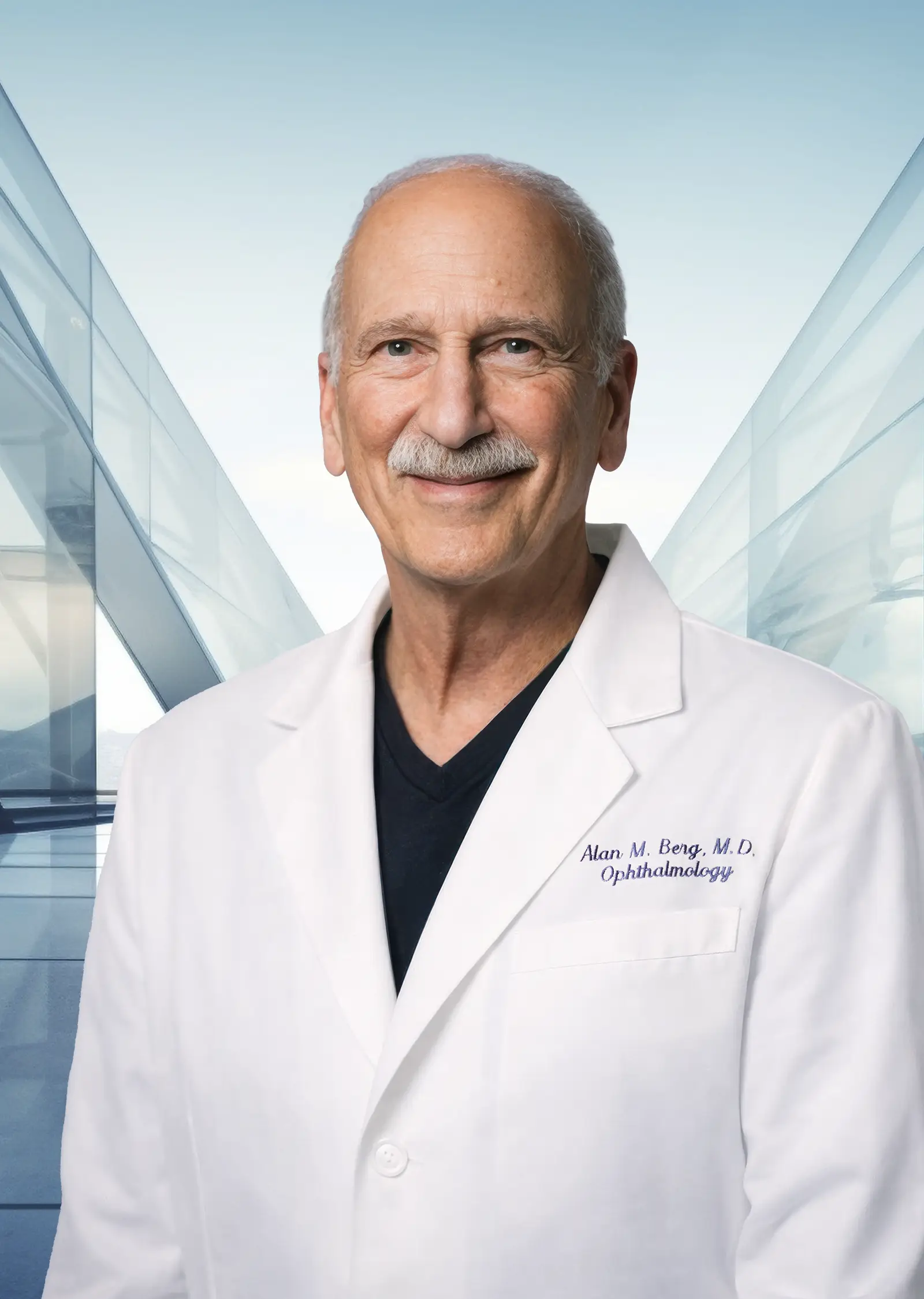
About Alan M. Berg, MD
Dr. Berg is a board-certified ophthalmologist and cataract and refractive surgeon at Berg-Feinfield Vision Correction in Los Angeles.
This article provides general education. Your examination and surgeon’s instructions determine your individual care.
Bring your questions to a consultation
Berg-Feinfield serves patients across Los Angeles, with offices in Burbank, Sherman Oaks, Beverly Hills, Arcadia and Valencia. Tell our team which location works for you.
Request a Consultation