Eye-Adjacent Training
The forehead, glabella, crow's feet, under-eyes, tear troughs, and upper cheeks are exactly where ophthalmologists train — the same anatomy most aesthetic injectors learn at a weekend course.

Botox, Juvéderm, Restylane, and eyelid surgery — by appointment in Burbank and Sherman Oaks, serving Beverly Hills, Studio City, Encino, Toluca Lake, Pasadena, Arcadia, and Valencia.

Berg-Feinfield is an ophthalmology practice that does facial aesthetics — not the other way around. The patients who find us are usually looking specifically for an injector with formal training in the anatomy around the eyes, because that's where most of the work happens.
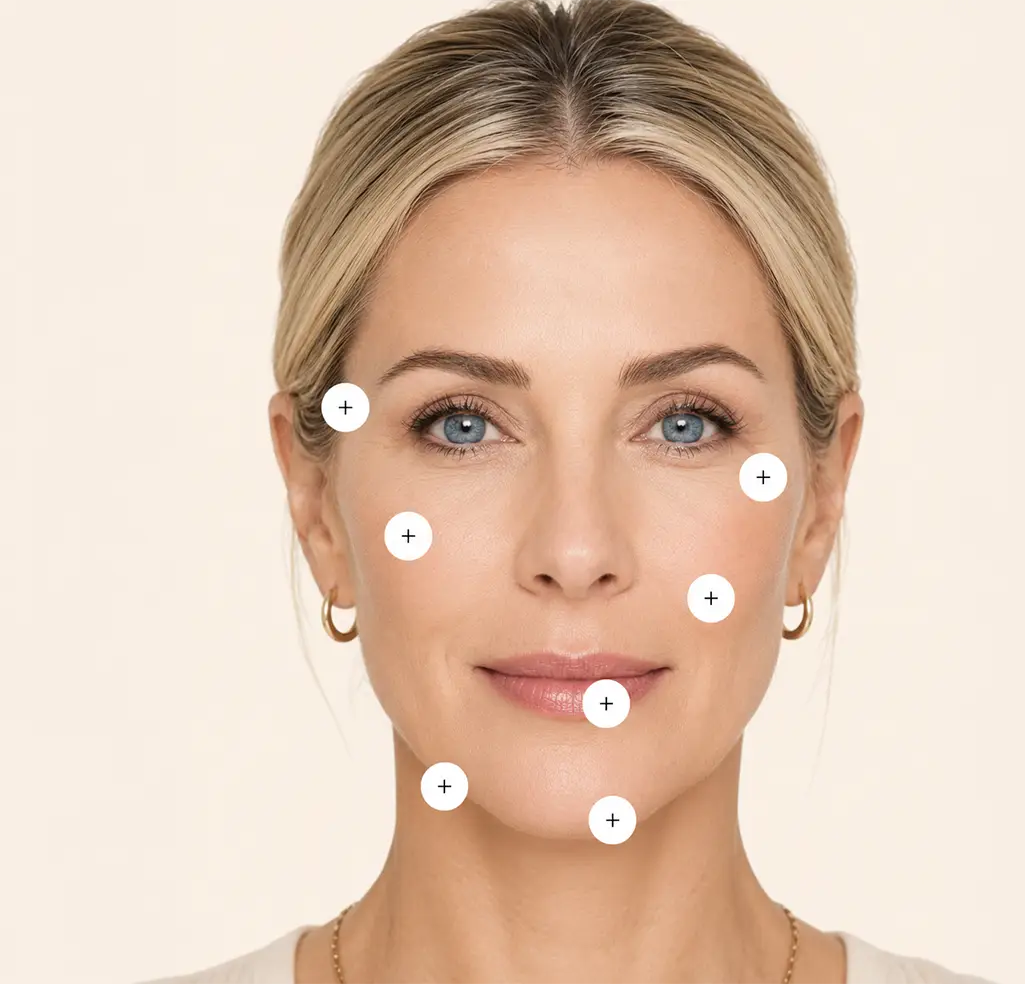
Most cosmetic injection sites — the forehead, the glabella, the crow's feet, the under-eyes, the tear troughs, the upper cheeks — sit within a few centimeters of the eye. The muscles, nerves, and blood vessels of that region are exactly what ophthalmologists train on for years in residency and fellowship. It's the region we operate on for strabismus, blepharospasm, and eyelid reconstruction.
The result is a treatment plan that respects what should still move — a forehead that can still register surprise, a brow that doesn't pull outward, an under-eye result that doesn't go blue or lumpy.
See What We OfferAn ophthalmology practice offering aesthetics because it's well-positioned to do it carefully.
The forehead, glabella, crow's feet, under-eyes, tear troughs, and upper cheeks are exactly where ophthalmologists train — the same anatomy most aesthetic injectors learn at a weekend course.
We under-treat at the first visit and add at a two-week follow-up if you want more. We can't subtract — so we'd rather start with less and finish with what you actually want.
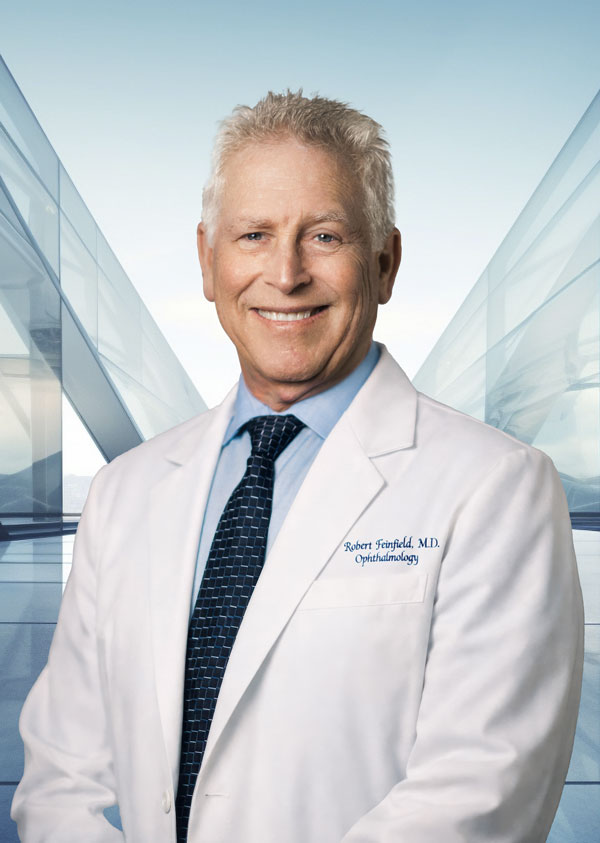
Dr. Robert Feinfield has been administering botulinum toxin since 1986 — sixteen years before its FDA approval for cosmetic use.
Most cosmetic injection sites sit within a few centimeters of the eye. These are the regions we evaluate and treat most often.
The two vertical lines between the brows that come from frowning or concentration. One of the most common areas for Botox.
Horizontal lines from raising the brows. Treated with Botox, dosed conservatively to keep the brow expressive.
Lines that fan out from the outer corners of the eyes when smiling. A small, precise Botox treatment that softens without freezing.
Hollowing under the eyes that creates shadow. Treated with Restylane — a more predictable gel structure for this delicate area.
Soft cheek augmentation and volume restoration. Juvéderm is our first choice here — it integrates well in the mid-face.
Lip refinement, the perioral area, and smaller targeted treatments like a lip flip. Filler for volume, Botox for movement.
Three core services, one practice: Botox for lines from movement, Juvéderm and Restylane for volume and refinement, and eyelid surgery for what filler can't fix. Each links to a dedicated page with the deeper specifics.
Botulinum toxin for lines from facial expression — the “11s” between the brows, forehead lines, crow's feet, bunny lines, and smaller targeted areas like a lip flip or a chemical brow lift. We use conservative dosing: under-treat at the first visit and add at a two-week follow-up if you want more. We can't subtract. Results typically last 3–4 months.
Read more about Botox →Hyaluronic acid fillers for volume loss, deep lines, and feature refinement. We use both families — Juvéderm for soft cheek augmentation and lower-face work, Restylane for under-eye hollowing where the gel structure is more predictable. All products we use are reversible with hyaluronidase, and results last from about 6 months to 2 years depending on the product and area.
Read more about fillers →For excess skin on the upper lids or bags under the lower lids that filler can't fix. Performed by an ophthalmologist who does the same procedure for medical reasons — patients with vision-blocking lid skin — so the technique is well-rehearsed. Surgical, not injectable; results are permanent for the upper lids and long-lasting for the lower lids.
Read more about eyelid surgery →Most patients ask about more than one service. The two treatments most often combined don't interact and can be performed in a single appointment.
The most common combination. Botox handles the lines from motion; filler addresses volume loss and lines at rest. The two work on completely different mechanisms, so they don't interact — both can be placed in the same visit, with the combined result coming in over the following two weeks.
Patients considering eyelid surgery sometimes pair it with filler in the cheek to support the lower lid from below. We'll walk through what's reasonable to combine and what's better staged across multiple visits.
We're an ophthalmology practice that offers aesthetics because we're well-positioned to do it carefully. There's no pressure to add services — if something you're asking for isn't something we'd recommend, we'll tell you.
An ophthalmology practice that offers aesthetics carefully — not a med-spa selling a menu.
The muscles, nerves, and vessels around the eye are exactly what ophthalmologists train on for years in residency and fellowship.
We under-treat and refine at a two-week follow-up. The HA fillers we use are reversible with hyaluronidase.
Dr. Robert Feinfield has administered botulinum toxin since 1986, sixteen years before its FDA approval for cosmetic use.
If something you're asking for isn't something we'd recommend, we'll tell you.
Botox, Juvéderm, Restylane, and eyelid surgery, with the formal anatomical training of an ophthalmology practice. Call us or request a consultation online — Burbank and Sherman Oaks appointments available.