
Eyelid Surgery · Los Angeles
Blepharoplasty Los Angeles
Upper and lower eyelid surgery performed by ophthalmologist Dr. Robert Feinfield — addressing drooping upper lids, under-eye bags, and excess eyelid skin that can affect both vision and appearance.
Understanding the Procedure
What Is Blepharoplasty?
Blepharoplasty — an eyelid lift — removes or repositions excess skin, muscle, and fat from the upper eyelids, lower eyelids, or both, based on your anatomy and goals.
Upper blepharoplasty corrects heavy, hooded, or drooping upper eyelids caused by excess skin that accumulates with age. In many patients, that excess skin obstructs the superior visual field — making it a medical condition, not purely a cosmetic one. Lower blepharoplasty addresses puffiness, bags, and loose skin beneath the eyes that create a chronically fatigued appearance no matter how much sleep you get.
Because the eyelids are among the most delicate structures in the body — and the eye itself sits immediately behind them — blepharoplasty demands the surgical precision that comes from true familiarity with ocular anatomy. At Berg Feinfield, Dr. Robert Feinfield brings decades of surgical experience operating in and around the eye to every blepharoplasty.
Two Procedures
Upper vs. Lower Blepharoplasty
Upper Blepharoplasty
Removes excess skin and, in some cases, herniated fat from the upper eyelid. The incision is hidden within the natural eyelid crease.
Addresses hooding, heaviness, and visual obstruction. Can be medically necessary when skin impairs peripheral vision. The scar heals within the eyelid fold and is effectively invisible.
Lower Blepharoplasty
Addresses under-eye bags caused by herniated fat, loose skin, or muscle laxity beneath the eyes.
Performed via an external incision (just below the lash line) or a transconjunctival incision (inside the eyelid, no external scar), depending on the degree of skin excess and your anatomy.
An Important Distinction
Functional vs. Cosmetic Blepharoplasty
Upper blepharoplasty can be both medically necessary and cosmetic, depending on your degree of eyelid ptosis and visual-field impairment. Knowing which applies to you is the first step.

When It's a Medical Necessity (Functional)
When excess upper-eyelid skin droops low enough to obstruct the superior visual field, it becomes a functional impairment — not just a cosmetic concern. Patients describe difficulty seeing overhead, constantly raising their eyebrows to see clearly, and fatigue from holding heavy lids open. Functional blepharoplasty is documented with visual-field testing, and when criteria are met, it may be covered by medical insurance.
For Appearance & Rejuvenation (Cosmetic)
Even when eyelid skin hasn't crossed into functional impairment, many patients choose blepharoplasty to address a tired, aged, or heavy-lidded look. The goal is a refreshed, alert appearance — without looking surgically altered. Lower blepharoplasty is almost always cosmetic, addressing under-eye bags, hollowing, and skin excess.
Insurance Coverage for Functional Upper Blepharoplasty
Upper blepharoplasty may be covered by medical insurance when medically necessary — specifically, when excess skin obstructs the superior visual field on visual-field testing. Dr. Feinfield's team documents your exam findings and assists with prior authorization. Lower blepharoplasty is generally classified as cosmetic and is not covered. We clarify coverage before scheduling any procedure.
Upper Blepharoplasty
Good Candidates for Upper Eyelid Surgery
- Excess upper-eyelid skin that folds over the eyelid margin
- Upper lids that feel heavy or tired throughout the day
- Raising your eyebrows involuntarily to see better, causing forehead fatigue
- Been told your lids are affecting your visual field
- Good general health with no serious eye conditions
- Realistic expectations — the procedure addresses skin, not bone structure
Lower Blepharoplasty
Good Candidates for Lower Eyelid Surgery
- Under-eye bags or puffiness that persist regardless of sleep or hydration
- Hollowing, shadow, or a tear trough that creates a sunken appearance
- Loose or crepey skin beneath the lower eyelids
- Looking tired or older than you feel, specifically from the under-eye area
- Realistic expectations — it addresses the eyelid, not surrounding facial areas
- Not planning significant weight loss, which can alter the lower-eyelid fat compartment
Often Combined
Upper and lower blepharoplasty are frequently performed together at the same surgical session. Dr. Feinfield will recommend the most appropriate combination at your consultation.
The Surgical Experience
What to Expect — Before, During & After
Consultation & Examination
Dr. Feinfield examines your eyelids and assesses skin excess, fat herniation, and levator function. Visual-field testing may be performed if a functional component is suspected. Photos are taken, and he outlines a specific surgical plan and expected outcome for your anatomy.
Pre-Operative Preparation
You'll receive specific instructions on medications to avoid (aspirin, NSAIDs, certain supplements), fasting requirements, and transportation and home recovery. Most patients discontinue blood thinners 1–2 weeks prior.
Surgery — Outpatient, Local Anesthesia
Performed under local anesthesia with optional oral sedation. Upper blepharoplasty typically takes 45–60 minutes; lower or combined procedures take 1–2 hours. You go home the same day, and someone must drive you.
Immediate Post-Operative Period
Cold compresses and head elevation for the first 48 hours significantly reduce swelling. You're seen the following day, and sutures are typically removed at 5–7 days. Most patients are comfortable and presentable within 10–14 days.
Final Results
Residual swelling resolves gradually over 4–6 weeks, and incision lines continue to fade for several months. Final results are natural-looking, long-lasting, and in most cases permanent — though natural aging continues after surgery.
Recovery
Blepharoplasty Recovery Timeline
Things to Avoid (First 2 Weeks)
Strenuous exercise, bending over, heavy lifting, contact lenses, eye makeup, and rubbing the eyes — these increase swelling and the risk of bleeding.
Your Surgeon
Dr. Robert Feinfield, MD
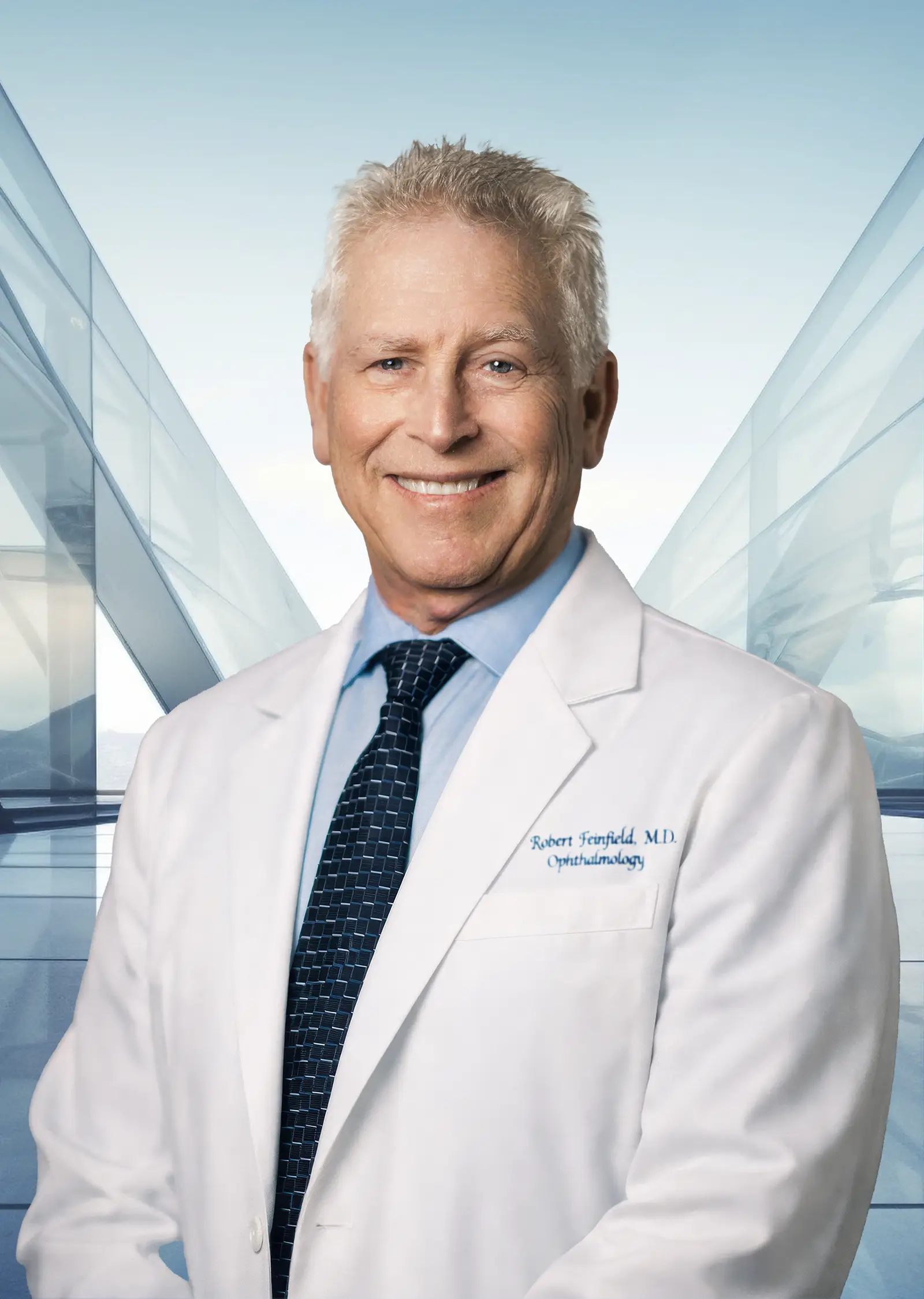
Robert Feinfield, MD
Co-Founder & Ophthalmologist · Berg Feinfield
Decades of eyelid surgery experience · Upper & lower blepharoplasty · Ptosis repair (levator advancement) · Combined blepharoplasty with complementary facial aesthetics.
Burbank · Sherman Oaks · Beverly Hills · Arcadia · Valencia
View Dr. Feinfield's full profile →Blepharoplasty is not merely a cosmetic surgery — it is eyelid surgery, performed millimeters from the globe of the eye. The anatomical precision it demands is exactly the kind ophthalmologists bring to the operating room every day.
Dr. Robert Feinfield, co-founder of Berg Feinfield Vision Correction, has been performing surgery in and around the eye for decades. His background in ophthalmology — a specialty built on meticulous, high-magnification surgery — gives him a depth of anatomical familiarity with the eyelid that is the foundation of safe, effective blepharoplasty.
Why an Ophthalmologist for Blepharoplasty?
The eyelid is the most complex and delicate structure adjacent to the eye. An ophthalmologist who operates on the eye itself — cataract surgery, laser procedures, other ocular surgery at high magnification — brings unmatched familiarity with the anatomy of the periorbital region. The margin for error is measured in fractions of a millimeter; that context is exactly what a physician who works at that scale every day provides.
“Blepharoplasty done well looks natural — as if you're well-rested, not as if you've had surgery. The goal is never an operated appearance, but a refreshed one.”Dr. Robert Feinfield, MD — Co-Founder, Berg Feinfield
Patient Results
Before & After Blepharoplasty
Results shown are from an actual Berg Feinfield patient. Individual outcomes vary based on anatomy, age, skin quality, and the specific procedure performed.
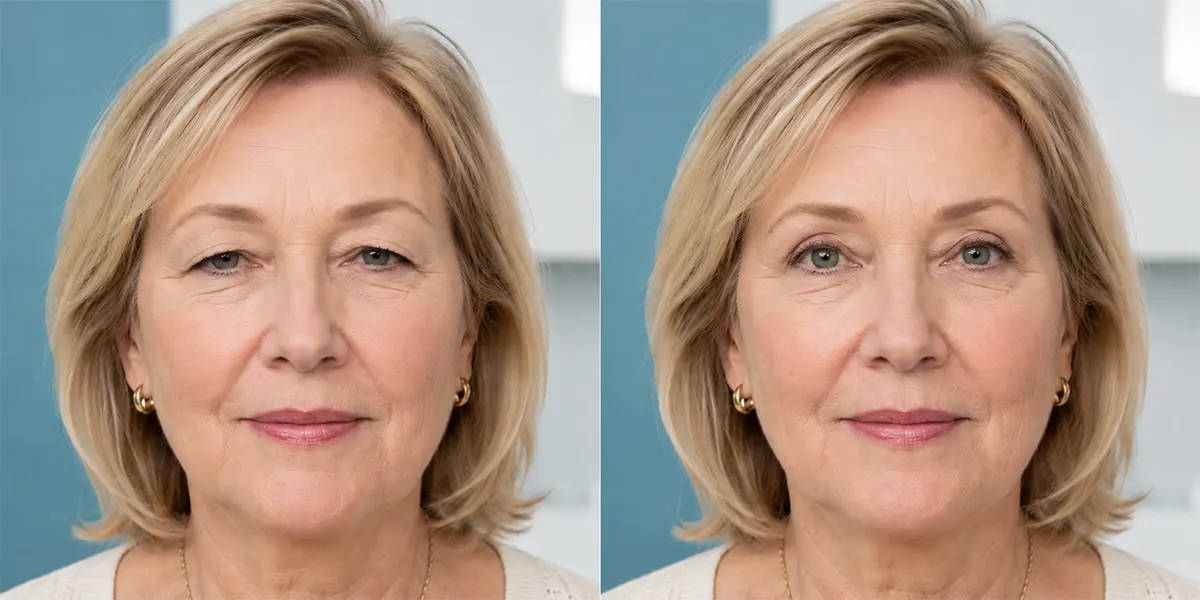
Individual results may vary. Photos represent actual patient outcomes and are used with permission.
Five Locations Across Greater Los Angeles
Blepharoplasty Consultations Near You
Dr. Feinfield sees blepharoplasty consultation patients across all Berg Feinfield locations. Call to confirm surgical scheduling at your preferred office.
Sherman Oaks
13320 Riverside Drive, Suite 114Sherman Oaks, CA 91423(818) 501-3937
Beverly Hills
462 N. Linden Drive, Suite 441Beverly Hills, CA 90212(866) 273-3327
Not sure which office?
Our team will match you with the most convenient location for your consultation.
Call 866-2-SEE FARBlepharoplasty Serving Greater Los Angeles
Berg Feinfield provides blepharoplasty consultations and surgery throughout Los Angeles County — including Burbank, Glendale, Sherman Oaks, Encino, Studio City, North Hollywood, Van Nuys, Tarzana, Beverly Hills, West Hollywood, Bel Air, Brentwood, Santa Monica, Culver City, Arcadia, Pasadena, Monrovia, Temple City, Valencia, Stevenson Ranch, and Santa Clarita.
Common Questions
Blepharoplasty — Your Questions Answered
Refresh Your Eyes. Consult Dr. Feinfield.
Whether you're concerned about functional vision impairment from heavy upper lids or simply want to look as alert as you feel, a consultation with Dr. Feinfield gives you a clear picture of your options and what to expect.