iLux · IPL · BlephEx · Restasis · Cequa · Xiidra · Tryptyr · TearLab
Dry eye is among the most common and most undertreated conditions in eye care. At Berg-Feinfield, we diagnose the root cause — and match you with treatments that actually work, not just drops that mask symptoms.
Most patients with dry eye have a combination of both types — but identifying the dominant cause is the most important step in getting effective relief. Treating the wrong type produces little benefit.
The lacrimal glands are not producing enough water-based tears. The eye surface dries out because there simply isn’t enough tear volume — regardless of how well the oil layer is functioning.
Treated with: Preservative-free tears, Meibo, Lacrifill canalicular lubricant, Restasis, Cequa, Xiidra, Tryptyr. A thorough medication review is essential — many common medications are major contributors to aqueous deficiency.
The meibomian glands in the eyelids are not producing enough protective oil. Without a healthy lipid layer, the water-based tears evaporate within seconds — even if tear production is completely normal.
Treated with: iLux thermal pulsation, Intense Pulsed Light (IPL), and BlephEx microblepharoexfoliation — in-office procedures that address the underlying gland blockage and inflammation that artificial tears cannot reach.
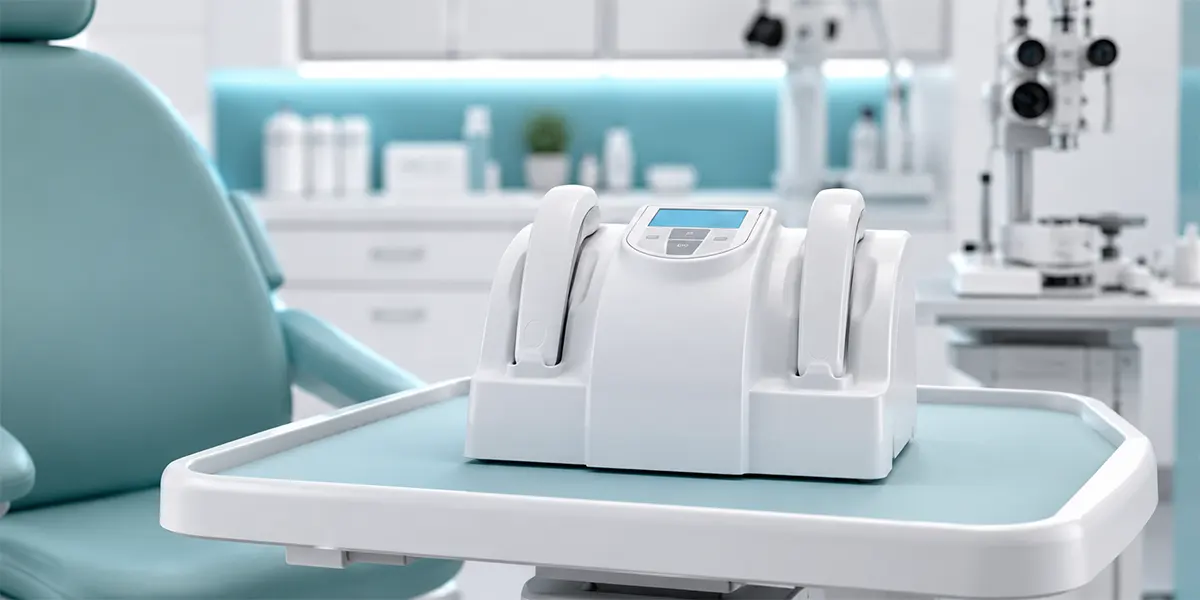
TearLab Osmolarity Testing measures the salt concentration of your tears — the most objective, quantifiable biomarker for dry eye severity available. High osmolarity = disrupted tear film. We use this number to confirm diagnosis, assess severity, and track treatment response at every follow-up visit.
Systemic conditions, prior surgeries, environmental exposures, and digital device use all contribute to the full clinical picture of dry eye.
Many common medications — antihistamines, antidepressants, beta blockers — significantly reduce tear production. Identifying them is often the highest-yield step in the evaluation.
Magnified examination of the tear film, corneal surface, and eyelid margins — including meibomian gland expression to assess oil quality and blockage.
Assessment of gland morphology, secretion quality, and lid margin inflammation to characterize MGD severity and guide treatment selection.
Berg-Feinfield offers the full spectrum of dry eye therapy — from in-office procedures to prescription medications to advanced lubricants. Your treatment plan is built around your specific diagnosis, not a one-size-fits-all protocol.
Restore & supplement tear production
Foundation of dry eye management. Preservative-free formulations are essential for patients using drops more than four times daily — preservatives accumulate on the ocular surface and worsen dry eye over time.
A preservative-free, water-free drop that targets the lipid layer of the tear film — effective for both aqueous deficiency and evaporative dry eye by stabilizing the oil-water interface.
Hyaluronic acid gel instilled directly into the canaliculus — the tear drainage channel — providing continuous, sustained lubrication from within the eye’s own drainage system. An excellent option for severe aqueous deficiency when drops alone are insufficient.
Reduces the chronic inflammation that suppresses tear production. Takes 3–6 months of consistent twice-daily use for full benefit. Best for moderate-to-severe aqueous deficiency with ocular surface inflammation.
Higher-concentration cyclosporine using nanomicellar technology for deeper corneal penetration. An option for patients with inadequate response to Restasis or requiring stronger anti-inflammatory therapy.
Blocks LFA-1 integrin — a different inflammatory pathway than cyclosporine. Some patients see symptom improvement faster than with cyclosporine-based drops. Used twice daily; works well as an alternative or add-on therapy.
Activates the nasal-lacrimal reflex arc to directly stimulate aqueous tear secretion. Unlike immunomodulators, Tryptyr does not work through the inflammatory pathway — it prompts the glands to produce more tears naturally. An option for patients who have not responded to topical prescription therapies.
Restore meibomian gland function & the lipid layer
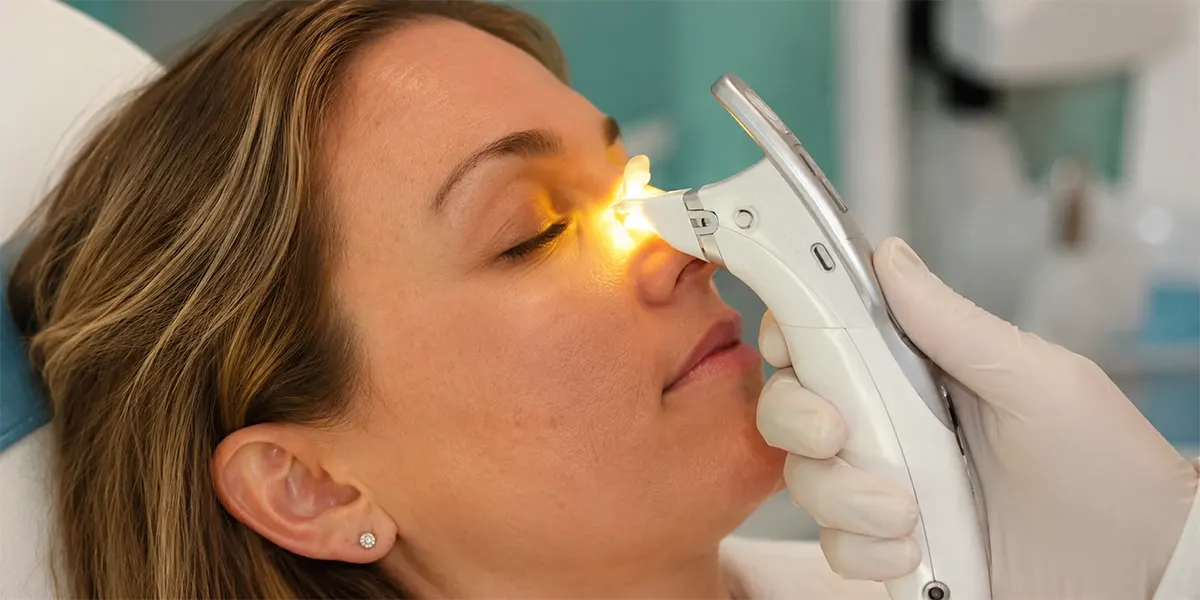
iLux applies controlled heat and gentle pressure to both surfaces of the eyelid, melting the thickened, waxy secretions blocking the meibomian glands and expressing them to restore normal oil flow. Approximately 8 minutes per eye. Many patients notice improvement within 2–4 weeks. Typically repeated every 6–12 months.
Broad-spectrum light pulses target the abnormal blood vessels (telangiectasias) around the eyelid margins that drive the MGD inflammatory cycle — while also applying heat that liquefies blocked meibomian secretions. Standard course: 4 sessions, 3–4 weeks apart. Particularly effective for rosacea-related ocular surface disease. Annual maintenance recommended.
A precision instrument that removes biofilm, bacterial debris, and crusting from the eyelid margins — the accumulation that contributes to meibomian gland obstruction and blepharitis. Think of it as a professional deep cleaning for your eyelids. Takes 6–8 minutes; commonly combined with iLux or IPL for comprehensive MGD management.
A significant number of dry eye patients are taking one or more medications that directly reduce tear production or degrade tear quality. Identifying medication contributors is often the single highest-yield step in the evaluation process.
Among the most potent medication contributors to aqueous deficiency dry eye. Both oral antihistamines and antihistamine eye drops reduce secretory gland activity — including the lacrimal glands. Daily allergy medication users are frequently affected.
Examples: Diphenhydramine, cetirizine, loratadine, fexofenadine, olopatadine eye drops
Tricyclic antidepressants and SSRIs have anticholinergic properties that reduce lacrimal gland secretion. Many patients on long-term antidepressant therapy develop progressively worsening dry eye without connecting it to their medication.
Examples: Amitriptyline, sertraline, fluoxetine, paroxetine, duloxetine
Beta blockers reduce lacrimal gland secretion by blocking beta-adrenergic receptors involved in tear production. Diuretics reduce overall body fluid volume, affecting tear quantity and quality.
Examples: Metoprolol, atenolol, propranolol, hydrochlorothiazide, furosemide
Declining androgens are strongly linked to meibomian gland dysfunction. Oral contraceptives and anti-androgen therapies can accelerate this effect significantly, particularly in younger women.
Examples: Oral contraceptives, hormone replacement therapy, anti-androgen medications
Directly suppresses meibomian gland secretion and can cause lasting changes to gland structure. Dry eye during and after isotretinoin use is extremely common and may persist long after the medication is stopped.
Examples: Isotretinoin (Accutane, Absorica, Claravis)
Reduce all secretory gland activity — including tear production. Found in medications for overactive bladder, motion sickness, Parkinson’s disease, and certain psychiatric conditions.
Examples: Oxybutynin, tolterodine, scopolamine patches, benztropine
Important: Never stop or change a medication based on dry eye concerns without consulting your prescribing physician. However, identifying medication contributors allows coordination with your other providers — a timing adjustment, dose change, or medication switch can sometimes significantly improve dry eye without compromising your other health conditions.
Most dry eye patients we see have been managing symptoms with drops for years. What they haven’t had is a diagnosis. Knowing which type of dry eye you have — and why — changes everything about the treatment.Berg-Feinfield Vision Correction — Los Angeles Dry Eye Center
Berg-Feinfield offers comprehensive dry eye evaluation and treatment across five Los Angeles area locations. iLux, IPL, and BlephEx in-office treatments are available — call to confirm availability at your preferred location.
Berg-Feinfield provides dry eye evaluation and treatment to patients throughout Los Angeles County. Communities served include Burbank, Glendale, Sherman Oaks, Encino, Studio City, North Hollywood, Van Nuys, Tarzana, Beverly Hills, West Hollywood, Bel Air, Brentwood, Santa Monica, Culver City, Arcadia, Pasadena, Monrovia, Temple City, Valencia, Stevenson Ranch, Santa Clarita, Saugus, Newhall, and surrounding communities throughout the greater Los Angeles metropolitan area.
The best dry eye treatment depends entirely on which type of dry eye you have. For meibomian gland dysfunction (evaporative dry eye), in-office treatments — iLux thermal pulsation and IPL — produce the most significant and lasting results because they address the blocked glands directly. For aqueous deficiency dry eye, prescription immunomodulators such as Restasis, Cequa, or Xiidra — combined with preservative-free tears and Lacrifill — are most effective. TearLab osmolarity testing at Berg-Feinfield establishes your baseline and guides treatment selection. Most patients need a combination approach.
You cannot reliably determine this yourself — and many patients have both. A comprehensive dry eye evaluation is needed, including TearLab osmolarity testing, slit lamp examination of the eyelid margins and meibomian glands, medication review, and tear film assessment. Key indicators: if your symptoms are worst in air conditioning, during screen use, or in dry environments, evaporative MGD is more likely. If you have autoimmune conditions, take antihistamines daily, or have Sjögren’s syndrome, aqueous deficiency is more likely. A specialist evaluation is the only reliable way to know.
For iLux, a single in-office treatment is the standard starting point — most patients notice improvement within 2–4 weeks and require repeat treatment every 6–12 months. For IPL, a standard course is 4 sessions spaced 3–4 weeks apart, followed by annual maintenance. Severity of your MGD and individual gland response determine the exact protocol. Your provider will reassess at each visit and adjust accordingly.
Artificial tears provide temporary surface lubrication but do not treat any underlying cause. If your dry eye is driven by meibomian gland dysfunction, tears will keep evaporating quickly regardless of how often you use drops — because the lipid layer that prevents evaporation is still deficient. If inflammation is suppressing your tear glands, drops add moisture but don’t restore the glands’ ability to produce it. For mild, situational dry eye, drops may be sufficient. For chronic, moderate-to-severe dry eye, targeted treatment of the underlying cause produces dramatically better and longer-lasting results than drops alone.
Both require time and consistency — they reduce chronic inflammation over months, they do not lubricate immediately. Restasis typically takes 3–6 months of twice-daily use before full benefit is seen. Xiidra may show symptom improvement faster for some patients — sometimes within 6–8 weeks — though full effect also takes several months. Both are long-term therapies. Many patients discontinue too early because they don’t feel results quickly enough. Using lubricating drops alongside them during the first months helps manage symptoms while the medication takes effect.
Yes — significantly. Dry eye affects the accuracy of corneal measurements used to calculate LASIK treatment and cataract IOL power. An unstable tear film produces misleading topography and biometry data, which can result in suboptimal refractive outcomes. LASIK also temporarily worsens dry eye, and patients with significant pre-existing MGD may need in-office treatment before proceeding. At Berg-Feinfield, dry eye evaluation and treatment is a standard part of the pre-operative workup for both LASIK and cataract surgery.
If drops aren’t cutting it, it’s time for a proper evaluation. We’ll identify exactly what’s driving your dry eye and build a treatment plan around it — not a one-size-fits-all protocol.
Call 866-2-SEE-FAR | Burbank · Sherman Oaks · Beverly Hills · Arcadia · Valencia