
The Keratoconus Treatment That Finally Doesn’t Require Weeks of Recovery

The Keratoconus Treatment That Finally Doesn’t Require Weeks of Recovery
Berg-Feinfield is the first practice in Los Angeles to offer Epioxa — the first FDA-approved epi-on corneal cross-linking therapy for keratoconus.
If you’ve been diagnosed with keratoconus and told you need corneal cross-linking, there’s a good chance you’ve been putting it off. That’s not a character flaw — it’s a logical response to what the procedure has historically required: scraping off the outer surface of your cornea, then spending one to four weeks in real pain while it heals back. For a working adult, a student, or especially a teenager, that kind of recovery isn’t easy to plan around.
That’s now changed. Berg-Feinfield Vision Correction is the first practice in Los Angeles to offer Epioxa — the first FDA-approved epi-on corneal cross-linking therapy for keratoconus. It’s the same goal as the procedure you may have been dreading, with one significant difference: no epithelium removal, no open wound, and no weeks-long recovery.
Why So Many Patients Have Been Delaying Cross‑Linking
Corneal cross-linking works. That part isn’t in dispute. The procedure uses riboflavin eye drops activated by UV light to create new collagen bonds in the cornea, strengthening the tissue and halting the progression of keratoconus. In the vast majority of patients, it stops the disease.
The problem was always the standard approach, known as epi-off CXL. To get the riboflavin to penetrate deep enough to work, surgeons had to remove the epithelium — the clear outer layer of the cornea — before applying the drops. That left an open wound on the eye that took anywhere from one to four weeks to fully heal. During that time, patients dealt with significant discomfort, light sensitivity, blurred vision, and an elevated risk of infection.
For patients who were already scared about their eyes, that recovery was often the deciding factor in delaying treatment. And every month of delay is a month keratoconus can continue to progress.
What Epi-On Cross-Linking Actually Means
Epi-on means the epithelium stays on. That’s it. That’s the difference — and it’s a significant one.
Epioxa uses a specially formulated riboflavin solution that penetrates the intact epithelium on its own, saturating the corneal tissue underneath without any scraping or removal. Patients wear oxygen-delivery goggles during the UV light treatment phase, which makes the photochemical reaction effective without needing to disturb the corneal surface. The result: the same cross-linking mechanism, without the wound.
In clinical trials involving more than 400 patients, Epioxa successfully halted keratoconus progression in the vast majority of cases, with a tolerability rate of 91.5%. Most patients return to normal activity within days, not weeks.
Who Is a Good Candidate for Epioxa
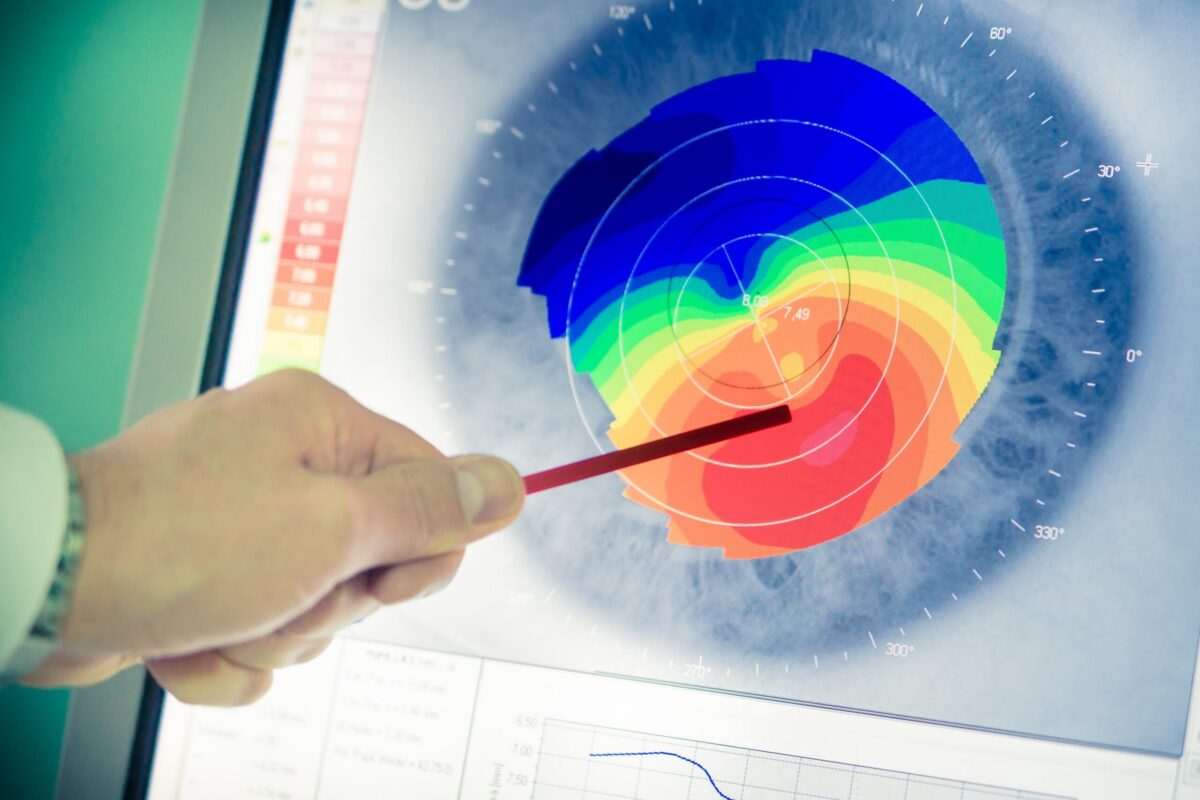
Epioxa received FDA approval in October 2025 for adults and pediatric patients aged 13 and older with progressive keratoconus. The ideal candidate is someone who:
- Has documented progression confirmed by corneal topography
- Has adequate corneal thickness for the procedure
- Wants to minimize recovery time and discomfort
- Has been delaying or avoiding epi-off CXL specifically because of the recovery
- Is in the early-to-moderate range of keratoconus, where Epioxa’s efficacy is optimal
Young patients are particularly important to treat promptly. Keratoconus is most commonly diagnosed in the teenage years and progresses most aggressively in younger patients — meaning every year of delay represents real, cumulative vision loss that can’t be reversed. Epioxa’s FDA indication for patients 13+ makes earlier intervention significantly more practical.
Standard epi-off CXL (Photrexa/iLink) remains available at Berg-Feinfield for patients where it’s the more clinically appropriate choice, including advanced keratoconus or post-refractive ectasia. Your surgeon will evaluate your tomography, corneal thickness, and disease stage to recommend the right approach.
Berg-Feinfield: First in Los Angeles to Offer Epioxa
Epioxa became commercially available in early 2026, and Berg-Feinfield was ready. The practice has been managing keratoconus for more than 30 years — Dr. Alan Berg was among the first surgeons in Southern California to offer Glaukos’s original iLink CXL platform — and the practice’s cornea specialist leads Epioxa treatment.
Bonnie Sklar, MD
Cornea Specialist · Duke Fellowship · Wills Eye Residency
Dr. Sklar serves as Berg-Feinfield’s lead Epioxa physician, bringing fellowship-level cornea expertise to every keratoconus evaluation and cross-linking procedure.
Berg-Feinfield offers Epioxa across all five of its Los Angeles area locations:
If you’ve been told you have keratoconus — or if you’ve been monitoring it and wondering when to act — now is a good time to get a real evaluation.
