Epioxa by Glaukos — in Los Angeles
The first FDA-approved epi-on CXL therapy preserves your corneal epithelium — no removal, no wound, no weeks of painful recovery. Berg-Feinfield now offers Epioxa across all five of our Los Angeles area locations.
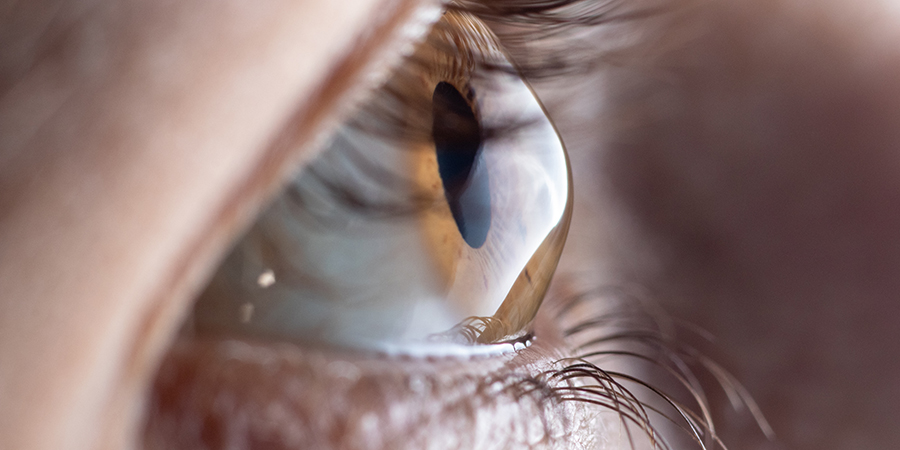
Corneal cross-linking treatment — Berg-Feinfield Vision Correction, Los Angeles
If you’ve been diagnosed with keratoconus, you’ve probably heard about corneal cross-linking — the procedure that can stop the condition from getting worse. Until now, the biggest downside was the recovery: the standard treatment required scraping off the outer layer of your cornea, leaving an open wound that took weeks to heal and was genuinely painful. Many patients put it off for that exact reason.
Epioxa changes that completely. It’s the first FDA-approved corneal cross-linking treatment that works without removing any part of your eye. The eye drop formula is applied directly to your cornea, seeps through the surface on its own, and then UV light activates it to strengthen the corneal tissue underneath — no scraping, no open wound, no weeks of recovery. Most patients are back to their normal routine within days.
Berg-Feinfield Vision Correction is the first practice in Los Angeles to offer Epioxa to patients. If keratoconus is affecting your vision — or if you’ve been told you need cross-linking but have been putting it off — this is the reason to come in now.
In two large clinical trials involving over 400 patients, Epioxa successfully stopped keratoconus from progressing in the vast majority of cases — with a tolerability rate of 91.5%. Put simply: it works, and patients tolerated it extremely well.
Comprehensive corneal tomography, pachymetry, and topographic review to confirm diagnosis, stage your disease, and determine whether Epioxa epi-on or standard epi-off CXL is your best option.
Epioxa HD then Epioxa are applied sequentially. Modified riboflavin penetrates your intact epithelium and saturates the corneal stroma — no cuts, no scraping, no wound of any kind.
You wear boost goggles delivering supplemental oxygen while the KXL system applies calibrated UV-A light. The photochemical reaction creates new collagen bonds, stiffening the cornea. Total treatment: ~60–90 minutes.
Because the epithelium is never disturbed, most patients return to work and normal activities within days — a dramatically different experience than the 1–4 weeks required after standard epi-off CXL.
Berg-Feinfield offers both procedures. The right choice depends on your disease severity, corneal thickness, and individual profile. Here’s how they compare.
The epi-off procedure remains appropriate for certain cases — advanced keratoconus, specific corneal thickness measurements, or post-refractive surgery ectasia. Your Berg-Feinfield surgeon will evaluate your tomography, pachymetry, and disease stage to determine which approach is optimal for your corneas.
Epioxa represents the most significant advancement in CXL since the procedure received FDA approval in 2016. For patients who have been delaying treatment because of recovery concerns, this changes everything.Berg-Feinfield Vision Correction — Los Angeles
Epioxa is FDA-indicated for adults and pediatric patients aged 13 and older with progressive keratoconus. The ideal candidate includes:
Keratoconus is most commonly diagnosed during the teenage years and progresses most aggressively in young patients. The younger the diagnosis, the more vision is at stake over the course of a lifetime.
Epioxa’s FDA approval for patients aged 13 and older makes earlier, proactive intervention more practical — particularly for students who can’t afford weeks of recovery or athletes who cannot stop their activities for that long.
If your child has been diagnosed with keratoconus or flagged as a keratoconus suspect by their optometrist, we strongly encourage a timely evaluation at Berg-Feinfield. Waiting costs vision that cannot be recovered.
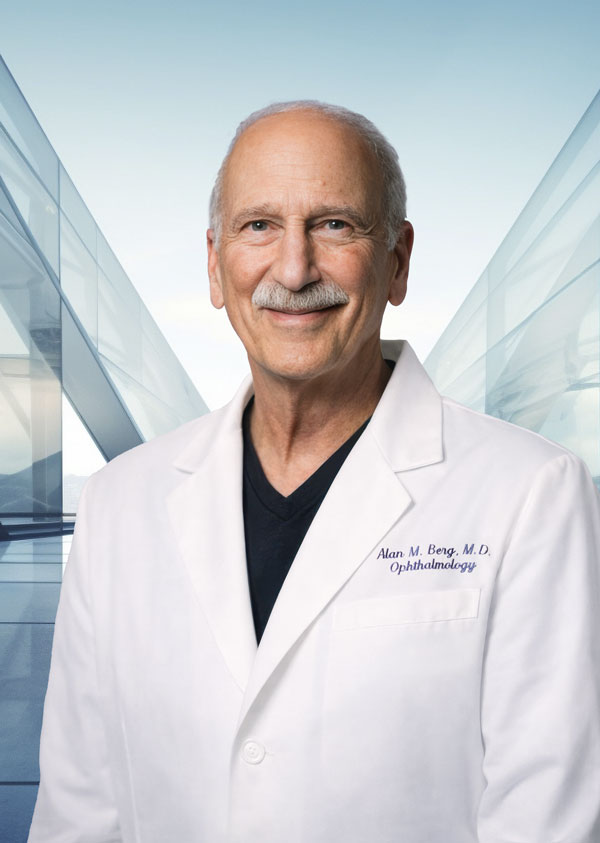
Dr. Alan M. Berg co-founded Berg-Feinfield Vision Correction and is one of the most experienced keratoconus and corneal specialists in the Los Angeles area. His expertise spans the full continuum of keratoconus management — from early topographic monitoring through corneal cross-linking, specialty contact lens planning, and corneal transplantation for end-stage disease.
Dr. Berg was among the first ophthalmologists in Southern California to offer Glaukos’s original iLink CXL platform, and he now brings the same depth of experience to Epioxa epi-on therapy. Several of his colleagues and residents have gone on to lead practices and programs across the country — a testament to the caliber of care he has modeled for decades.
Dr. Berg sees keratoconus patients at our Burbank, Sherman Oaks, and Beverly Hills offices.
View Dr. Berg’s full profile →
Dr. Bonnie Sklar is Berg-Feinfield’s fellowship-trained cornea specialist and the practice’s primary Epioxa CXL physician. She completed her cornea fellowship at Duke University Eye Center — one of the nation’s most prestigious programs — and her ophthalmology residency at Wills Eye Hospital in Philadelphia, consistently ranked among the top ophthalmic training programs in the world.
Dr. Sklar’s clinical focus is the full spectrum of corneal disease and surgery: corneal cross-linking for keratoconus, corneal transplantation (DMEK, DSEK, and PKP), complex anterior segment surgery, ocular surface disease, and cataract surgery with advanced technology lenses. Her academic contributions include peer-reviewed publications and presentations at national ophthalmology conferences.
Beyond the clinic, Dr. Sklar has performed sight-restoring surgeries on humanitarian medical missions in Honduras, Sierra Leone, Kenya, and Mongolia. She sees keratoconus patients at our Burbank and Sherman Oaks offices.
View Dr. Sklar’s full profile →Insurance coverage for Epioxa is actively evolving — it was only FDA-approved in October 2025 and launched commercially in early 2026. Standard epi-off CXL has variable but improving coverage across major insurers and Medicare. Your Berg-Feinfield care coordinator will verify your specific benefits and clearly outline any out-of-pocket costs before your procedure. Financing through CareCredit and other programs is available.
Corneal cross-linking — epi-on or epi-off — primarily stabilizes the cornea and halts keratoconus progression. It does not reverse vision already lost to the disease. Some patients do see a modest improvement in maximum corneal curvature (Kmax) following CXL, and this may translate to mild visual improvement. Glasses, specialty contact lenses, or other correction remains part of the picture for patients with significant visual distortion.
Yes — Epioxa is FDA-approved for patients aged 13 and older. Young patients with keratoconus are often the most critical group to treat promptly, as they typically have the most active progression ahead of them. The significantly reduced recovery burden of epi-on CXL makes early intervention more practical for students and athletes. If your child has been diagnosed with keratoconus or is a keratoconus suspect, we strongly encourage a timely evaluation.
Monitoring mild keratoconus without treatment is sometimes appropriate — but the decision of when to intervene is nuanced. It depends on how quickly your cornea is changing, your age, and your long-term visual risk. The clinical community is increasingly moving toward earlier intervention. We recommend an in-person evaluation with one of our keratoconus specialists if you have any questions about timing. We will give you an honest answer — even if that answer is to continue monitoring.
Yes. Glaukos Photrexa iLink epi-off CXL remains available at Berg-Feinfield for patients for whom it is the more appropriate clinical choice — including advanced keratoconus, specific corneal thickness thresholds, or post-refractive surgery ectasia. Our surgeons will evaluate your specific situation and recommend the procedure that best serves your long-term corneal health.
Your surgeon will determine the appropriate treatment plan — including whether bilateral same-day treatment is appropriate — based on your clinical presentation. This is an individualized decision that will be discussed in detail at your pre-operative consultation.
See Further.
Live Fully.
Keratoconus doesn’t have to define your vision. Berg-Feinfield’s keratoconus team — with 30+ years of experience and the full spectrum of CXL technology — is ready to evaluate your corneas and build a treatment plan around your life.
Call us at 866-2-SEE-FAR | Burbank · Sherman Oaks · Beverly Hills · Arcadia · Valencia